Description
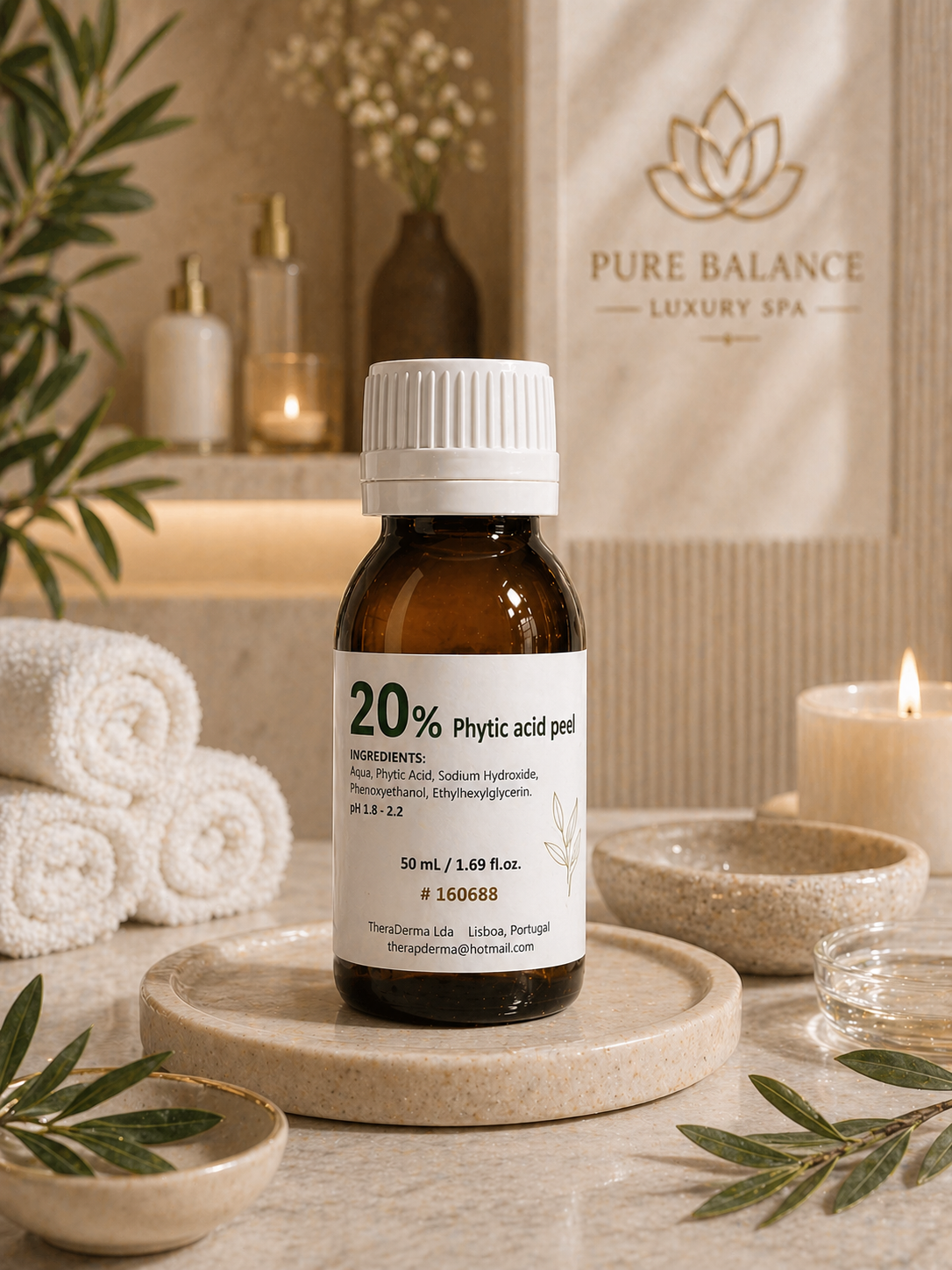
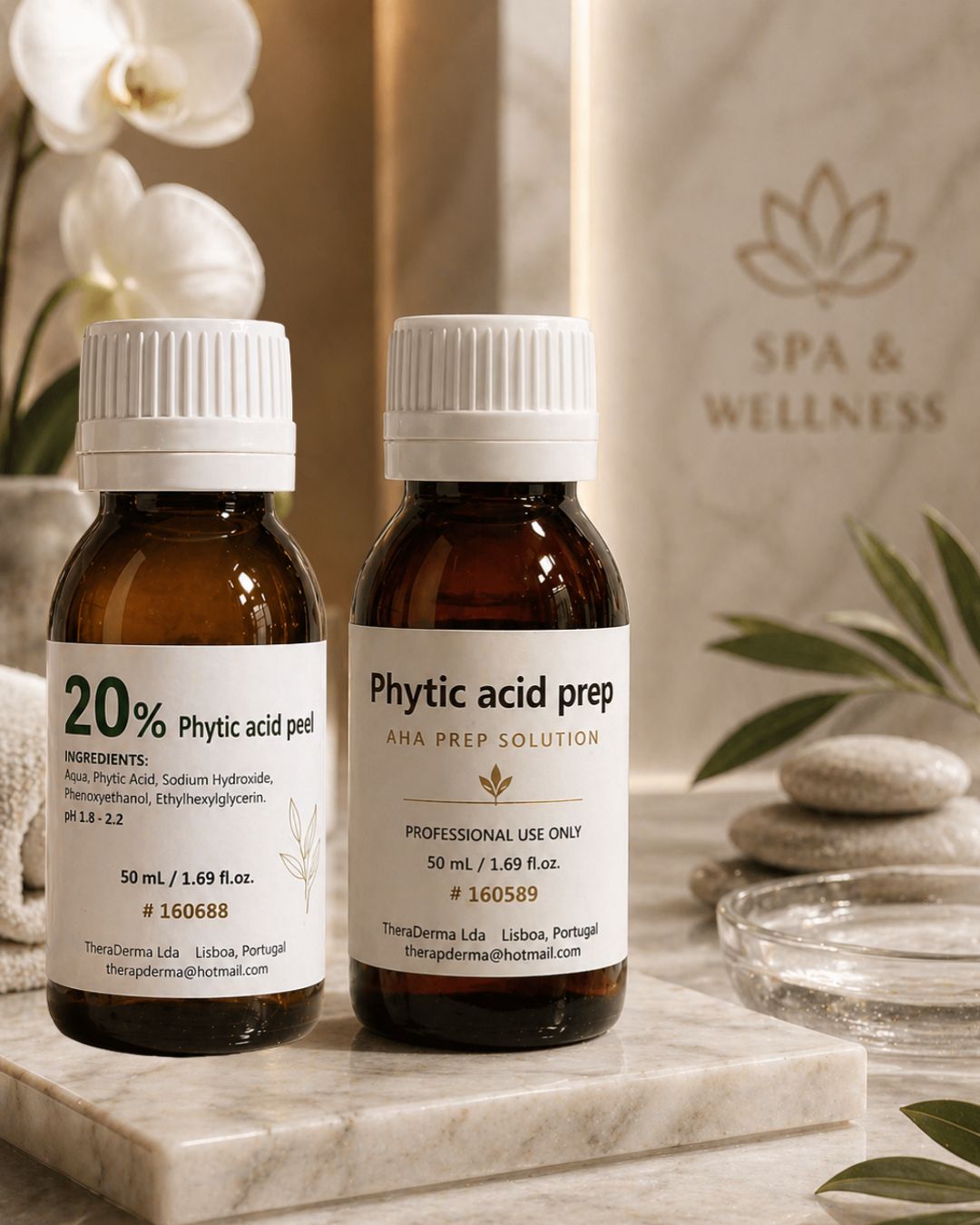
Phytic Peel 20%
Progressive depigmentation, antioxidant protection and Skin Quality optimisation within personalised professional protocols.
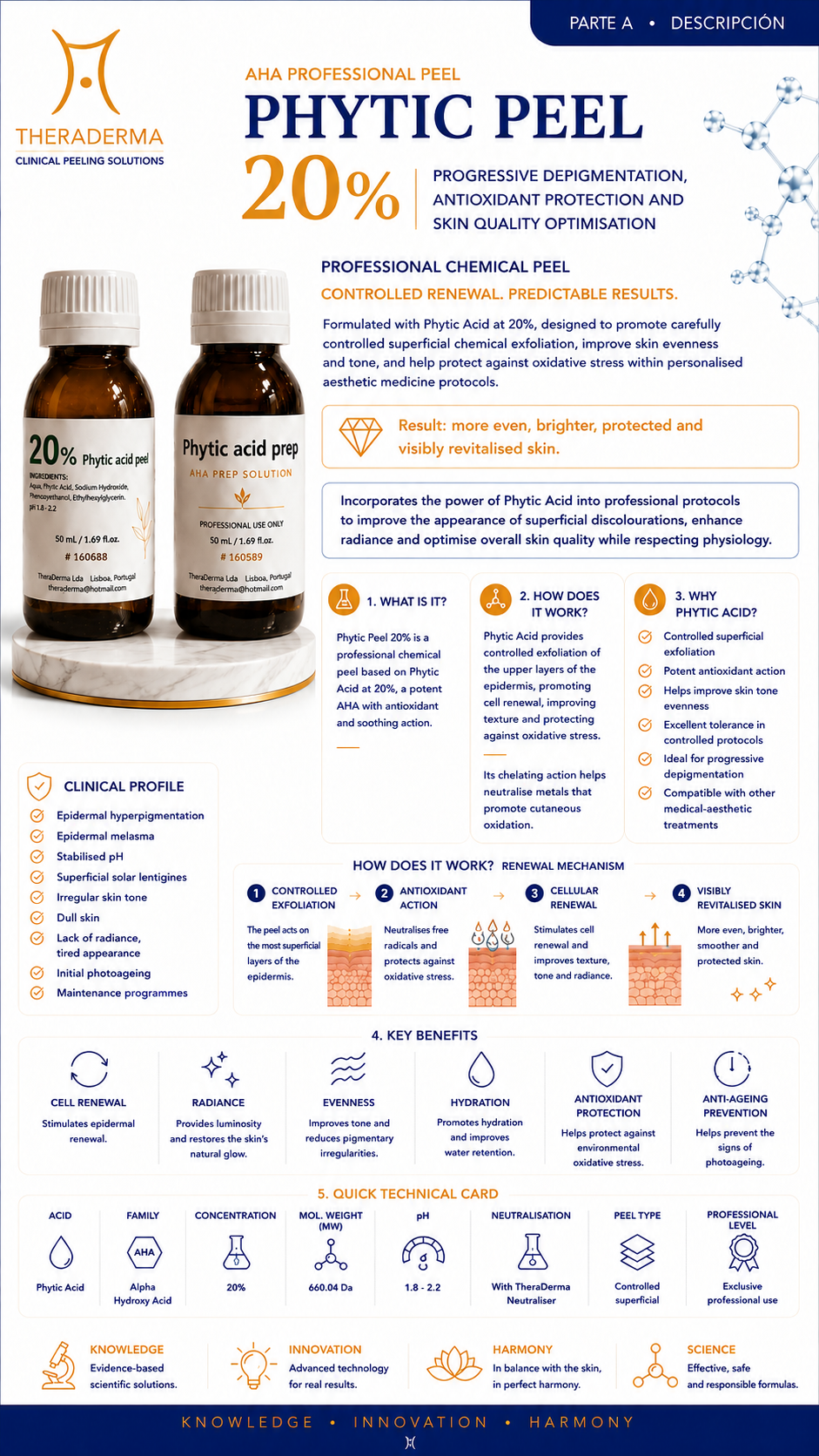
Phytic Peel 20% TherapDerma is a professional chemical peel formulated with 20% Phytic Acid, developed to promote carefully controlled superficial chemical exfoliation, progressively improve skin tone uniformity and contribute to protection against oxidative stress within personalised aesthetic medicine protocols.
Phytic Acid is one of the most widely recognised active ingredients in professional programmes designed to treat superficial pigmentation disorders and photoaged skin, thanks to the combination of its exfoliating, antioxidant and metal-chelating properties. Its use promotes progressive epidermal renewal while respecting skin physiology and enabling the development of treatments aimed at achieving skin that appears visibly brighter, more even and revitalised.
Beyond superficial exfoliation, Phytic Peel 20% has been designed to integrate into therapeutic strategies aimed at optimising Skin Quality, improving the appearance of superficial hyperpigmentation, promoting greater skin tone uniformity and supporting the physiological mechanisms responsible for maintaining healthy-looking skin.
When applied under professional judgement and following appropriate clinical planning, it may be incorporated into protocols intended for dull skin, photoaged skin, superficial pigmentation disorders or progressive loss of radiance, always respecting the individual biological response and the integrity of the skin barrier function.
As part of the TherapDerma clinical approach, Phytic Peel 20% forms part of the TherapDerma Clinical Ecosystem™, a methodology based on accurate diagnosis, personalised therapeutic planning, the integration of different medical-aesthetic procedures and continuous patient reassessment in order to achieve progressive, safe and physiologically consistent results.
What makes Phytic Peel 20% different?
Not all chemical peels act in the same way or pursue the same clinical objectives.
Each active ingredient has its own biological profile, which determines its mechanism of action, its affinity for specific skin types and its role within a personalised professional protocol.
Phytic Peel 20% has been developed for professionals wishing to incorporate protocols designed to progressively improve skin radiance, promote greater visual skin tone uniformity and optimise overall skin quality through controlled superficial exfoliation combined with powerful antioxidant activity.
One of its main distinguishing characteristics lies in the ability of Phytic Acid to act as a chelating agent for certain metals involved in skin oxidation processes, helping to reduce the impact of oxidative stress and promoting a more favourable biological environment for the progressive revitalisation of the skin.
Its balanced behaviour allows the development of gradual depigmentation programmes suitable for appropriately selected skin phototypes, respecting the skin barrier function and promoting progressive clinical improvement based on each patient’s individual biological response.
Integrated within a structured therapeutic strategy, Phytic Peel 20% may be combined with other TherapDerma solutions whenever indicated by the clinical diagnosis, allowing the development of sequential programmes designed to optimise Skin Quality, improve the appearance of superficial dyschromias and enhance the skin’s natural radiance.
________________________________________
What is Phytic Acid?
Phytic Acid is a plant-derived compound widely used in professional aesthetic medicine for its antioxidant, depigmenting and chelating properties. It occurs naturally in seeds, cereals and legumes, where it acts as an important biological regulator against oxidation processes.
Within aesthetic medicine, its use is aimed at promoting carefully controlled superficial chemical exfoliation while progressively improving visual skin tone uniformity, enhancing the skin’s natural radiance and supporting protocols designed to treat superficial pigmentation disorders.
Its antioxidant action helps protect the skin against the effects of oxidative stress associated with skin ageing and environmental exposure, promoting a more balanced physiological environment for the skin’s natural epidermal renewal processes.
Thanks to its high tolerability when applied under professional judgement, Phytic Acid may be incorporated into protocols intended for patients presenting with dull skin, early photoageing, superficial hyperpigmentation or progressive loss of radiance, forming part of personalised programmes designed to optimise Skin Quality.
________________________________________
When should Phytic Peel 20% be selected?
Phytic Peel 20% may be considered when the clinical assessment identifies the need to develop a progressive strategy aimed at improving skin tone uniformity, promoting brighter-looking skin and supporting the physiological mechanisms of epidermal renewal without compromising the integrity of the skin barrier function.
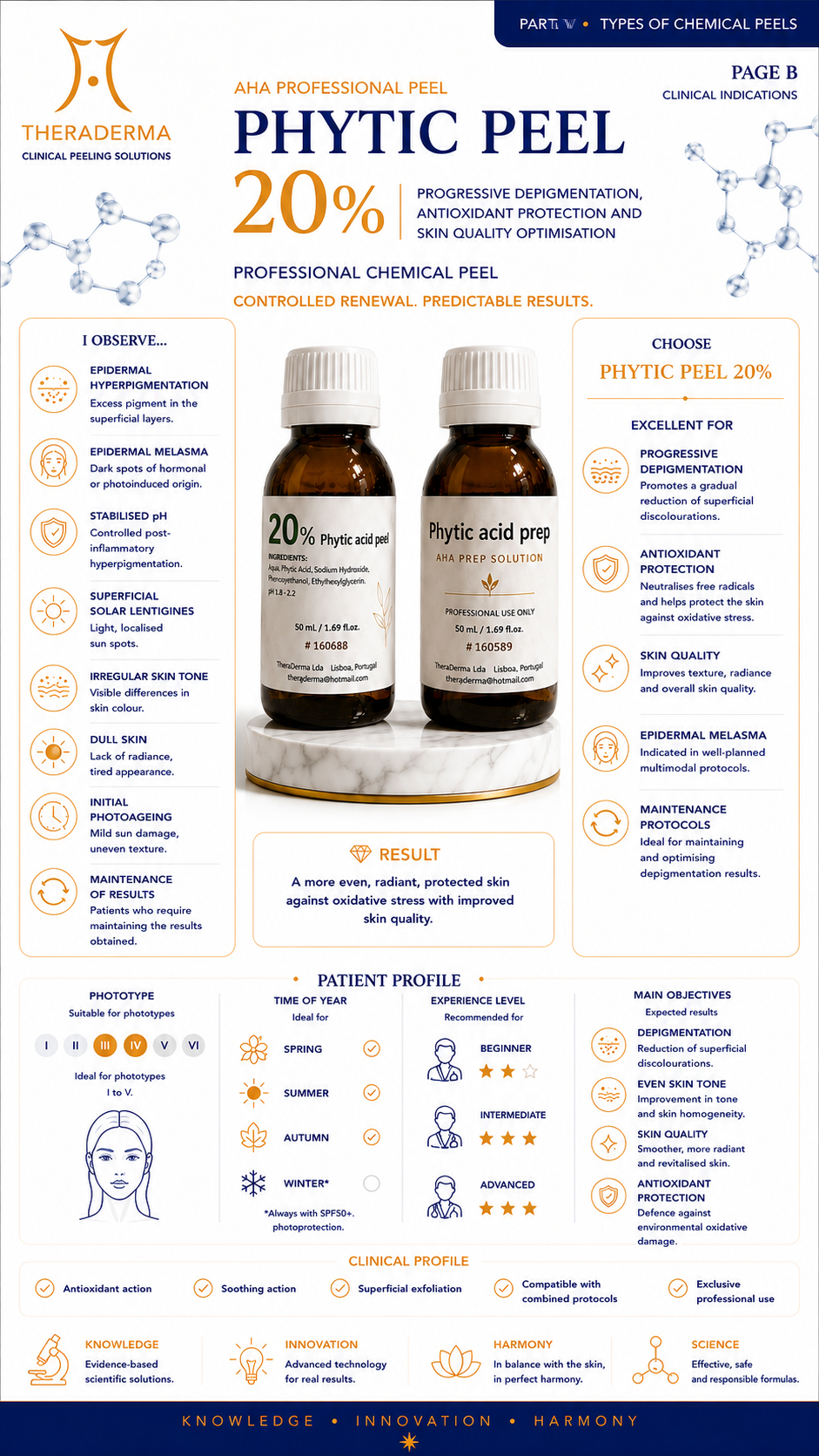
It may be incorporated into personalised protocols intended for patients presenting with:
• superficial hyperpigmentation;
• appropriately selected melasma;
• solar lentigines;
• uneven skin tone;
• dull or devitalised skin;
• early photoageing;
• progressive loss of radiance;
• superficial post-inflammatory pigmentation disorders;
• progressive depigmentation programmes;
• Skin Quality protocols;
• maintenance of skin tone uniformity.
The final indication should always be established following an individualised clinical assessment carried out by the professional.
________________________________________
Positioning within the TherapDerma Clinical Ladder™
At TherapDerma, we understand that the selection of a chemical peel does not depend solely on the concentration of the active ingredient, but rather on choosing the most appropriate active ingredient to meet each patient’s specific biological needs.
Each acid has a different clinical profile and should be incorporated into a personalised therapeutic plan based on diagnosis, skin physiology and treatment objectives.
Phytic Peel 20% occupies a position particularly suited to protocols designed to progressively improve skin tone uniformity, enhance the skin’s natural radiance and optimise Skin Quality through carefully controlled superficial exfoliation combined with significant antioxidant activity.
Treatment progression will always depend on the diagnosis, the individual’s biological response, the condition of the skin barrier function and the clinical reassessment carried out throughout the therapeutic programme.
Whenever deemed appropriate by professional judgement, it may be integrated sequentially with other TherapDerma solutions within combined protocols aimed at enhancing clinical results while always respecting the skin’s physiological recovery times.
________________________________________
TherapDerma Philosophy
At TherapDerma, we believe that skin depigmentation is not simply about reducing the appearance of pigmentation.
The true objective is to understand the biological mechanisms responsible for pigmentation, protect the skin against oxidative stress and design progressive therapeutic strategies that respect skin physiology and promote natural and sustainable results.
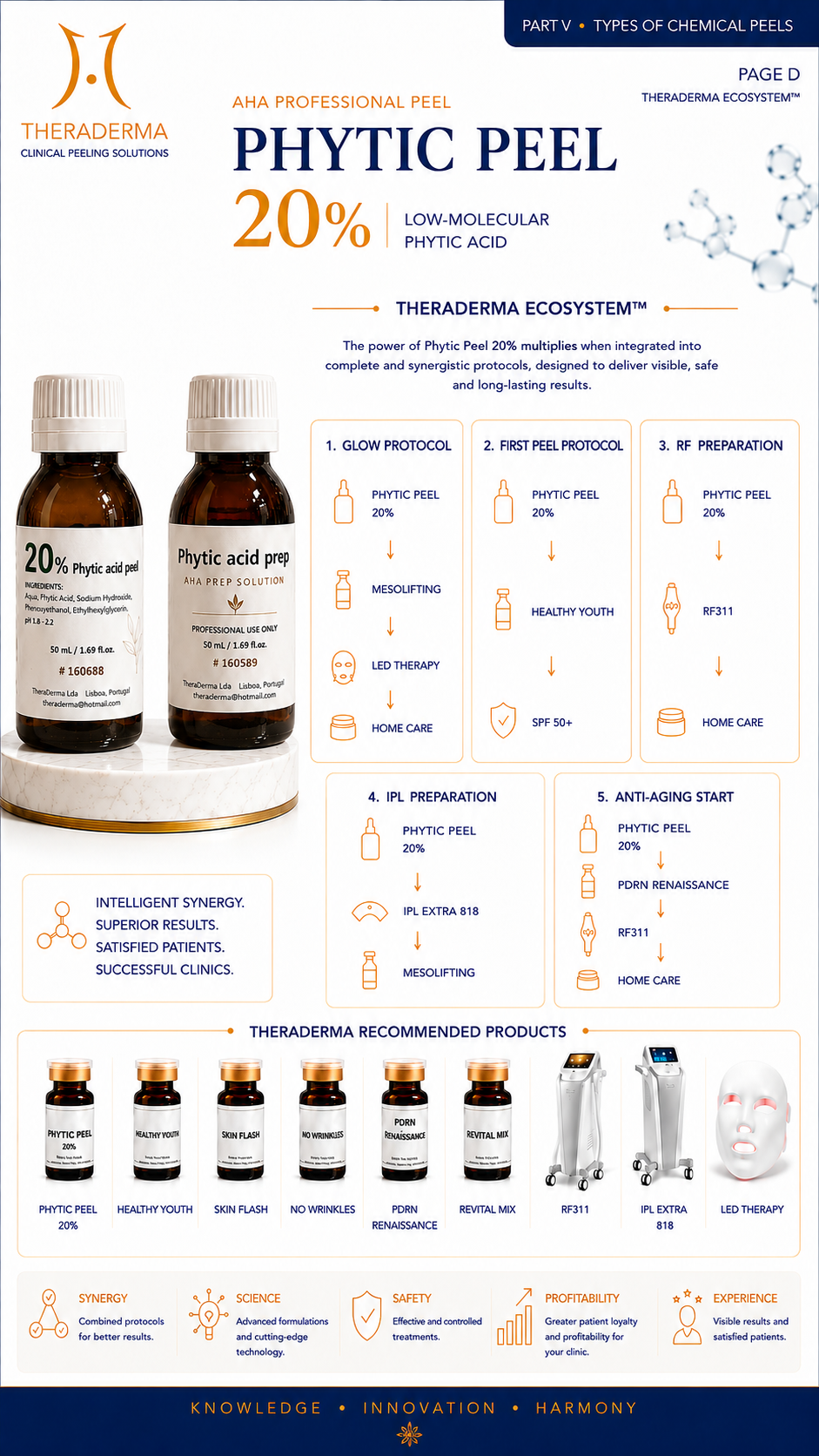
For this reason, Phytic Peel 20% forms part of the TherapDerma Clinical Ecosystem™, a clinical model that integrates chemical peels, mesotherapy, biostimulation, medical-aesthetic technologies and home care within fully personalised protocols based on scientific criteria.
________________________________________
TherapDerma Conclusion
Phytic Peel 20% is a clinical tool developed for professionals wishing to incorporate progressive depigmentation protocols, antioxidant protection and Skin Quality optimisation through carefully controlled superficial chemical exfoliation.
Its formulation may contribute to progressively improving visual skin tone uniformity, enhancing the skin’s natural radiance and promoting skin that appears more even and revitalised when the procedure is integrated into an individualised therapeutic plan.
Its true value lies not only in the concentration of Phytic Acid, but also in its ability to form part of structured clinical strategies based on diagnosis, therapeutic planning, continuous reassessment and respect for skin physiology, enabling the development of personalised, progressive and scientifically based treatments.
Clinical Benefits
Progressive depigmentation, antioxidant protection and enhanced skin radiance within personalised professional protocols
Phytic Peel 20% TherapDerma has been developed to promote carefully controlled superficial chemical exfoliation, intended for professionals wishing to incorporate personalised protocols designed to progressively improve skin tone uniformity, enhance the skin’s natural radiance and optimise Skin Quality.
Thanks to the antioxidant, depigmenting and chelating properties of Phytic Acid, this peel contributes to the gradual renewal of the epidermis while helping to protect the skin against oxidative stress and promoting a more balanced biological environment for the physiological processes of skin regeneration.
When incorporated into an individualised therapeutic plan, its benefits develop progressively, respecting the skin barrier function, each patient’s specific biological response and the skin’s natural epidermal renewal mechanisms.
________________________________________
✨ Progressive Depigmentation
What does it contribute clinically?
Phytic Peel 20% promotes superficial chemical exfoliation, contributing to the progressive reduction of melanin accumulation in the most superficial layers of the epidermis, helping to achieve a more even skin tone appearance.
Its use forms part of therapeutic strategies designed to treat superficial pigmentation disorders through a progressive approach that respects skin physiology.
Clinical Benefits
✔ Promotes greater visual skin tone uniformity.
✔ Helps improve the appearance of superficial hyperpigmentation.
✔ Contributes to progressive depigmentation.
✔ Integrates into professional protocols designed for the treatment of dyschromias.
________________________________________
🛡 Antioxidant Protection
What does it contribute clinically?
Phytic Acid has a high antioxidant and chelating capacity, helping to reduce the impact of oxidative stress on the skin and promoting a more balanced environment for the physiological processes of skin renewal.
This characteristic is particularly valuable in protocols intended for photo-exposed and photoaged skin.
Clinical Benefits
✔ Helps protect against oxidative stress.
✔ Promotes the skin’s physiological balance.
✔ Contributes to maintaining a healthy-looking appearance.
✔ Is incorporated into photoageing prevention programmes.
________________________________________
🌞 Enhanced Skin Radiance
What does it contribute clinically?
The progressive renewal of the most superficial layers of the epidermis promotes a more even reflection of light on the skin, contributing to the recovery of a brighter, more even and revitalised appearance.
Results develop progressively as the clinical protocol advances.
Clinical Benefits
✔ Promotes greater natural radiance.
✔ Helps revitalise the appearance of the skin.
✔ Contributes to a fresher and healthier appearance.
✔ Progressively improves the skin’s visual quality.
________________________________________
🎯 Skin Tone Uniformity
What does it contribute clinically?
The combination of superficial epidermal renewal and the depigmenting action of Phytic Acid promotes a more even skin tone appearance and helps visually minimise superficial pigmentation irregularities.
Clinical Benefits
✔ Promotes a more even skin tone.
✔ Contributes to visibly reducing pigmentation differences.
✔ Helps improve the appearance of superficial pigmentation.
✔ Enhances the overall uniformity of the skin’s appearance.
________________________________________
🧬 Skin Quality Optimisation
What does it contribute clinically?
Phytic Peel 20% may be incorporated into professional protocols designed to progressively improve overall skin quality through a balanced combination of superficial exfoliation, antioxidant activity and skin revitalisation.
Clinical progression will always depend on the diagnosis and the individual’s biological response.
Clinical Benefits
✔ Promotes the progressive optimisation of Skin Quality.
✔ Contributes to healthier-looking skin.
✔ Helps improve the superficial quality of the epidermis.
✔ Integrates into personalised aesthetic medicine programmes.
________________________________________
🌿 Skin Revitalisation
What does it contribute clinically?
The progressive removal of superficial cells and the improvement of skin tone uniformity promote a fresher, more revitalised and radiant appearance.
When incorporated into properly planned protocols, it contributes to restoring the skin’s healthy appearance without compromising the skin barrier function.
Clinical Benefits
✔ Promotes progressive skin revitalisation.
✔ Promotes a more refreshed appearance.
✔ Contributes to restoring the skin’s healthy appearance.
✔ Enhances the skin’s natural radiance.
________________________________________
⚖ Physiological Balance and High Tolerability
What does it contribute clinically?
One of the distinguishing characteristics of Phytic Acid is its excellent tolerability profile when applied under professional judgement.
Its balanced behaviour allows the development of progressive protocols while respecting the skin barrier function and promoting appropriate physiological recovery between sessions.
Clinical Benefits
✔ Respects skin physiology.
✔ Promotes progressive protocols.
✔ Contributes to maintaining the skin barrier function.
✔ Compatible with personalised Skin Quality programmes.
________________________________________
📈 Progressive Clinical Improvement
The benefits associated with Phytic Peel 20% form part of a progressive biological process and do not depend on a single session.
The clinical response develops progressively as treatment sessions progress, respecting the physiological timing of epidermal renewal, recovery of the skin barrier function and the individual’s biological adaptation.
An accurate diagnosis, appropriate patient selection and personalised therapeutic planning enable the development of protocols consistent with the established clinical objectives and the achievement of progressive, natural and clinically predictable results.
________________________________________
CLINICAL SUMMARY
Main Benefits of Phytic Peel 20%
✔ Progressive depigmentation.
✔ Antioxidant protection.
✔ Enhanced natural skin radiance.
✔ Visual skin tone uniformity.
✔ Skin Quality optimisation.
✔ Progressive skin revitalisation.
✔ Respect for the skin barrier function.
✔ Progressive clinical improvement.
________________________________________
THERAPDERMA CLINICAL CONCLUSION
The main clinical value of Phytic Peel 20% lies in combining carefully controlled superficial chemical exfoliation with powerful antioxidant activity and a progressive depigmentation approach, promoting the gradual improvement of skin tone uniformity, radiance and Skin Quality.
Integrated within the TherapDerma Clinical Ecosystem™, it may form part of therapeutic strategies based on diagnosis, clinical planning and periodic reassessment, enabling the development of personalised, progressive treatments that respect skin physiology and are aimed at achieving natural, safe and clinically predictable results.
Why Choose Phytic Peel 20%?
Much more than a chemical peel: a clinical strategy to improve skin tone uniformity, protect against oxidative stress and optimise Skin Quality.
In modern aesthetic medicine, the choice of a chemical peel should not be based solely on the concentration of the acid or the intensity of the exfoliation. Each active ingredient has a specific biological behaviour that determines its mechanism of action, its clinical indications and the type of patient for whom it is most suitable.
Phytic Peel 20% TherapDerma has been developed for professionals seeking to incorporate a peel with a highly balanced profile, capable of combining controlled superficial exfoliation with powerful antioxidant activity and a progressive depigmentation strategy.
Its formulation allows it to be integrated into personalised protocols designed to improve skin radiance, promote greater skin tone uniformity and optimise overall skin quality, always within the framework of an individualised clinical diagnosis.
________________________________________
A Different Treatment Philosophy
At TherapDerma, we understand that pigmentation disorders cannot be addressed solely from an exfoliation perspective.
Skin pigmentation is the result of multiple biological factors, including melanocytic activity, inflammation, sun exposure, oxidative stress and the skin’s natural capacity for epidermal renewal.
For this reason, Phytic Peel 20% forms part of a therapeutic approach that seeks to act progressively on these processes while respecting skin physiology and promoting natural, even and long-lasting results.
It is not simply about removing superficial cells, but about creating a favourable biological environment that enables the skin to gradually regain a more even, radiant and healthy appearance.
________________________________________
What Makes Phytic Acid Different?
Phytic Acid stands out because it combines three properties that make it an active ingredient of great interest in professional aesthetic medicine.
Progressive Depigmenting Action
It promotes superficial epidermal renewal, contributing to the progressive improvement of the appearance of pigmentation disorders and helping to achieve greater skin tone uniformity.
________________________________________
Powerful Antioxidant Action
It helps neutralise the impact of oxidative stress generated by ultraviolet radiation, environmental pollution and other external factors associated with skin ageing.
________________________________________
Chelating Capacity
One of the most distinctive characteristics of Phytic Acid is its ability to bind to certain metals involved in oxidative reactions, helping to reduce the formation of free radicals and promoting a more balanced physiological environment for the skin.
This combination of properties makes Phytic Peel 20% an excellent tool for protocols aimed at the progressive improvement of skin quality.
________________________________________
Benefits Beyond Exfoliation
While some peels focus their action primarily on epidermal renewal, Phytic Peel 20% incorporates a much broader approach.
Its use enables the development of protocols designed to:
• progressively improve skin tone uniformity;
• promote brighter-looking skin;
• enhance the skin’s visual quality;
• support protection against oxidative stress;
• promote physiological epidermal renewal;
• optimise Skin Quality;
• complement professional depigmentation programmes.
All while respecting the skin barrier function and each patient’s individual biological response.
________________________________________
A Peel Designed for Modern Aesthetic Medicine
Aesthetic medicine is evolving towards increasingly personalised, less aggressive treatments supported by stronger scientific evidence.
Patients no longer seek only to eliminate a pigmentation mark or improve a specific concern; they want skin that appears more even, healthy and radiant while maintaining its natural appearance.
Phytic Peel 20% responds to this new philosophy through a progressive and balanced approach that can be adapted to different clinical needs when the professional performs an accurate diagnosis and develops an individualised therapeutic plan.
________________________________________
Integration Within the TherapDerma Clinical Ecosystem™
The true potential of Phytic Peel 20% is achieved when it forms part of the TherapDerma Clinical Ecosystem™.
This clinical model developed by TherapDerma integrates:
• individualised professional diagnosis;
• personalised peel selection;
• sequential protocols;
• professional mesotherapy;
• medical-aesthetic technologies;
• skin biostimulation;
• home care;
• clinical follow-up and periodic reassessment.
This comprehensive approach makes it possible to design treatments adapted to each patient’s biology, optimising clinical progression and promoting progressive and predictable results.
________________________________________
For What Type of Professional Has It Been Developed?
Phytic Peel 20% is intended for aesthetic physicians, dermatologists and aesthetic medicine professionals seeking to incorporate treatments based on scientific criteria and personalised protocols.
Its clinical profile makes it a particularly valuable tool for professionals wishing to offer solutions focused on progressive depigmentation, skin revitalisation and Skin Quality improvement without resorting to excessively aggressive procedures.
Its high versatility allows it to be integrated into programmes intended for patients with superficial pigmentation disorders, early photoageing, uneven skin tone or loss of radiance.
________________________________________
An Investment in Clinical Quality
Choosing Phytic Peel 20% does not simply mean selecting a chemical peel.
It means incorporating a therapeutic tool designed to integrate into structured protocols, where diagnosis, clinical planning and patient follow-up form the foundation for achieving consistent and physiologically coherent results.
Its progressive approach promotes personalised treatments that respect the biological timing of skin renewal while prioritising safety, naturalness and the quality of the final result.
________________________________________
Why Choose Phytic Peel 20% TherapDerma?
✔ Formulated with 20% Phytic Acid for professional use.
✔ Combines superficial exfoliation, antioxidant activity and chelating capacity.
✔ Promotes progressive depigmentation and skin tone uniformity.
✔ Contributes to improving skin radiance and Skin Quality.
✔ Respects skin physiology and the skin barrier function.
✔ Integrates easily into combined aesthetic medicine protocols.
✔ Compatible with personalised therapeutic strategies.
✔ Based on a clinical philosophy focused on diagnosis and individualised treatment planning.
________________________________________
TherapDerma Conclusion
The true difference of Phytic Peel 20% lies not only in the concentration of Phytic Acid, but also in the way this active ingredient is integrated into a comprehensive clinical strategy.
Its combination of superficial chemical exfoliation, antioxidant activity and chelating capacity enables the development of protocols aimed at progressively improving skin tone uniformity, enhancing radiance and optimising Skin Quality, always through a personalised approach that respects skin physiology.
As part of the TherapDerma Clinical Ecosystem™, Phytic Peel 20% represents a solution designed for professionals who understand that the best results do not depend on more aggressive treatments, but on well-founded clinical decisions, well-structured protocols and a comprehensive approach to skin care.
Areas of Application
A versatile solution for professional depigmentation, skin revitalisation and Skin Quality optimisation protocols
Phytic Peel 20% TherapDerma has been developed for application in different anatomical areas where the professional identifies superficial pigmentation disorders, loss of radiance, early photoageing or the need to progressively improve overall skin quality.
Its superficial exfoliation profile, combined with the antioxidant and chelating action of Phytic Acid, makes it possible to design personalised protocols adapted to the physiological characteristics of each treatment area, always respecting the integrity of the skin barrier function and the individual’s biological response.
The selection of the treatment area should always be made following a comprehensive clinical assessment, taking into account the patient’s skin phototype, skin condition, medical history and established therapeutic objectives.
________________________________________
👩 Face
The Primary Clinical Indication
The face is the area where pigmentation disorders associated with photoageing, cumulative sun exposure and chronological ageing most frequently appear.
Phytic Peel 20% may be incorporated into protocols designed to progressively improve:
• skin tone uniformity;
• skin radiance;
• the appearance of superficial pigmentation;
• the appearance of photoaged skin;
• overall skin quality.
Its application promotes controlled epidermal renewal, contributing to skin that appears visibly more even, fresh and revitalised.
________________________________________
🌞 Forehead
The forehead is frequently exposed to sunlight, making it one of the areas where pigmentation irregularities and early signs of photoageing may appear.
Phytic Peel 20% may be integrated into protocols designed to promote a more even and radiant appearance while respecting skin physiology.
Clinical Objectives
✔ Improve skin tone uniformity.
✔ Enhance skin radiance.
✔ Promote epidermal renewal.
________________________________________
👁 Facial Contour
When considered appropriate following professional assessment, Phytic Peel 20% may be incorporated into specific protocols for selected areas of the facial contour, always respecting technical recommendations and avoiding anatomical areas that are not indicated for this type of procedure.
Its objective is to progressively improve visual uniformity and enhance the superficial quality of the skin.
________________________________________
😊 Cheeks
The cheeks are one of the most common locations for superficial pigmentation disorders and photoageing.
Treatment may contribute to:
• improving the appearance of uneven skin tone;
• promoting brighter-looking skin;
• optimising Skin Quality;
• revitalising the overall appearance of the face.
________________________________________
👃 Nose
The nose is highly exposed to environmental factors and sunlight.
Within personalised protocols, Phytic Peel 20% may contribute to promoting superficial epidermal renewal and improving skin tone uniformity in this anatomical region.
________________________________________
👄 Perioral Region
Pigmentation disorders associated with ageing and sun exposure may affect the perioral area.
When indicated by professional diagnosis, Phytic Peel 20% may be incorporated into protocols designed to progressively improve radiance and the uniform appearance of this area.
________________________________________
👤 Chin
The chin may present pigmentation irregularities or loss of radiance associated with different intrinsic and extrinsic factors.
Its treatment aims to promote better aesthetic integration with the rest of the face.
________________________________________
✨ Neck
The neck is an aesthetic extension of the face and often shows early signs of photoageing.
Phytic Peel 20% may form part of protocols designed to:
• progressively improve skin tone uniformity;
• promote brighter-looking skin;
• optimise superficial skin quality;
• contribute to a more rejuvenated appearance.
________________________________________
🌿 Décolletage
The décolletage is one of the body areas with the greatest chronic exposure to ultraviolet radiation.
It frequently presents:
• sunspots;
• uneven skin tone;
• loss of radiance;
• photoageing.
Phytic Peel 20% may be incorporated into programmes designed to progressively improve these concerns through carefully controlled superficial chemical exfoliation.
________________________________________
🤲 Back of the Hands
The hands are one of the areas where photoageing tends to become most evident.
Within personalised protocols, Phytic Peel 20% may progressively contribute to improving:
• the appearance of superficial solar lentigines;
• skin tone uniformity;
• skin radiance;
• the skin’s visual quality.
________________________________________
🌍 Other Body Areas
Always under professional judgement, Phytic Peel 20% may be incorporated into protocols intended for other anatomical areas where there is a clinical indication and the characteristics of the skin allow the procedure to be carried out safely.
Each treatment should be adapted to the physiological characteristics of the area, respecting recovery times and the individual’s biological response.
________________________________________
Personalisation According to the Patient
At TherapDerma, there are no universal protocols.
Each patient presents a unique combination of:
• skin phototype;
• degree of photoageing;
• pigmentation distribution;
• skin quality;
• level of sensitivity;
• aesthetic history;
• therapeutic objectives.
For this reason, the selection of treatment areas should form part of a personalised clinical strategy based on a comprehensive diagnosis and individualised treatment planning.
________________________________________
Integration Within the TherapDerma Clinical Ecosystem™
The choice of treatment areas is only one of the elements that make up a successful treatment.
Within the TherapDerma Clinical Ecosystem™, Phytic Peel 20% may be combined with other therapeutic solutions whenever indicated by professional diagnosis, enabling the development of sequential programmes designed to optimise Skin Quality, improve skin tone uniformity and enhance the skin’s natural radiance.
This comprehensive approach makes it possible to adapt each protocol to the patient’s specific needs, promoting progressive, natural and clinically predictable results.
________________________________________
Summary of Areas of Application
Phytic Peel 20% may be incorporated into professional protocols intended for:
✔ Face.
✔ Forehead.
✔ Cheeks.
✔ Nose.
✔ Perioral Region.
✔ Chin.
✔ Neck.
✔ Décolletage.
✔ Back of the Hands.
✔ Other anatomical areas selected according to professional judgement.
________________________________________
TherapDerma Conclusion
The versatility of Phytic Peel 20% allows its integration into different anatomical areas where the clinical objective is to progressively improve skin tone uniformity, enhance radiance and optimise Skin Quality.
More than treating a specific area, its true value lies in forming part of a personalised therapeutic plan, in which each treatment area is selected according to the diagnosis, the patient’s biological characteristics and the established clinical objectives, ensuring a coherent, safe and scientifically based approach.
How Does It Work?
The biological mechanism of Phytic Peel 20%: intelligent exfoliation, antioxidant protection and progressive Skin Quality optimisation
Understanding how a chemical peel works is essential for selecting the most appropriate protocol for each patient. Although all chemical peels produce controlled epidermal renewal, each active ingredient interacts with the skin in a different way, generating specific biological responses.
Phytic Peel 20% TherapDerma has been formulated to induce carefully controlled superficial chemical exfoliation, promoting epidermal renewal, progressively improving skin tone uniformity and helping to protect the skin against oxidative stress.
Its action is not limited to the removal of superficial cells. It acts as part of a progressive biological process that seeks to restore skin balance and optimise overall skin quality while always respecting skin physiology.
________________________________________
Phase 1
Preparation of the Skin Surface
Following professional application, Phytic Peel 20% begins by interacting with the stratum corneum, the outermost layer of the epidermis.
This action promotes the controlled weakening of the connections between corneocytes, facilitating uniform and progressive exfoliation without causing unnecessary damage to the tissues.
This superficial renewal helps remove aged cells and promotes the appearance of an epidermis that looks more even and radiant.
Biological Outcome
✔ Controlled superficial renewal.
✔ Progressive removal of keratinised cells.
✔ Preparation of the skin for its physiological regeneration.
________________________________________
Phase 2
Progressive Epidermal Renewal
As exfoliation progresses, the epidermis’ natural cellular renewal process is activated.
The superficial layers are progressively replaced by new epidermal cells, promoting skin with a more even and revitalised appearance.
This process respects the physiological timing of skin regeneration, which is why results develop gradually from session to session.
Biological Outcome
✔ Promotes epidermal renewal.
✔ Contributes to a more even texture.
✔ Progressively improves the overall appearance of the skin.
________________________________________
Phase 3
Progressive Depigmenting Action
One of the main clinical objectives of Phytic Acid is to promote the progressive improvement of superficial pigmentation disorders.
Epidermal renewal facilitates the gradual removal of cells containing excess melanin accumulated in the outermost layers of the skin, contributing to a more even skin tone appearance.
The clinical response will always depend on the type of pigmentation, the skin phototype, the diagnosis and the protocol established by the professional.
Biological Outcome
✔ Promotes skin tone uniformity.
✔ Helps improve the appearance of superficial hyperpigmentation.
✔ Contributes to progressive depigmentation protocols.
________________________________________
Phase 4
Protection Against Oxidative Stress
In addition to its exfoliating capacity, Phytic Acid stands out for its significant antioxidant activity.
During daily exposure, the skin is subjected to external factors such as ultraviolet radiation, environmental pollution and other agents capable of generating free radicals.
Phytic Acid contributes to reducing the impact of these oxidative processes, promoting a more balanced physiological environment and supporting the skin’s natural defence mechanisms.
Biological Outcome
✔ Helps reduce the impact of oxidative stress.
✔ Promotes the skin’s physiological balance.
✔ Contributes to maintaining a healthy-looking appearance.
________________________________________
Phase 5
Chelating Action
One of the most characteristic properties of Phytic Acid is its ability to act as a chelating agent.
This property consists of binding to certain metal ions involved in oxidation reactions, reducing their availability and helping to limit the formation of free radicals.
This mechanism makes Phytic Acid a particularly valuable ingredient within protocols designed to prevent skin deterioration associated with photoageing.
Biological Outcome
✔ Promotes an antioxidant environment.
✔ Helps limit oxidative processes.
✔ Complements the skin’s natural protection mechanisms.
________________________________________
Phase 6
Skin Quality Optimisation
The combination of epidermal renewal, progressive depigmentation, antioxidant activity and chelating capacity promotes an overall improvement in the skin’s visual quality.
As the therapeutic protocol progresses, the skin may present a more even, radiant and revitalised appearance, always respecting skin physiology and the patient’s individual response.
Optimising Skin Quality is one of the principal objectives of the TherapDerma clinical approach.
Biological Outcome
✔ Greater radiance.
✔ Improved skin tone uniformity.
✔ A more even skin appearance.
✔ Visibly healthier-looking skin.
________________________________________
A Progressive Process, Not an Immediate One
It is important to understand that Phytic Peel 20% does not work through an instant effect.
The observed changes result from natural biological processes that require time to develop.
Epidermal renewal, the superficial reorganisation of the skin and the progressive improvement of pigmentation develop gradually as the clinical protocol progresses.
For this reason, the best results are generally achieved through personalised programmes adapted to each patient’s specific needs and supported by appropriate home care and daily photoprotection.
________________________________________
Integration Within the TherapDerma Clinical Ecosystem™
The mechanism of action of Phytic Peel 20% reaches its full potential when integrated within the TherapDerma Clinical Ecosystem™.
This clinical model combines:
• individualised diagnosis;
• personalised peel selection;
• sequential protocols;
• professional mesotherapy;
• medical-aesthetic technologies;
• skin biostimulation;
• home care;
• periodic clinical follow-up.
This approach makes it possible to act on different mechanisms involved in skin quality, promoting more comprehensive, personalised and scientifically based treatments.
________________________________________
Summary of the Mechanism of Action
Phytic Peel 20% works through a progressive biological sequence:
1. Controlled superficial exfoliation.
2. Physiological epidermal renewal.
3. Progressive improvement of skin tone uniformity.
4. Protection against oxidative stress.
5. Chelating action against pro-oxidant metals.
6. Progressive Skin Quality optimisation.
________________________________________
TherapDerma Conclusion
The mechanism of action of Phytic Peel 20% goes beyond simple chemical exfoliation. Its combination of controlled epidermal renewal, progressive depigmenting action, antioxidant capacity and chelating effect makes it possible to act on various processes related to skin quality and appearance.
Integrated within a personalised protocol and the TherapDerma Clinical Ecosystem™, it contributes to the development of treatments aimed at progressively improving skin tone uniformity, enhancing radiance and optimising Skin Quality, always respecting skin physiology and each patient’s individual biological response.
Mechanism of Action
How Phytic Acid works at the biological level to promote progressive depigmentation, protect against oxidative stress and improve Skin Quality
The clinical success of a chemical peel depends, to a great extent, on understanding the biological mechanism through which its active ingredient interacts with the skin. Although all chemical peels induce controlled epidermal renewal, Phytic Acid has a unique mode of action, characterised by the combination of superficial exfoliating activity, antioxidant capacity and chelating effect.
These properties enable Phytic Peel 20% TherapDerma to act on different physiological processes related to pigmentation, photoageing and overall skin quality, making it a particularly valuable tool within depigmentation and skin rejuvenation protocols.
Its mechanism of action does not depend on a single biological effect, but on the coordinated interaction of different processes that develop progressively throughout the treatment.
________________________________________
1. Controlled Superficial Chemical Exfoliation
The first mechanism of action of Phytic Peel 20% is to induce carefully controlled superficial chemical exfoliation.
Phytic Acid promotes the progressive shedding of corneocytes from the stratum corneum, reducing cohesion between the superficial cells of the epidermis and facilitating their physiological elimination.
This process renews the outermost layer of the skin without significantly altering the architecture of the deeper tissues.
Biological Effects
✔ Promotes controlled desquamation.
✔ Stimulates superficial renewal.
✔ Removes aged cells.
✔ Contributes to more even-looking skin.
________________________________________
2. Physiological Epidermal Renewal
As a result of superficial exfoliation, the epidermis activates its natural regeneration mechanisms.
New cells progressively migrate towards the surface, replacing aged layers and promoting an epidermis with a more even and radiant appearance.
This phenomenon constitutes one of the fundamental pillars of non-invasive skin rejuvenation treatments.
Biological Effects
✔ Promotes physiological cellular renewal.
✔ Improves skin texture.
✔ Contributes to visibly fresher-looking skin.
✔ Optimises the superficial quality of the epidermis.
________________________________________
3. Action on Superficial Pigmentation
One of the main clinical objectives of Phytic Acid is to promote the progressive improvement of the appearance of superficial pigmentation disorders.
Continuous epidermal renewal facilitates the gradual removal of keratinocytes containing accumulated melanin, helping to achieve a more even distribution of pigment across the skin surface.
It is important to note that the clinical response will always depend on the origin of the hyperpigmentation, the skin phototype, the diagnosis and the therapeutic protocol established.
Biological Effects
✔ Promotes greater skin tone uniformity.
✔ Contributes to improving the appearance of superficial pigmentation.
✔ Supports progressive depigmentation protocols.
✔ Promotes skin that appears more even.
________________________________________
4. Antioxidant Action
Phytic Acid is distinguished by its high antioxidant capacity.
During skin ageing, ultraviolet radiation, pollution and other environmental factors promote the formation of free radicals capable of disrupting the skin’s physiological balance.
The antioxidant activity of Phytic Acid contributes to reducing the impact of these oxidative processes and promotes a more stable biological environment for skin regeneration.
Biological Effects
✔ Helps protect against oxidative stress.
✔ Promotes the skin’s redox balance.
✔ Contributes to maintaining healthy-looking skin.
✔ Complements the skin’s natural antioxidant defence mechanisms.
________________________________________
5. Chelating Action
One of the most distinctive properties of Phytic Acid is its ability to act as a chelating agent.
This mechanism consists of binding to certain metal ions that may promote oxidative reactions responsible for the formation of free radicals.
By reducing the availability of these metals, Phytic Acid contributes to reducing oxidative damage and promotes a more balanced skin microenvironment.
This property distinguishes Phytic Acid from many other agents used in superficial chemical peels.
Biological Effects
✔ Reduces the pro-oxidant activity of certain metals.
✔ Promotes the skin’s antioxidant stability.
✔ Complements cellular protection mechanisms.
✔ Contributes to maintaining the skin’s physiological balance.
________________________________________
6. Improvement of Skin Radiance
The combination of exfoliation, epidermal renewal and the progressive improvement of skin tone uniformity promotes a more even reflection of light across the skin surface.
As a result, the skin acquires a visibly brighter, more even and revitalised appearance.
This benefit is generally observed progressively as the therapeutic protocol advances.
Biological Effects
✔ Promotes greater radiance.
✔ Improves the overall appearance of the skin.
✔ Contributes to a healthier-looking appearance.
✔ Enhances the skin’s visual quality.
________________________________________
7. Skin Quality Optimisation
All of the mechanisms described above converge towards a common objective: progressively improving Skin Quality.
Optimising skin quality does not depend exclusively on depigmentation, but also on biological balance, cellular renewal, antioxidant protection and the preservation of a healthy skin barrier function.
For this reason, Phytic Peel 20% forms part of protocols designed to achieve skin that appears more even, radiant, revitalised and physiologically balanced.
Biological Effects
✔ Promotes overall skin quality.
✔ Contributes to a rejuvenated appearance.
✔ Progressively improves skin tone uniformity.
✔ Promotes a healthier-looking appearance.
________________________________________
Synergy with Other Treatments
Within modern aesthetic medicine, the full potential of Phytic Peel 20% is achieved when it forms part of combined protocols.
Depending on the clinical diagnosis, the professional may combine it with other TherapDerma solutions, such as mesotherapy, skin biostimulation, medical-aesthetic technologies or home care, with the aim of acting on different mechanisms involved in skin ageing and pigmentation disorders.
This combination makes it possible to design more comprehensive, personalised treatments tailored to each patient’s specific needs.
________________________________________
Summary of the Mechanism of Action
The mechanism of action of Phytic Peel 20% can be summarised in seven main biological processes:
1. Controlled superficial chemical exfoliation.
2. Physiological renewal of the epidermis.
3. Progressive improvement of superficial pigmentation.
4. Antioxidant protection against oxidative stress.
5. Chelating action on pro-oxidant metals.
6. Progressive increase in skin radiance.
7. Overall Skin Quality optimisation.
________________________________________
TherapDerma Conclusion
The mechanism of action of Phytic Peel 20% TherapDerma reflects a modern vision of aesthetic medicine, in which a chemical peel is no longer simply an exfoliating procedure but becomes a tool capable of acting on multiple biological processes related to skin quality and appearance.
Thanks to its combination of controlled superficial exfoliation, epidermal renewal, progressive depigmenting action, powerful antioxidant activity and chelating capacity, Phytic Peel 20% supports protocols aimed at improving skin tone uniformity, enhancing radiance and optimising Skin Quality.
Integrated within the TherapDerma Clinical Ecosystem™, it represents a solution designed for professionals seeking personalised, progressive, scientifically based treatments that respect skin physiology.
Scientific Foundations
The scientific basis of Phytic Acid in modern depigmentation, antioxidant protection and Skin Quality optimisation protocols
The evolution of aesthetic medicine has driven the development of increasingly personalised treatments, supported by the understanding of skin biology and the available scientific evidence.
Within this context, Phytic Peel 20% TherapDerma has been conceived as a professional chemical peel whose foundation lies not only in its exfoliating capacity, but also in the combination of different biological mechanisms that contribute to the progressive improvement of skin quality.
Phytic Acid (myo-inositol hexakisphosphate) is a naturally occurring compound extensively studied for its antioxidant and chelating properties. In aesthetic medicine, its clinical interest lies in its ability to be integrated into protocols aimed at progressive depigmentation, protection against oxidative stress and improvement of skin tone uniformity.
________________________________________
Phytic Acid from a Scientific Perspective
Phytic Acid is a plant-derived molecule naturally present in cereals, seeds, nuts and legumes.
Its chemical structure has a high affinity for certain metal ions, a characteristic that explains much of its antioxidant activity.
From a biological perspective, this chelating capacity contributes to reducing the availability of metals capable of participating in oxidative processes, promoting a more balanced physiological environment for the skin.
For this reason, Phytic Acid has attracted growing interest within cosmetic dermatology and aesthetic medicine as a complementary ingredient in strategies designed to preserve skin quality.
________________________________________
Oxidative Stress and Skin Ageing
One of the most extensively studied processes in skin ageing is oxidative stress.
Continuous exposure to factors such as:
• ultraviolet radiation;
• environmental pollution;
• infrared radiation;
• tobacco smoke;
• chronic inflammation;
• physiological ageing,
promotes the production of reactive oxygen species (ROS), capable of disrupting cellular balance and accelerating the progressive deterioration of the skin.
Various studies have shown that an excess of free radicals may affect essential components such as collagen, elastin, epidermal lipids and other structures involved in maintaining the skin barrier function and skin quality.
Within this context, the incorporation of active ingredients with antioxidant capacity represents a valuable complement within professional skin rejuvenation and photoageing prevention protocols.
________________________________________
The Importance of Chelating Action
One of the most distinctive characteristics of Phytic Acid is its ability to act as a chelating agent.
Oxidative processes may be enhanced by the presence of certain transition metals capable of promoting chemical reactions associated with the formation of free radicals.
Phytic Acid has an affinity for these metal ions, helping to limit their participation in these processes and promoting a more stable biological environment.
This property distinguishes Phytic Acid from numerous acids commonly used in superficial chemical peels and constitutes one of the most extensively studied aspects of its scientific profile.
________________________________________
Epidermal Renewal and Improvement of Pigmentation
The physiological renewal of the epidermis is one of the fundamental mechanisms for maintaining skin with a healthy and even appearance.
Superficial chemical exfoliation promotes the progressive removal of aged corneocytes and facilitates the natural turnover of the epidermis.
This process may contribute to the gradual improvement of the appearance of superficial pigmentation disorders and promote a more homogeneous distribution of pigment across the skin surface.
Clinical progression will always depend on the diagnosis, the origin of the hyperpigmentation, the skin phototype and the individualised therapeutic protocol.
________________________________________
Skin Quality: A New Scientific Paradigm
Over recent years, the concept of Skin Quality has assumed a leading role within aesthetic medicine.
Today, the success of a treatment is no longer assessed solely by the reduction of a pigmentation mark or the correction of a wrinkle, but by the overall improvement of the characteristics that define healthy and visually attractive skin.
These include:
• skin tone uniformity;
• radiance;
• texture;
• hydration;
• elasticity;
• skin barrier function;
• physiological balance.
Phytic Peel 20% fits within this philosophy, acting as a tool designed to progressively optimise these parameters when incorporated into personalised protocols.
________________________________________
Evidence-Based Aesthetic Medicine
Contemporary aesthetic medicine is evolving towards a model based on the integration of scientific evidence with clinical experience and each patient’s individual needs.
This implies understanding that no peel represents a universal solution.
Treatment selection should take multiple factors into consideration, including:
• clinical diagnosis;
• type of pigmentation disorder;
• skin phototype;
• condition of the skin barrier function;
• medical history;
• sun exposure;
• therapeutic objectives.
Within this approach, Phytic Peel 20% represents a tool that may be incorporated rationally into personalised protocols, always under professional judgement.
________________________________________
Scientific Integration Within the TherapDerma Clinical Ecosystem™
The scientific foundation of Phytic Peel 20% becomes even more relevant when integrated into the TherapDerma Clinical Ecosystem™.
This clinical model considers that improving the skin requires acting simultaneously on different biological mechanisms through a structured strategy that may include:
• chemical peels;
• professional mesotherapy;
• skin biostimulation;
• medical-aesthetic technologies;
• home care;
• clinical follow-up;
• therapeutic reassessment.
This multidisciplinary approach makes it possible to develop personalised programmes aimed at optimising Skin Quality while respecting skin physiology and promoting progressive results.
________________________________________
Scientific Principles Supporting Phytic Peel 20%
The development of Phytic Peel 20% is based on seven scientific principles:
✔ Controlled superficial chemical exfoliation.
✔ Physiological renewal of the epidermis.
✔ Progressive improvement of skin tone uniformity.
✔ Protection against oxidative stress.
✔ Chelating action on pro-oxidant metals.
✔ Skin Quality optimisation.
✔ Integration within personalised aesthetic medicine protocols.
________________________________________
Clinical Considerations
Although Phytic Acid is of considerable scientific interest within aesthetic medicine, it is important to remember that the clinical response may vary between patients.
Results depend on multiple factors, including:
• the initial diagnosis;
• the clinical indication;
• the skin phototype;
• adherence to treatment;
• daily photoprotection;
• home care;
• combination with other procedures when indicated.
For this reason, Phytic Peel 20% should always be used within an individualised professional protocol adapted to each patient’s biological characteristics and therapeutic objectives.
________________________________________
TherapDerma Conclusion
The scientific foundations of Phytic Peel 20% are based on the interaction of well-established biological mechanisms, including controlled epidermal exfoliation, cellular renewal, antioxidant activity and the chelating capacity of Phytic Acid, integrated into a modern vision of aesthetic medicine focused on Skin Quality.
More than a conventional chemical peel, Phytic Peel 20% represents a tool designed to be incorporated into personalised clinical protocols, where diagnosis, therapeutic planning and professional follow-up make it possible to develop progressive, safe and scientifically based treatments while always respecting skin physiology and each patient’s specific needs.
Indications
When is Phytic Peel 20% clinically indicated?
The indication for a professional chemical peel should be established following an individual clinical assessment, taking into consideration the diagnosis, the type of skin condition, the patient’s phototype, the integrity of the skin barrier, and the therapeutic objectives.
Phytic Peel 20% TherapDerma is primarily indicated when the practitioner identifies predominantly epidermal pigmentary disorders or when the clinical objective is to incorporate a superficial chemical peel into a comprehensive treatment programme.
________________________________________
CANDIDATE PATIENT PROFILE
Phytic Peel 20% may be considered for patients presenting one or more of the following clinical profiles:
• Superficial pigmentary disorders.
• Uneven skin tone.
• Mild to moderate photodamage.
• Correctly diagnosed predominantly epidermal melasma.
• Stabilised post-inflammatory hyperpigmentation.
• Superficial solar lentigines.
• Patients requiring maintenance following depigmentation protocols.
• Patients with good adherence to home photoprotection.
The final indication should always depend on the practitioner’s clinical assessment.
________________________________________
MAIN INDICATIONS
Phytic Peel 20% may be incorporated into protocols intended for:
Epidermal Hyperpigmentation
When excess pigmentation is located predominantly within the epidermis and the practitioner considers treatment with a superficial chemical peel appropriate.
________________________________________
Epidermal Melasma
As part of carefully planned multimodal treatment protocols, always combined with photoprotection and appropriate home care.
________________________________________
Post-Inflammatory Hyperpigmentation (PIH)
In patients with completely stabilised lesions, following identification of the underlying cause of pigmentation.
________________________________________
Solar Lentigines
For pigmentary disorders associated with chronic ultraviolet radiation exposure, when the practitioner considers a superficial chemical exfoliation strategy appropriate.
________________________________________
Uneven Skin Tone
When visible skin colour irregularities may benefit from a superficial depigmentation protocol.
________________________________________
Depigmentation Maintenance
As part of periodic programmes designed to maintain the clinical stability achieved following previous treatments.
________________________________________
WHEN IS IT THE FIRST CHOICE?
Phytic Peel 20% may represent a first-line option when:
✔ the pigmentary disorder is predominantly superficial;
✔ the patient has good skin barrier function;
✔ a clearly established pigmentary diagnosis is available;
✔ treatment can be carried out through a progressive protocol;
✔ the patient agrees to comply strictly with photoprotection measures.
________________________________________
WHEN SHOULD OTHER OPTIONS BE CONSIDERED?
The practitioner may consider alternative therapeutic approaches when:
• pigmentation has a predominantly dermal component;
• active skin lesions require prior treatment;
• the primary clinical objective is not depigmentation;
• the patient cannot ensure adequate sun protection;
• the diagnosis requires deeper procedures or a different therapeutic strategy.
Treatment selection should always be individualised.
________________________________________
CLINICAL SELECTION CRITERIA
Before recommending Phytic Peel 20%, it is advisable to confirm:
✔ a clearly established clinical diagnosis;
✔ correct identification of the pigmentation type;
✔ phototype assessment;
✔ evaluation of skin barrier function;
✔ absence of contraindications;
✔ realistic patient expectations;
✔ the possibility of appropriate clinical follow-up.
________________________________________
QUICK INDICATION MATRIX
Clinical Situation Can Phytic Peel 20% be considered?
Epidermal hyperpigmentation ✔ Yes
Epidermal melasma ✔ Yes, as part of a comprehensive protocol
Stabilised PIH ✔ Yes
Superficial solar lentigines ✔ Yes
Uneven skin tone ✔ Yes
Photodamage with a pigmentary component ✔ Yes
Predominantly dermal pigmentation Individual assessment
Active inflammatory lesions Not until the condition has resolved
Patient without adequate photoprotection Not recommended
________________________________________
CLINICAL DECISION
The indication for Phytic Peel 20% should not be based solely on the presence of a pigmented lesion.
The practitioner should determine:
• the origin of the condition;
• the estimated depth of pigmentation;
• the patient’s phototype;
• the clinical stability of the condition;
• the patient’s ability to comply with treatment and post-treatment care.
Only after integrating all these factors can an appropriate therapeutic protocol be established.
________________________________________
THERAPDERMA CONCLUSION
Correct indication is the first step towards developing an effective and safe treatment.
Phytic Peel 20% has been designed to be incorporated into professional protocols primarily intended for superficial pigmentary disorders and depigmentation maintenance programmes, always following an individual clinical diagnosis and appropriate patient selection.
Its use should be based on objective clinical criteria and form part of a personalised therapeutic plan, where every decision is supported by the specific characteristics of the patient’s skin and the treatment objectives, avoiding universal protocols or indications based solely on the type of lesion.
Contraindications
When Should Phytic Peel 20% Not Be Performed?
Patient safety begins with the correct identification of situations in which a chemical peel should not be performed or should be temporarily postponed.
Before each procedure, the professional should review the patient’s medical history, assess the current condition of the skin and confirm that no conditions are present that could increase the risk of complications or compromise the progression of the treatment.
The following contraindications constitute a general clinical guide and do not replace the judgement of the healthcare professional.
________________________________________
ABSOLUTE CONTRAINDICATIONS
In the following situations, Phytic Peel 20% must not be applied.
Active Skin Lesions
Do not perform the procedure on skin presenting:
• open wounds;
• erosions;
• ulcers;
• burns;
• active infections.
________________________________________
Skin Infections
Do not treat patients presenting infectious processes in the treatment area, such as:
• active herpes simplex;
• impetigo;
• bacterial infections;
• fungal infections;
• active viral infections.
Treatment may only be considered once the condition has completely resolved.
________________________________________
Known Hypersensitivity
Patients with a history of known hypersensitivity to any of the components of the formulation.
________________________________________
Active Dermatitis
Do not perform the procedure in the presence of:
• contact dermatitis;
• irritant dermatitis;
• active atopic dermatitis;
• active eczema.
________________________________________
Uncontrolled Skin Diseases
The procedure should be avoided when active dermatological diseases are present that may interfere with proper healing or with the clinical response.
________________________________________
RELATIVE CONTRAINDICATIONS
These situations require individual assessment and may make it necessary to postpone the treatment or modify the therapeutic strategy.
Pregnancy and Breastfeeding
Although Phytic Acid has a favourable safety profile, the use of chemical peels during pregnancy or breastfeeding should be assessed individually in accordance with medical judgement and current regulations.
________________________________________
Recent Sun Exposure
The procedure should be avoided in patients with recent intense sun exposure or active sunburn.
________________________________________
Recent Aesthetic Procedures
Carefully assess the appropriate interval when the patient has recently undergone:
• laser treatment;
• intense pulsed light (IPL);
• ablative radiofrequency;
• dermabrasion;
• deep microneedling;
• other chemical peels.
The professional should respect the appropriate recovery periods before indicating a new procedure.
________________________________________
Pharmacological Treatments
Assess the indication in patients using medications that may modify the skin’s response or increase skin sensitivity.
Whenever there is any doubt, an appropriate medical assessment should be carried out.
________________________________________
Tendency Towards Abnormal Scarring
In patients with a history of abnormal scarring or keloids, the professional should carefully assess the benefit-risk ratio before indicating treatment.
________________________________________
SITUATIONS REQUIRING CAUTION
The procedure should be planned with particular caution in patients with:
• extremely sensitive skin;
• stabilised rosacea;
• darker skin phototypes with a history of post-inflammatory hyperpigmentation;
• autoimmune diseases affecting the skin;
• ongoing dermatological treatments;
• a history of adverse reactions to chemical peels.
These situations do not necessarily constitute absolute contraindications but require an individual clinical assessment.
________________________________________
WHEN SHOULD THE TREATMENT BE POSTPONED?
It is recommended to postpone the procedure when the patient presents:
✔ active skin irritation;
✔ intense erythema;
✔ significant desquamation;
✔ temporary impairment of the skin barrier function;
✔ skin infection;
✔ recent intense sun exposure;
✔ incomplete recovery following another aesthetic procedure.
The treatment may be rescheduled once the clinical condition has resolved.
________________________________________
MANDATORY PRE-TREATMENT ASSESSMENT
Before each session, the professional should confirm:
✔ updated medical history;
✔ current medication;
✔ dermatological history;
✔ known allergies;
✔ recent aesthetic procedures;
✔ condition of the skin at the time of treatment;
✔ absence of contraindications.
This assessment should be carried out before every session, even in previously treated patients.
________________________________________
REMINDER FOR THE PROFESSIONAL
The absence of contraindications does not automatically mean that treatment is indicated.
The final decision should always be based on the professional’s clinical judgement, the individual patient assessment and the established therapeutic objectives.
________________________________________
THERAPDERMA CONCLUSION
Early identification of contraindications is one of the fundamental pillars of responsible clinical practice.
At TherapDerma, we promote aesthetic medicine based on safety, individualised assessment and decision-making supported by clinical criteria, always prioritising the patient’s well-being above the performance of the procedure.
Appropriate patient selection is the first step towards developing predictable, safe treatments of a high clinical standard.
Professional Application
Clinical Application Protocol for Phytic Peel 20% TherapDerma
The correct application of a chemical peel is one of the most important factors in achieving safe, progressive and clinically predictable results.
The effectiveness of Phytic Peel 20% depends not only on the product formulation, but also on appropriate patient selection, proper skin preparation, a standardised application technique and individualised professional follow-up.
Every treatment should be adapted to the patient’s clinical characteristics, avoiding universal protocols and always prioritising safety.
________________________________________
Objectives of the Application
The procedure aims to:
✔ promote controlled superficial chemical exfoliation;
✔ stimulate the physiological renewal of the epidermis;
✔ contribute to the progressive improvement of skin tone uniformity;
✔ support progressive depigmentation protocols;
✔ optimise Skin Quality.
________________________________________
Pre-Treatment Clinical Assessment
Before each session, the professional should confirm:
✔ clinical diagnosis;
✔ type of pigmentation disorder;
✔ estimated depth of the pigment;
✔ skin phototype;
✔ condition of the skin barrier function;
✔ dermatological history;
✔ recent treatments;
✔ absence of contraindications;
✔ realistic patient expectations.
Only after this assessment should the procedure be planned.
________________________________________
Skin Preparation
Before applying Phytic Peel 20%, the skin must be completely clean and free from:
• make-up;
• sunscreens;
• creams;
• oils;
• superficial impurities.
When required by the protocol, the professional may perform a preliminary cleansing and appropriate preparation of the skin surface in accordance with the clinic’s established procedures.
Uniform preparation promotes even distribution of the peel.
________________________________________
Recommended Materials
For the application, it is recommended to have available:
• gloves;
• product container;
• suitable brush or applicator;
• sterile gauze;
• timer;
• adequate ventilation;
• recommended post-peel products.
________________________________________
Peel Application
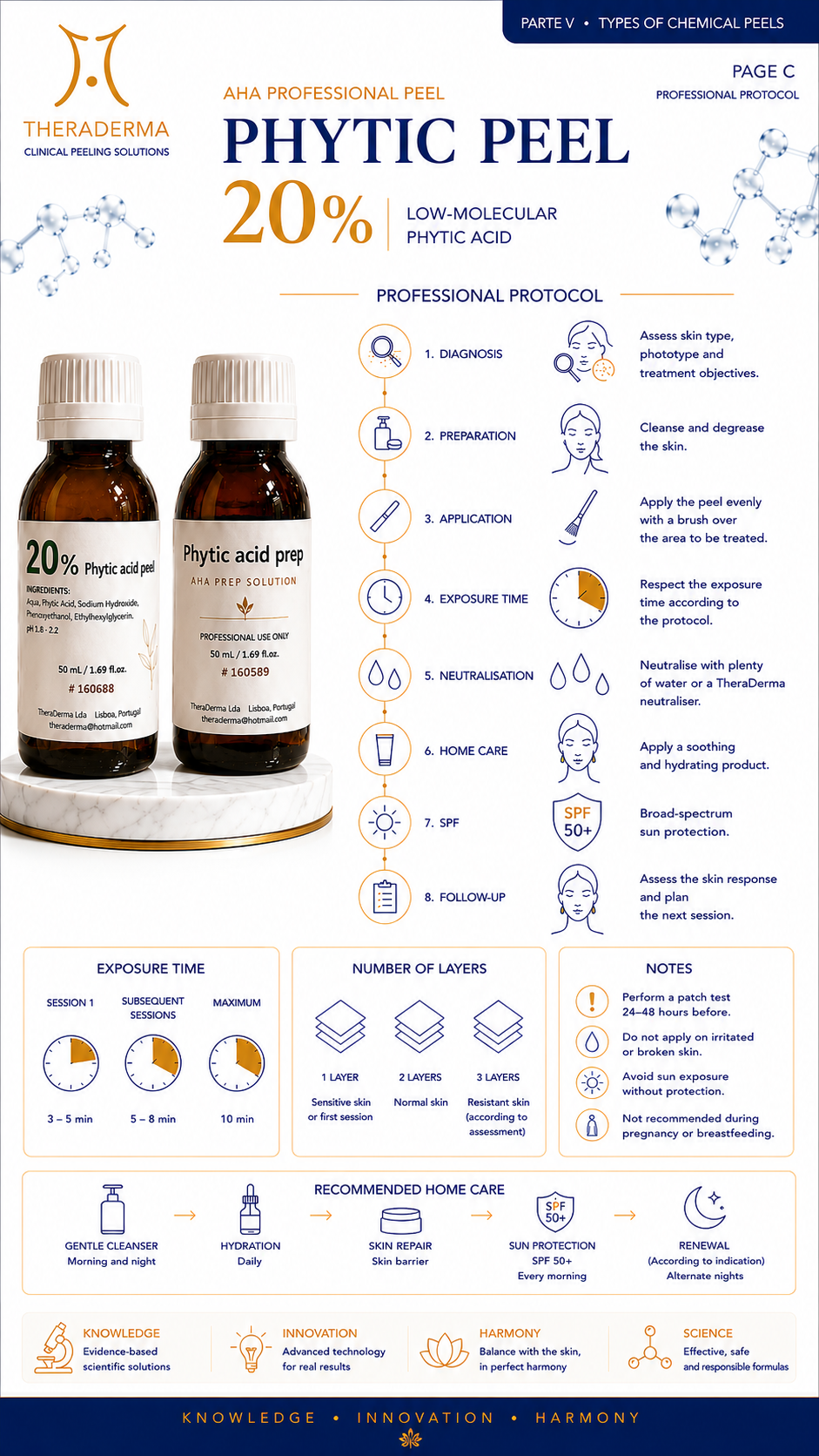
Apply a uniform layer of Phytic Peel 20% to the selected treatment area using smooth and even movements.
Application generally begins on areas of greater skin resistance, following an organised sequence that facilitates consistent control of the procedure.
Avoid contact with:
• mucous membranes;
• lips;
• eyelids;
• conjunctiva;
• open lesions;
• irritated areas.
________________________________________
Monitoring During the Procedure
Throughout the application, the professional should continuously observe the skin’s response.
It is recommended to monitor:
✔ the appearance of erythema;
✔ patient-reported sensations;
✔ uniformity of application;
✔ clinical tolerance;
✔ any signs of excessive irritation.
The exposure time should always be adapted to the established protocol and the professional’s clinical judgement.
________________________________________
Completion of the Procedure
The procedure should be completed in accordance with the professional protocol established for Phytic Peel 20%.
The recommended post-peel products should then be applied to promote the skin’s physiological recovery and optimise patient comfort.
________________________________________
Immediate Post-Treatment Care
Following the procedure, it is recommended to:
✔ avoid sun exposure;
✔ use broad-spectrum photoprotection;
✔ maintain adequate skin hydration;
✔ avoid potentially irritating products during the first few days;
✔ follow all professional recommendations.
Adherence to the home care programme is an essential part of the treatment.
________________________________________
Mistakes to Avoid
To maintain a high level of clinical safety, it is recommended to avoid:
✘ treating patients without a prior diagnosis;
✘ performing the procedure on irritated skin;
✘ ignoring contraindications;
✘ applying standardised protocols to every patient;
✘ failing to monitor the clinical response during the session;
✘ underestimating the importance of post-treatment photoprotection.
________________________________________
Integration Within the TherapDerma Clinical Ecosystem™
The application of Phytic Peel 20% reaches its full potential when it forms part of the TherapDerma Clinical Ecosystem™.
The treatment may be integrated into personalised programmes combining:
• individualised diagnosis;
• chemical peels;
• professional mesotherapy;
• skin biostimulation;
• medical-aesthetic technologies;
• home care;
• periodic clinical follow-up.
This approach makes it possible to develop more comprehensive, progressive and scientifically based treatments.
________________________________________
Summary of the Application Protocol
The professional application of Phytic Peel 20% can be summarised in the following clinical sequence:
1. Clinical assessment.
2. Patient selection.
3. Skin preparation.
4. Uniform application of the peel.
5. Continuous monitoring.
6. Completion of the procedure.
7. Post-peel care.
8. Clinical follow-up.
________________________________________
TherapDerma Conclusion
The professional application of Phytic Peel 20% should be understood as an individualised clinical procedure rather than a standardised technique.
The combination of appropriate patient selection, meticulous application, continuous monitoring and integration within the TherapDerma Clinical Ecosystem™ makes it possible to develop safer, more progressive treatments focused on optimising Skin Quality, while always respecting skin physiology and each patient’s individual needs.
Clinical Protocols
How to Integrate Phytic Peel 20% into Personalised Depigmentation and Skin Quality Optimisation Protocols
In modern aesthetic medicine, there are no universal treatment protocols.
Every patient presents different biological characteristics, clinical needs and therapeutic objectives, which is why treatment should always be individually designed.
Phytic Peel 20% TherapDerma has been developed to be incorporated into progressive treatment protocols, in which the selection of the peel represents only one component of a much broader therapeutic strategy.
The combination of clinical diagnosis, therapeutic planning and regular follow-up enables the development of safer, more predictable treatments focused on optimising Skin Quality.
________________________________________
Principles of TherapDerma Protocols
All clinical protocols should be based on five fundamental pillars:
✔ Individualised diagnosis.
✔ Patient selection.
✔ Personalised treatment.
✔ Clinical follow-up.
✔ Periodic reassessment.
The objective is not simply to treat a pigmented lesion, but to progressively improve the overall quality of the skin.
________________________________________
TherapDerma Clinical Algorithm
Treatment planning can be summarised in the following sequence:
Clinical Assessment
↓
Pigmentation Diagnosis
↓
Phototype Assessment
↓
Skin Barrier Function Assessment
↓
Protocol Selection
↓
Application of Phytic Peel 20%
↓
Home Care Treatment
↓
Clinical Follow-up
↓
Reassessment and Maintenance
________________________________________
Clinical Protocol 1
Epidermal Hyperpigmentation
Objective
To promote superficial skin renewal and progressively improve skin tone uniformity.
Ideal Candidate
Patients with correctly diagnosed predominantly epidermal pigmentation.
May Be Combined With
• depigmenting skincare;
• daily photoprotection;
• regular clinical follow-up.
Therapeutic Objectives
✔ improve the appearance of hyperpigmentation;
✔ promote greater skin tone uniformity;
✔ optimise Skin Quality.
________________________________________
Clinical Protocol 2
Epidermal Melasma
Objective
To integrate Phytic Peel 20% into a carefully planned multimodal treatment strategy.
Considerations
Melasma requires individualised protocols and continuous clinical follow-up.
Treatment should always be combined with:
• photoprotection;
• home care treatment;
• regular monitoring.
Therapeutic Objectives
✔ stabilise clinical progression;
✔ promote the progressive improvement of skin tone;
✔ minimise the risk of recurrence.
________________________________________
Clinical Protocol 3
Post-Inflammatory Hyperpigmentation (PIH)
Objective
To promote the progressive restoration of skin tone uniformity once the lesion has completely stabilised.
Before Starting
✔ confirm resolution of the inflammatory process;
✔ identify the origin of the pigmentation;
✔ assess the skin phototype.
Therapeutic Objectives
✔ progressively improve the appearance of pigmentation;
✔ preserve skin barrier function;
✔ minimise the risk of new pigmentary alterations.
________________________________________
Clinical Protocol 4
Solar Lentigines
Objective
To progressively improve the appearance of pigmentary changes associated with photoageing.
May Be Combined With
• skin rejuvenation programmes;
• antioxidant protocols;
• photoageing prevention strategies.
Therapeutic Objectives
✔ promote a more even skin tone;
✔ enhance skin radiance;
✔ optimise the skin’s visual quality.
________________________________________
Clinical Protocol 5
Depigmentation Maintenance
Once clinical stability has been achieved, Phytic Peel 20% may be incorporated into personalised maintenance programmes.
Objectives
✔ maintain the results achieved;
✔ promote pigmentary stability;
✔ preserve Skin Quality.
________________________________________
Integration with Other TherapDerma Solutions
Depending on the clinical diagnosis, the professional may integrate Phytic Peel 20% with other solutions within the TherapDerma Clinical Ecosystem™, including:
• professional mesotherapy;
• skin biostimulation;
• medical-aesthetic technologies;
• home care;
• maintenance programmes.
The combination of different therapeutic tools makes it possible to develop more comprehensive and personalised treatments.
________________________________________
Clinical Follow-up
Throughout the treatment programme, regular reassessments are recommended to evaluate:
✔ progression of pigmentation;
✔ skin tolerance;
✔ condition of the skin barrier function;
✔ treatment adherence;
✔ compliance with photoprotection.
Each session should be adapted according to the patient’s observed clinical progress.
________________________________________
Protocol Summary
Clinical Situation Can Phytic Peel 20% Be Incorporated?
Epidermal hyperpigmentation ✔ Yes
Epidermal melasma ✔ Yes, as part of a comprehensive protocol
Stabilised PIH ✔ Yes
Solar lentigines ✔ Yes
Depigmentation maintenance ✔ Yes
Skin Quality optimisation ✔ Yes
________________________________________
TherapDerma Philosophy
Treatment does not end when the session is over.
The progressive improvement of the skin depends on the integration of the professional procedure, home care treatment, clinical follow-up and the continuous adaptation of the protocol according to each patient’s individual clinical progress.
This philosophy forms the foundation of the TherapDerma Clinical Ecosystem™.
________________________________________
TherapDerma Conclusion
The clinical protocols for Phytic Peel 20% TherapDerma represent a personalised aesthetic medicine model based on clinical diagnosis, scientific evidence and individualised therapeutic planning.
Rather than simply applying a chemical peel, the objective is to develop comprehensive clinical strategies capable of progressively improving skin tone uniformity, enhancing radiance and optimising Skin Quality, while always respecting skin physiology and each patient’s individual needs.
TherapDerma™ Combinations
How to Integrate Phytic Peel 20% Within the TherapDerma Clinical Ecosystem™
Modern aesthetic medicine has evolved towards a therapeutic model based on the strategic combination of different treatments, in which each procedure acts on specific biological mechanisms.
Within this context, Phytic Peel 20% TherapDerma should not be regarded as a stand-alone treatment, but as a tool that can be integrated into the TherapDerma Clinical Ecosystem™, forming part of personalised protocols designed to progressively improve Skin Quality.
The selection of each combination should always depend on the clinical diagnosis, the patient’s biological characteristics and the therapeutic objectives established by the professional.
________________________________________
TherapDerma™ Combination Philosophy
Every treatment should be based on an individualised clinical strategy.
The objective is not simply to improve a pigmentary disorder, but to simultaneously address the different mechanisms involved in the overall quality of the skin.
TherapDerma™ combinations make it possible to develop treatments that are:
✔ more comprehensive;
✔ more personalised;
✔ progressive;
✔ scientifically based;
✔ respectful of skin physiology.
________________________________________
Therapeutic Integration Algorithm
Treatment planning may follow the following clinical sequence:
Clinical Diagnosis
↓
Phototype Assessment
↓
Skin Barrier Function Assessment
↓
Selection of Phytic Peel 20%
↓
Combination with Other TherapDerma Solutions
↓
Home Care Treatment
↓
Clinical Follow-up
↓
Maintenance Programme
________________________________________
Combination with TherapDerma Professional Mesotherapy
Following appropriate skin recovery and according to the professional’s clinical judgement, Phytic Peel 20% may be integrated into professional mesotherapy protocols.
Objectives
✔ enhance skin revitalisation;
✔ promote the optimisation of Skin Quality;
✔ complement skin rejuvenation protocols;
✔ personalise treatment according to the patient’s individual needs.
The selection of the mesotherapy solution should always be based on the clinical diagnosis.
________________________________________
Combination with Skin Biostimulation
When clinically indicated, Phytic Peel 20% may be incorporated into skin biostimulation protocols designed to improve the overall quality of the skin.
Objectives
✔ improve the skin’s visual quality;
✔ promote a more even-looking complexion;
✔ enhance skin radiance;
✔ complement progressive skin rejuvenation programmes.
Treatment planning should always respect the skin’s biological recovery time.
________________________________________
Combination with Medical-Aesthetic Technologies
Depending on the clinical diagnosis and therapeutic objective, the professional may integrate Phytic Peel 20% with different medical-aesthetic technologies.
These combinations should be planned on an individual basis, always respecting the appropriate intervals between procedures.
Possible Areas of Integration
• photorejuvenation technologies;
• radiofrequency;
• ultrasound;
• other compatible technologies according to professional judgement.
The order of application and therapeutic sequence should always be adapted to each individual patient.
________________________________________
Combination with Home Care
Professional treatment should be complemented by an appropriate home care programme.
The skincare products recommended by the professional may help to:
✔ maintain skin barrier function;
✔ promote skin hydration;
✔ improve skin tone uniformity;
✔ optimise clinical outcomes;
✔ prolong the results achieved.
Adherence to the home care programme is an essential factor in therapeutic success.
________________________________________
Photoprotection: A Fundamental Part of the Protocol
All protocols incorporating Phytic Peel 20% should include appropriate photoprotection.
Unprotected sun exposure may compromise clinical outcomes and increase the risk of new pigmentary alterations.
For this reason, the following is recommended:
✔ daily broad-spectrum photoprotection;
✔ reapplication according to the manufacturer’s recommendations;
✔ avoidance of intense sun exposure during treatment.
Photoprotection should be regarded as an integral part of the therapeutic protocol.
________________________________________
Clinical Follow-up Programme
TherapDerma™ combinations should be accompanied by periodic reassessment to evaluate:
✔ clinical progress;
✔ patient response;
✔ skin tolerance;
✔ condition of the skin barrier function;
✔ compliance with the home care programme;
✔ the need to adjust the treatment protocol.
Clinical follow-up allows treatment to be adapted according to each patient’s individual progress.
________________________________________
TherapDerma™ Combination Matrix
Clinical Objective Can It Be Combined with Phytic Peel 20%?
Professional mesotherapy ✔ Yes
Skin biostimulation ✔ Yes
Medical-aesthetic technologies ✔ According to clinical judgement
Home care ✔ Always recommended
Daily photoprotection ✔ Essential
Maintenance programmes ✔ Yes
________________________________________
Principles of TherapDerma™ Combinations
Every therapeutic combination should be based on:
✔ individualised diagnosis;
✔ rational selection of procedures;
✔ respect for the skin’s recovery time;
✔ regular clinical follow-up;
✔ continuous adaptation of the treatment protocol;
✔ patient safety.
________________________________________
TherapDerma Clinical Ecosystem™
The true potential of Phytic Peel 20% is achieved when it forms part of a structured therapeutic ecosystem.
Rather than simply combining treatments, the TherapDerma Clinical Ecosystem™ integrates different clinical tools to address multiple biological mechanisms related to Skin Quality, developing personalised, progressive programmes based on scientific evidence.
________________________________________
TherapDerma Conclusion
TherapDerma™ Combinations represent an advanced approach to personalised aesthetic medicine.
The integration of Phytic Peel 20% with professional mesotherapy, skin biostimulation, medical-aesthetic technologies, home care and clinical follow-up programmes makes it possible to develop more comprehensive, coherent and scientifically based treatment protocols.
Each combination should be individually designed, respecting skin physiology, clinical progression and each patient’s therapeutic objectives, with the aim of progressively optimising Skin Quality while delivering safe, natural and long-lasting results.
Frequently Asked Questions (FAQ)
Evidence-Based Answers for the Professional Use of Phytic Peel 20% TherapDerma
Providing accurate information to healthcare professionals is an essential component of evidence-based aesthetic medicine. The following questions address some of the most common queries regarding the clinical use of Phytic Peel 20% TherapDerma.
The answers are intended as general guidance and should always be interpreted within the individual clinical context of each patient.
________________________________________
1. What type of peel is Phytic Peel 20%?
Phytic Peel 20% is a superficial chemical peel for professional use only, formulated with Phytic Acid to promote epidermal renewal, contribute to the progressive improvement of skin tone uniformity, help protect against oxidative stress and optimise Skin Quality.
________________________________________
2. What is its primary indication?
It is primarily indicated for protocols targeting:
• epidermal hyperpigmentation;
• predominantly epidermal melasma;
• stabilised post-inflammatory hyperpigmentation;
• superficial solar lentigines;
• uneven skin tone;
• depigmentation maintenance programmes.
The final indication should always be based on the clinical diagnosis established by the professional.
________________________________________
3. Is it suitable for all skin phototypes?
It may be considered for different skin phototypes, provided that an individualised clinical assessment has been carried out.
In patients with higher skin phototypes, particular attention should be paid to the risk of post-inflammatory hyperpigmentation and to appropriate treatment planning.
________________________________________
4. How many treatment sessions are usually recommended?
The number of sessions will depend on:
• the clinical indication;
• the type of pigmentation disorder;
• the individual response;
• treatment progress;
• the therapeutic objectives.
The protocol should always be adapted to each individual patient.
________________________________________
5. Are the results immediate?
No.
Phytic Peel 20% works through progressive biological processes.
Epidermal renewal, improvement in skin tone uniformity and optimisation of Skin Quality develop gradually as the therapeutic protocol progresses.
________________________________________
6. Can it be used as a stand-alone treatment?
Depending on the diagnosis, yes.
However, in many clinical cases, the professional may achieve better results by integrating it into combination protocols alongside other solutions within the TherapDerma Clinical Ecosystem™.
________________________________________
7. Is photoprotection necessary?
Yes.
Photoprotection is an essential part of the treatment.
It is recommended to use a broad-spectrum sunscreen throughout the entire protocol and to follow the professional’s recommendations to minimise the risk of new pigmentary alterations.
________________________________________
8. Can it be combined with other aesthetic treatments?
Yes.
When considered clinically appropriate, Phytic Peel 20% may be integrated with:
• professional mesotherapy;
• skin biostimulation;
• medical-aesthetic technologies;
• home care.
Treatment planning should always respect the skin’s recovery time and the patient’s clinical progress.
________________________________________
9. What post-treatment care should the patient follow?
After each session, it is recommended to:
✔ use daily photoprotection;
✔ maintain adequate skin hydration;
✔ avoid potentially irritating products during the first few days;
✔ avoid intense sun exposure;
✔ follow all professional recommendations.
Compliance with these measures supports the proper progression of the treatment.
________________________________________
10. Can peeling occur?
Depending on the individual’s response and the protocol applied, some patients may experience temporary superficial peeling.
The intensity of this response may vary between patients and forms part of the physiological process of epidermal renewal.
________________________________________
11. When can results be expected?
Clinical improvement is progressive.
Changes are usually observed as the therapeutic protocol progresses and will depend on factors such as:
• the diagnosis;
• the origin of the pigmentation;
• the skin phototype;
• treatment adherence;
• photoprotection;
• home care.
________________________________________
12. Can it be used all year round?
Its indication will depend on the professional’s clinical judgement and the patient’s ability to maintain appropriate photoprotection.
During periods of high sun exposure, protective measures should be reinforced, and the suitability of treatment should be assessed on an individual basis.
________________________________________
13. What distinguishes Phytic Peel 20% from other chemical peels?
Its clinical profile combines:
✔ controlled superficial chemical exfoliation;
✔ antioxidant action;
✔ chelating capacity;
✔ progressive improvement in skin tone uniformity;
✔ integration into protocols designed to optimise Skin Quality.
This combination makes Phytic Peel 20% a particularly valuable tool within modern depigmentation and skin rejuvenation programmes.
________________________________________
14. Is a prior clinical diagnosis necessary?
Yes.
Every treatment should begin with a comprehensive clinical assessment.
The professional should evaluate:
• the type of pigmentation disorder;
• the skin phototype;
• skin barrier function;
• dermatological history;
• possible contraindications;
• therapeutic objectives.
Clinical diagnosis forms the foundation of every personalised treatment protocol.
________________________________________
15. Is it part of a broader treatment protocol?
Yes.
Phytic Peel 20% has been developed to integrate into the TherapDerma Clinical Ecosystem™, a clinical model that combines diagnosis, therapeutic planning, professional treatments, home care and clinical follow-up to progressively optimise Skin Quality.
________________________________________
Quick Summary
Question Answer
Is it a professional peel? ✔ Yes
Is it indicated for epidermal hyperpigmentation? ✔ Yes
Is a prior clinical diagnosis required? ✔ Always
Should it be combined with photoprotection? ✔ Essential
Can it be combined with other treatments? ✔ Yes
Are the results progressive? ✔ Yes
Is it part of the TherapDerma Clinical Ecosystem™? ✔ Yes
________________________________________
TherapDerma Conclusion
A thorough understanding of the indications, mechanism of action and clinical integration of Phytic Peel 20% enables professionals to develop treatments that are safer, more personalised and scientifically based.
At TherapDerma, we believe that every patient requires an individualised therapeutic strategy. For this reason, Phytic Peel 20% forms part of the TherapDerma Clinical Ecosystem™, an approach based on clinical diagnosis, therapeutic planning and professional follow-up, designed to progressively improve Skin Quality while always respecting skin physiology and the specific needs of each patient.
Related Content
Clinical Resources to Expand Knowledge of Phytic Peel 20% and the TherapDerma Clinical Ecosystem™
Modern aesthetic medicine requires continuous scientific updating and a comprehensive approach to treatment. A chemical peel represents only one component of the therapeutic approach. Its true potential is achieved when the professional understands how to integrate it into personalised protocols based on clinical diagnosis, therapeutic planning and patient follow-up.
This section brings together the main resources related to Phytic Peel 20% TherapDerma, providing access to complementary information to support and optimise clinical decision-making.
________________________________________
Related Clinical Documentation
It is recommended to complement the study of Phytic Peel 20% with the following TherapDerma technical documents:
✔ TherapDerma Clinical Peel Manual.
✔ Pigmentary Disorders Diagnostic Guide.
✔ TherapDerma Skin Quality Manual.
✔ Professional Photoprotection Guide.
✔ TherapDerma Professional Mesotherapy Manual.
✔ Skin Biostimulation Guide.
✔ TherapDerma Clinical Protocols.
✔ TherapDerma Clinical Ecosystem™.
Consulting these documents together enables the development of more structured and personalised treatment protocols.
________________________________________
Related TherapDerma Products
Depending on the clinical diagnosis and therapeutic objectives, Phytic Peel 20% may be integrated with other solutions from the TherapDerma professional portfolio.
These combinations may include:
• professional mesotherapy solutions;
• skin biostimulation products;
• home care products;
• professional photoprotection;
• maintenance treatments.
The selection of each product should always be based on professional judgement following an individualised clinical assessment.
________________________________________
Complementary Clinical Protocols
Professionals may expand their knowledge by consulting specific protocols for:
• epidermal hyperpigmentation;
• melasma;
• post-inflammatory hyperpigmentation (PIH);
• solar lentigines;
• photoageing;
• Skin Quality optimisation;
• maintenance programmes.
Each protocol provides strategies adapted to different clinical profiles.
________________________________________
Educational Resources
TherapDerma promotes the continuous education of professionals through resources focused on clinical practice.
These include:
✔ clinical guides;
✔ scientific manuals;
✔ therapeutic protocols;
✔ clinical decision algorithms;
✔ specialised training;
✔ continuous scientific updates.
The objective is to facilitate the delivery of safe, personalised treatments based on scientific evidence.
________________________________________
TherapDerma Clinical Ecosystem™
All related resources converge within a single clinical framework: the TherapDerma Clinical Ecosystem™.
This structured approach integrates:
• clinical diagnosis;
• chemical peels;
• professional mesotherapy;
• skin biostimulation;
• medical-aesthetic technologies;
• home care;
• photoprotection;
• clinical follow-up;
• maintenance programmes.
Each element forms part of a therapeutic strategy designed to progressively optimise Skin Quality.
________________________________________
Research and Scientific Updates
Aesthetic medicine is constantly evolving.
For this reason, TherapDerma recommends that professionals regularly update their knowledge by reviewing:
✔ scientific literature;
✔ specialist publications;
✔ clinical guidelines;
✔ international consensus documents;
✔ recommendations issued by scientific societies;
✔ continuing professional education programmes.
Continuous updating is an essential component of responsible clinical practice.
________________________________________
TherapDerma Learning Philosophy
At TherapDerma, we believe that clinical excellence depends not only on the quality of a product but also on the knowledge of the professional.
For this reason, we promote a learning model based on:
✔ scientific evidence;
✔ clinical reasoning;
✔ individualised diagnosis;
✔ therapeutic planning;
✔ patient follow-up;
✔ continuous improvement.
This philosophy supports the development of treatments that are safer, more consistent and focused on progressive clinical outcomes.
________________________________________
Summary of Related Resources
Resource Purpose
Clinical Peel Manual Understand the principles of chemical peels
Pigmentary Disorders Guide Support clinical diagnosis
Skin Quality Manual Optimise overall skin quality
Mesotherapy Manual Integrate combination treatments
Photoprotection Guide Help prevent recurrence
Clinical Protocols Personalise the therapeutic strategy
TherapDerma Clinical Ecosystem™ Integrate all treatments within a single clinical model
________________________________________
Continuing Education
The knowledge presented in this manual represents only one part of the learning process.
Clinical experience, continuous evaluation of treatment outcomes and ongoing scientific updates enable professionals to progressively refine their clinical practice and optimise patient care.
________________________________________
TherapDerma Conclusion
The true value of Phytic Peel 20% TherapDerma lies not only in its formulation but also in its ability to integrate into a comprehensive clinical strategy.
Through scientific resources, therapeutic protocols and the TherapDerma Clinical Ecosystem™, professionals have access to a clinical framework based on diagnosis, scientific evidence and personalised treatment planning.
This approach enables the development of programmes designed to progressively optimise Skin Quality, delivering treatments that are safer, more consistent and tailored to the individual needs of each patient.
TherapDerma Professional Academy™
Scientific Education for Professionals Pursuing Clinical Excellence
The evolution of aesthetic medicine demands increasingly skilled professionals who are capable of integrating scientific knowledge with clinical experience and the personalisation of every treatment.
The TherapDerma Professional Academy™ was established with the objective of providing continuous education based on scientific evidence, clinical reasoning and the practical application of modern therapeutic protocols.
More than simply teaching the use of a product, the Academy trains professionals to understand skin biology, perform accurate clinical diagnoses and design personalised treatment plans focused on optimising Skin Quality.
________________________________________
Our Educational Philosophy
At TherapDerma, we believe that clinical success begins with knowledge.
For this reason, all of our educational programmes are built upon five fundamental pillars:
✔ scientific evidence;
✔ clinical diagnosis;
✔ therapeutic planning;
✔ professional practice;
✔ continuous professional development.
Our objective is to provide professionals with the tools required to make clinical decisions with greater confidence, sound judgement and assurance.
________________________________________
What Will You Learn?
The TherapDerma Professional Academy™ offers comprehensive education covering every stage of professional aesthetic treatment.
Course content includes:
• skin biology and physiology;
• clinical diagnosis;
• pigmentary disorders;
• Skin Quality;
• professional chemical peels;
• professional mesotherapy;
• skin biostimulation;
• medical-aesthetic technologies;
• therapeutic planning;
• clinical follow-up;
• combination treatment protocols;
• prevention and management of complications;
• clinical photography and case documentation.
Each module has been designed to facilitate practical application in everyday clinical practice.
________________________________________
Learning Methodology
The training combines scientific knowledge with a strongly clinical approach.
Programmes may include:
✔ theoretical lectures;
✔ clinical demonstrations;
✔ practical workshops;
✔ clinical case analysis;
✔ therapeutic decision-making algorithms;
✔ step-by-step treatment protocols;
✔ question-and-answer sessions.
The learning experience is focused on professional practice and evidence-based clinical decision-making.
________________________________________
Areas of Education
The Academy offers specialised programmes in:
Chemical Peels
• scientific principles;
• peel selection;
• indications and contraindications;
• personalised treatment protocols.
Skin Quality
• clinical assessment;
• skin quality parameters;
• optimisation strategies.
Professional Mesotherapy
• solution selection;
• therapeutic integration;
• protocol planning.
Skin Biostimulation
• biological principles;
• clinical indications;
• combination with other treatments.
Medical-Aesthetic Technologies
• selection criteria;
• integration with TherapDerma protocols;
• optimisation of treatment outcomes.
________________________________________
Case-Based Learning
Clinical experience is an essential part of the educational process.
Throughout the training programmes, real clinical cases are analysed to understand:
✔ the diagnostic process;
✔ treatment selection;
✔ clinical progression;
✔ protocol adaptation;
✔ patient follow-up;
✔ outcome evaluation.
The objective is to translate scientific knowledge into real-life clinical practice.
________________________________________
TherapDerma Clinical Ecosystem™
All education provided by the TherapDerma Professional Academy™ is based on the TherapDerma Clinical Ecosystem™ model.
This approach integrates:
• individualised diagnosis;
• therapeutic planning;
• professional treatments;
• mesotherapy;
• chemical peels;
• skin biostimulation;
• medical-aesthetic technologies;
• home care;
• clinical follow-up;
• maintenance programmes.
In this way, professionals learn to develop comprehensive treatment protocols rather than isolated procedures.
________________________________________
Continuous Scientific Development
Aesthetic medicine is constantly evolving.
For this reason, the Academy promotes continuous professional development through:
✔ new clinical protocols;
✔ scientific reviews;
✔ specialist seminars;
✔ practical workshops;
✔ advanced training programmes;
✔ updates to clinical consensus guidelines.
Continuous education enables professionals to maintain clinical practice aligned with the latest scientific advances.
________________________________________
Who Is It For?
The TherapDerma Professional Academy™ is intended for aesthetic medicine and healthcare professionals wishing to expand their knowledge and refine their clinical practice.
The programmes are particularly designed for:
• aesthetic physicians;
• dermatologists;
• plastic surgeons;
• healthcare professionals authorised to perform medical-aesthetic procedures;
• clinics specialising in aesthetic medicine.
Participation should always comply with the regulations applicable in each country.
________________________________________
Benefits of Training with TherapDerma
✔ Education based on scientific evidence.
✔ A practical, clinically focused approach.
✔ Personalised treatment protocols.
✔ Integration of multiple treatment modalities.
✔ Development of clinical reasoning.
✔ Continuous professional development.
✔ A comprehensive understanding of Skin Quality.
✔ Application of the TherapDerma Clinical Ecosystem™.
________________________________________
Our Commitment
The mission of the TherapDerma Professional Academy™ is to contribute to the development of professionals capable of delivering treatments that are safer, more personalised and scientifically based.
We believe that clinical excellence is achieved when knowledge, experience and innovation work together to improve patient care.
________________________________________
TherapDerma Conclusion
The TherapDerma Professional Academy™ reflects TherapDerma’s commitment to scientific education, innovation and clinical excellence.
Through structured educational programmes, evidence-based protocols and a methodology centred on clinical reasoning, the Academy provides professionals with the knowledge and skills required to integrate the TherapDerma Clinical Ecosystem™ into their daily clinical practice.
Our objective is to train professionals capable of designing personalised, safe and progressive treatment protocols, contributing to the optimisation of Skin Quality while delivering aesthetic medicine of the highest scientific and clinical standards.
TherapDerma Clinical Decision System™
A Clinical Decision-Making Model for Selecting the Most Appropriate Treatment According to the Diagnosis, Skin Biology and Therapeutic Objectives
Modern aesthetic medicine has evolved from a procedure-centred model to an approach based on diagnosis and personalised treatment planning.
At TherapDerma, we understand that no chemical peel represents a universal solution. Every patient presents unique biological characteristics that require an individualised assessment before any therapeutic protocol is established.
The TherapDerma Clinical Decision System™ (TCDS™) has been developed as a clinical decision-support methodology, helping professionals integrate all the information gathered during the patient assessment in order to select the most appropriate therapeutic strategy.
Its purpose is not to replace clinical judgement, but to provide a logical, structured and evidence-based framework that facilitates personalised therapeutic planning.
________________________________________
TherapDerma Clinical Decision System™ Philosophy
The success of a treatment does not depend solely on the product used.
It depends on the correct interpretation of multiple clinical factors that must be assessed together.
The TherapDerma Clinical Decision System™ is based on five fundamental principles:
✔ individualised diagnosis;
✔ clinical reasoning;
✔ personalised therapeutic planning;
✔ ongoing clinical follow-up;
✔ progressive optimisation of Skin Quality.
________________________________________
General Clinical Decision Algorithm
Every therapeutic decision should follow a structured sequence:
Clinical Assessment
↓
Primary Diagnosis
↓
Identification of the Condition
↓
Skin Phototype Assessment
↓
Skin Barrier Function Assessment
↓
Identification of Contraindications
↓
Definition of Therapeutic Objectives
↓
Selection of the TherapDerma Protocol
↓
Clinical Follow-up
↓
Reassessment and Treatment Adjustment
Each stage influences the next, enabling the development of safer and more personalised treatment protocols.
________________________________________
Step 1 — Comprehensive Clinical Assessment
Before selecting any treatment, the professional should carry out a comprehensive assessment that includes:
✔ medical history;
✔ dermatological history;
✔ previous treatments;
✔ current medication;
✔ sun exposure habits;
✔ skincare routine;
✔ patient expectations.
Comprehensive clinical information forms the foundation of sound clinical decision-making.
________________________________________
Step 2 — Clinical Diagnosis
Diagnosis represents the starting point of every treatment protocol.
The professional should determine:
• the type of skin condition;
• the origin of the problem;
• the estimated depth of the lesion;
• the clinical stability of the condition;
• the expected progression.
Treatment should never be selected solely on the visual appearance of the lesion.
________________________________________
Step 3 — Biological Skin Assessment
The assessment should consider factors such as:
✔ condition of the skin barrier function;
✔ level of skin sensitivity;
✔ hydration;
✔ signs of photoageing;
✔ skin tone uniformity;
✔ overall skin quality.
This information enables both the treatment intensity and therapeutic strategy to be tailored appropriately.
________________________________________
Step 4 — Defining the Therapeutic Objectives
Every patient may present different treatment goals.
Among the most common are:
• improving skin tone uniformity;
• optimising Skin Quality;
• enhancing skin radiance;
• supporting depigmentation protocols;
• maintaining previously achieved results;
• preventing the progression of photoageing.
Therapeutic objectives should always be defined before treatment begins.
________________________________________
Step 5 — Treatment Selection
Once the clinical assessment has been completed, the professional can determine whether Phytic Peel 20% TherapDerma represents the most appropriate treatment option.
The decision should take into account:
✔ indications;
✔ contraindications;
✔ expected benefits;
✔ patient profile;
✔ integration with other procedures.
Treatment selection should always be based on objective clinical criteria.
________________________________________
Step 6 — Therapeutic Integration
Where clinically indicated, Phytic Peel 20% may be integrated with other solutions within the TherapDerma Clinical Ecosystem™, including:
• professional mesotherapy;
• skin biostimulation;
• medical-aesthetic technologies;
• home care;
• maintenance programmes.
The combination of different therapeutic tools makes it possible to address multiple biological mechanisms related to skin quality.
________________________________________
Step 7 — Clinical Follow-up
Every treatment protocol should include periodic assessments to evaluate:
✔ clinical progress;
✔ patient response;
✔ skin tolerance;
✔ treatment adherence;
✔ compliance with photoprotection;
✔ the need to modify the treatment protocol.
Modern aesthetic medicine should be regarded as a dynamic process rather than an isolated treatment.
________________________________________
Clinical Decision Matrix
Clinical Question Recommended Action
Has a clinical diagnosis been established? Continue with the assessment
Is the condition suitable for a superficial chemical peel? Consider Phytic Peel 20%
Is the skin barrier function intact? Continue with the treatment protocol
Are there any contraindications? Reconsider or postpone treatment
Does the patient understand the treatment and aftercare requirements? Initiate the treatment protocol
Is the clinical progress satisfactory? Continue or adapt the therapeutic plan
________________________________________
Integration with the TherapDerma Clinical Ecosystem™
The TherapDerma Clinical Decision System™ is the strategic core of the TherapDerma Clinical Ecosystem™.
The two models work in a complementary manner:
Clinical Decision System™
→ helps determine which treatment should be selected.
Clinical Ecosystem™
→ establishes how that treatment should be integrated into a comprehensive therapeutic protocol.
This integration enables the delivery of a more structured, personalised and evidence-based approach to aesthetic medicine.
________________________________________
Benefits of the TherapDerma Clinical Decision System™
✔ Promotes more objective clinical decision-making.
✔ Encourages personalised treatment protocols.
✔ Reduces the use of standardised treatment approaches.
✔ Facilitates the integration of different therapies.
✔ Reinforces clinical safety.
✔ Improves therapeutic planning.
✔ Contributes to the progressive optimisation of Skin Quality.
________________________________________
TherapDerma Philosophy
At TherapDerma, we believe that true clinical success depends not on performing more treatments, but on making better clinical decisions.
Every patient requires an individual assessment, a personalised therapeutic strategy and continuous follow-up to ensure that the treatment protocol evolves according to the biological progression of their skin.
The TherapDerma Clinical Decision System™ reflects this philosophy by providing a clinical framework that combines science, clinical reasoning and personalisation to deliver safer, more consistent and more effective aesthetic medicine.
________________________________________
TherapDerma Conclusion
The TherapDerma Clinical Decision System™ represents the culmination of the clinical model developed by TherapDerma.
Based on individualised diagnosis, biological skin assessment, rational treatment selection and integration within the TherapDerma Clinical Ecosystem™, this system helps professionals develop personalised, progressive and scientifically based treatment protocols.
More than simply a decision-making tool, it represents a clinical philosophy focused on optimising Skin Quality, while always respecting skin physiology, scientific evidence and the individual needs of every patient.


 +1 (786) 546-8347 (Office)