Description
Lactic Peel 40%
Advanced epidermal renewal and intensive hydration to progressively improve skin quality
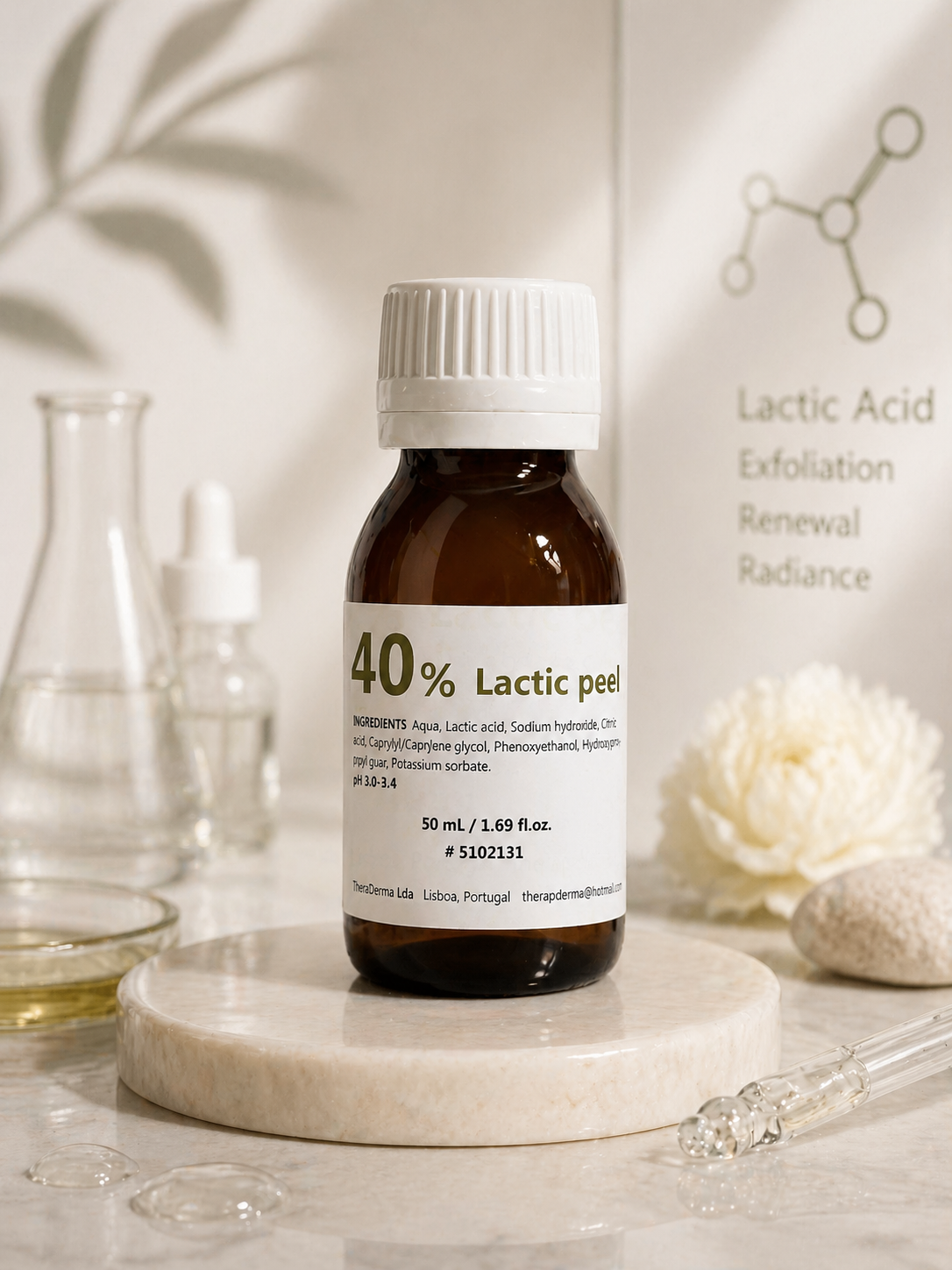
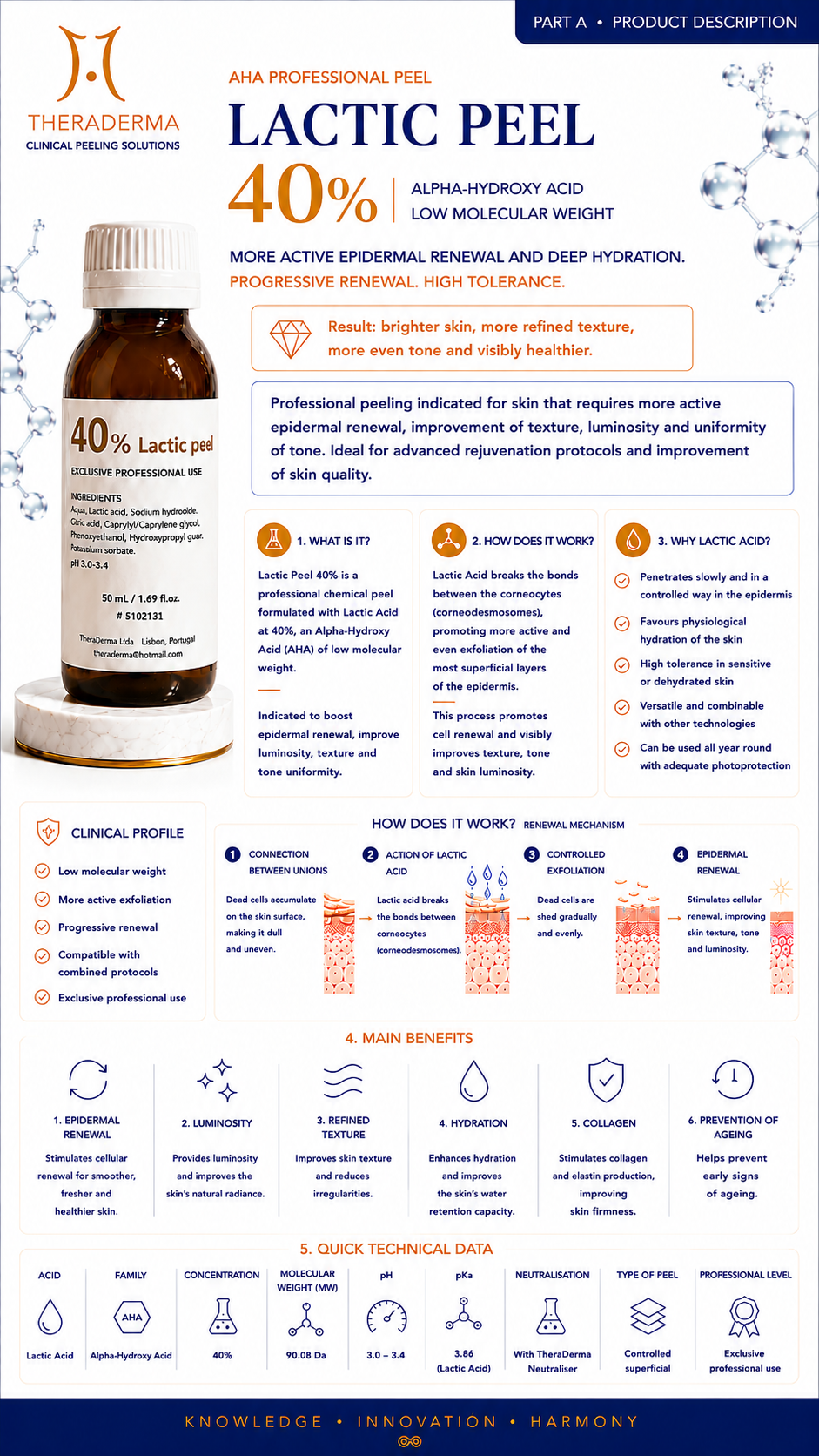
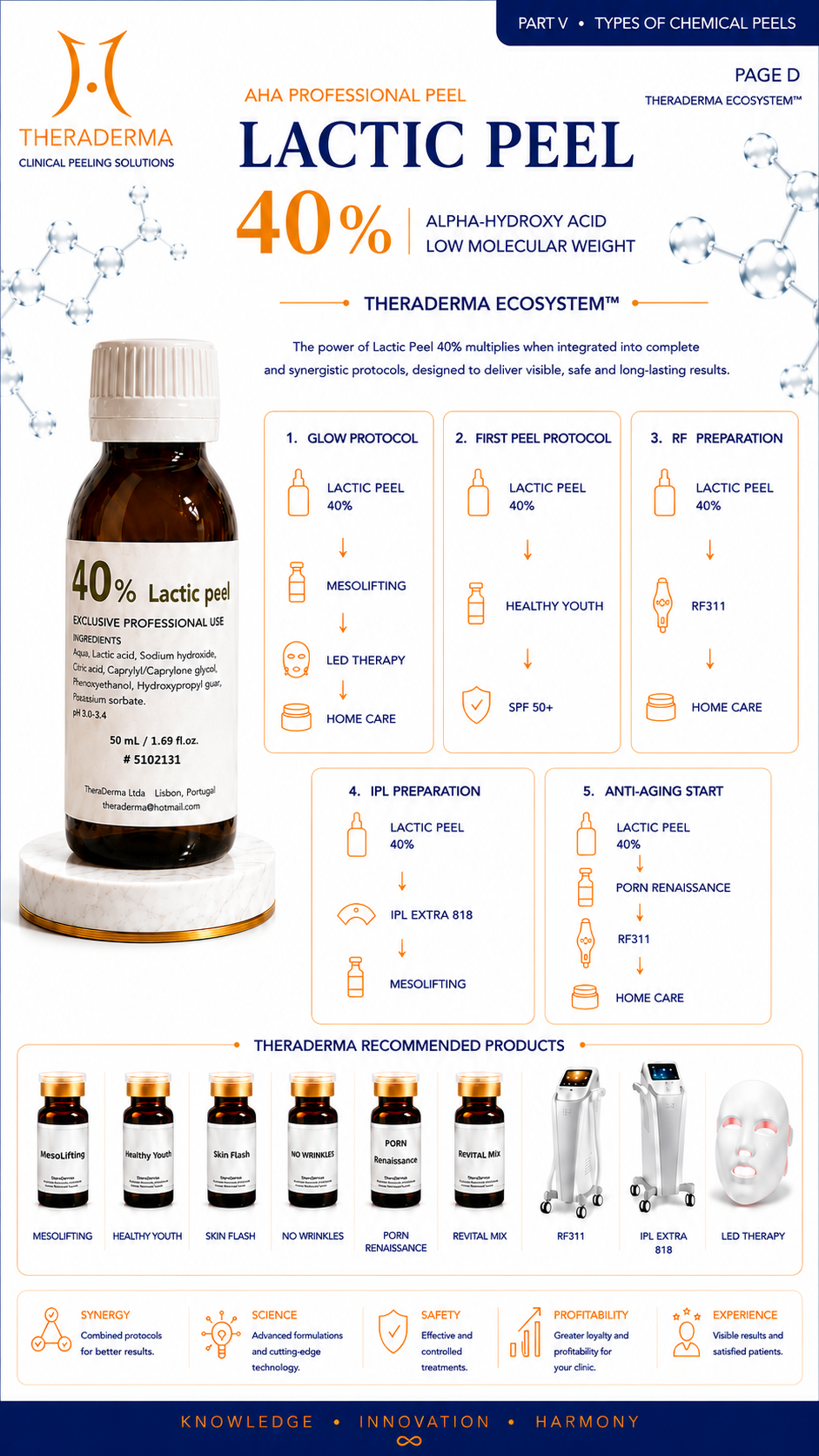
TherapDerma Lactic Peel 40% is a professional chemical peel formulated with 40% Lactic Acid, belonging to the Alpha Hydroxy Acid (AHA) family, developed to provide more intensive superficial epidermal renewal whilst maintaining the excellent skin tolerance characteristic of Lactic Acid.
Within the TherapDerma professional range, this concentration represents the next step in progressive Lactic Acid protocols, offering greater cell renewal capacity without compromising the balance between efficacy, safety and patient comfort.
Thanks to its higher concentration, it promotes a more active exfoliation of the superficial layers of the epidermis, helping to improve skin texture, tone uniformity, radiance and overall skin quality, whilst contributing to the maintenance of optimal skin hydration.
Like all TherapDerma peels, Lactic Peel 40% forms part of the TherapDerma Clinical Ecosystem™, a clinical model based on professional diagnosis, personalised treatment protocols and the intelligent combination of chemical peels, mesotherapy, medical-aesthetic technologies and home care cosmetics to achieve natural, reproducible and progressive results.
What makes Lactic Peel 40% different?
Not all patients require the same level of skin renewal.
When the skin has already developed good tolerance to Lactic Acid or presents more evident alterations in texture, radiance or early photoageing, a higher concentration allows treatment efficacy to be increased whilst maintaining an excellent safety profile.
Lactic Peel 40% has been developed for professionals wishing to enhance epidermal renewal progressively, providing more intensive exfoliation than Lactic Peel 30% without resorting to more aggressive chemical peels.
Its gradual mode of action respects skin physiology whilst progressively improving epidermal quality, facilitating the planning of personalised and cumulative rejuvenation protocols.
This combination of greater exfoliating capacity, physiological hydration and excellent tolerance makes Lactic Peel 40% an especially versatile solution for clinics and professionals seeking visible results whilst maintaining a high level of patient comfort.
________________________________________
What is Lactic Acid?
Lactic Acid is one of the most widely used Alpha Hydroxy Acids (AHAs) in aesthetic medicine due to its ability to combine epidermal renewal and skin hydration within a single treatment.
It forms part of the skin’s Natural Moisturising Factor (NMF), helping to maintain the moisture balance of the stratum corneum whilst promoting the progressive removal of aged corneocytes.
Its higher molecular weight, compared with other AHAs such as Glycolic Acid, allows slower and more controlled penetration, providing a more predictable, even and comfortable exfoliation. This characteristic makes Lactic Acid an excellent alternative for patients requiring effective skin renewal with a lower risk of irritation.
In addition to promoting superficial renewal, it helps improve skin hydration, flexibility and radiance, providing a more even, healthier and revitalised appearance.
________________________________________
When should Lactic Peel 40% be selected?
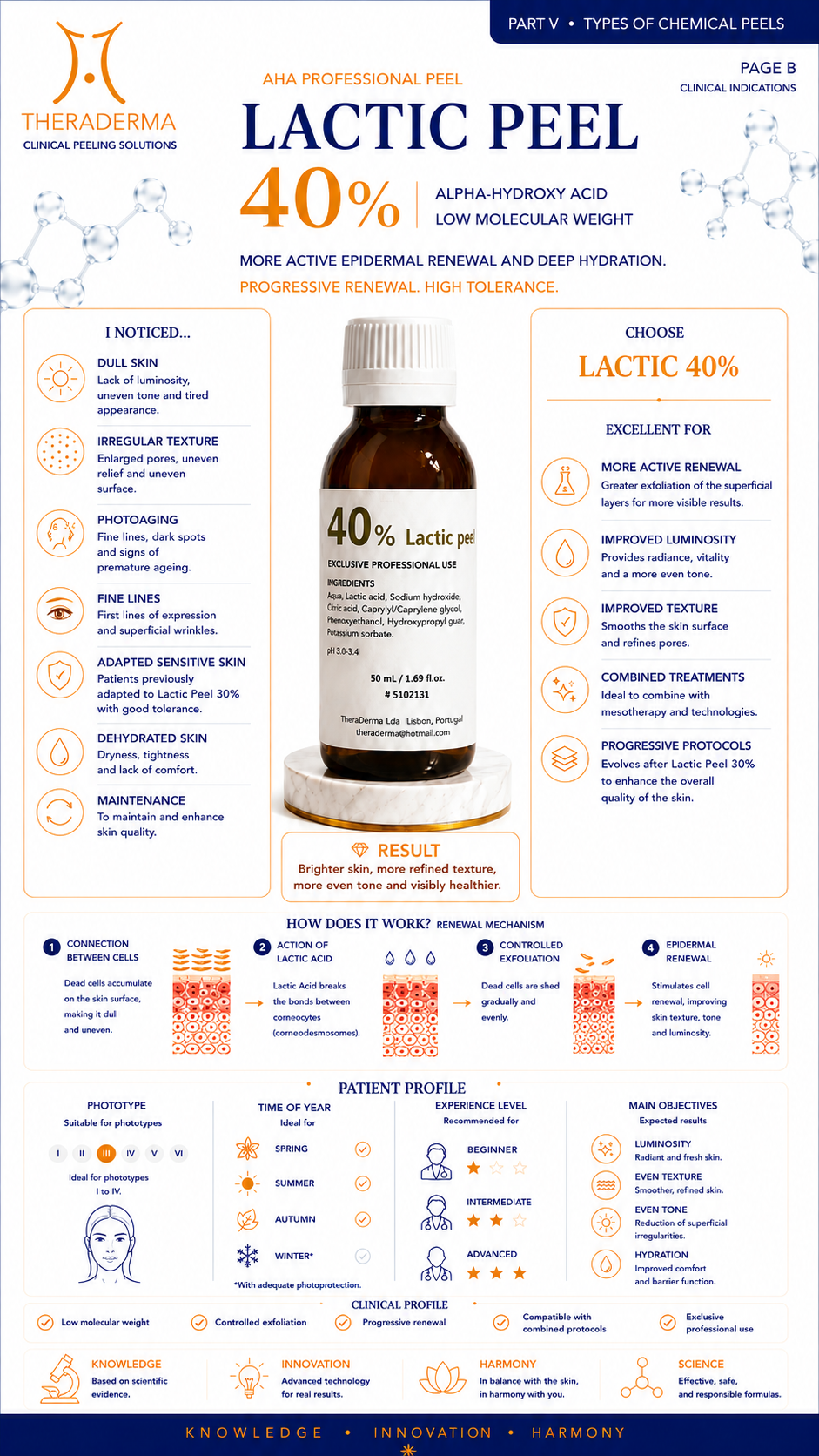
Lactic Peel 40% is particularly indicated when professional diagnosis determines the need for more active epidermal renewal whilst maintaining the progressive exfoliation philosophy characteristic of Lactic Acid.
It may be incorporated into protocols for patients presenting:
• early or moderate photoageing;
• noticeable loss of radiance;
• uneven skin texture;
• uneven skin tone;
• superficial hyperpigmentation;
• dry skin with visible signs of ageing;
• superficial fine lines;
• patients previously adapted to Lactic Peel 30%;
• advanced progressive rejuvenation programmes;
• combined hydration, glow and skin renewal protocols.
As with any professional chemical peel, treatment selection should always be based on an individual clinical assessment.
________________________________________
Position within the TherapDerma Clinical Ladder™
At TherapDerma, we believe that the concentration of a chemical peel does not represent a “better” treatment, but rather a tool for adapting the protocol to each patient’s individual needs.
Within the TherapDerma Clinical Ladder™, Lactic Peel 40% represents the second level of Lactic Acid renewal and is intended for patients requiring more intensive exfoliation, greater improvement in skin texture and a progressive rejuvenation protocol.
Its use allows the clinical progression initiated with lower concentrations to continue whenever the biological response and skin tolerance justify a gradual increase in treatment intensity.
This stepwise approach facilitates safer, more personalised protocols that are scientifically consistent with skin physiology.
________________________________________
TherapDerma Philosophy
At TherapDerma, we believe that the best results are not achieved by using increasingly aggressive treatments, but by selecting the appropriate concentration at the right stage of the patient’s clinical progression.
Lactic Peel 40% has been developed to provide more intensive epidermal renewal without compromising comfort, hydration or respect for the skin barrier function.
Integrated within the TherapDerma Clinical Ecosystem™, it allows chemical peels, mesotherapy, medical-aesthetic technologies and home care cosmetics to be combined in order to develop personalised, reproducible protocols aimed at achieving natural, cumulative and sustainable results.
________________________________________
TherapDerma Conclusion
Lactic Peel 40% represents the natural evolution of professional Lactic Acid protocols for patients requiring more active epidermal renewal whilst maintaining excellent skin tolerance.
Its combination of advanced superficial exfoliation, physiological hydration and a high level of safety progressively improves skin texture, radiance and tone uniformity, expanding the therapeutic possibilities available to professionals within an approach to aesthetic medicine based on diagnosis, personalisation and clinical progression.
Integrated within the TherapDerma Clinical Ecosystem™, Lactic Peel 40% forms part of a scientific strategy designed to achieve visible, progressive and sustainable results through protocols tailored to the genuine needs of each patient.
Beneficios Clínicos
Renovación epidérmica más intensa e hidratación fisiológica para mejorar progresivamente la calidad cutánea
El Lactic Peel 40% TherapDerma ha sido desarrollado para profesionales que desean obtener una renovación epidérmica más activa manteniendo el excelente perfil de tolerancia característico del Ácido Láctico.
Gracias a su mayor concentración, este peeling favorece una exfoliación superficial más eficaz, facilitando la eliminación progresiva de las células córneas envejecidas mientras preserva el equilibrio fisiológico de la piel y contribuye al mantenimiento de su hidratación natural.
Cuando se integra dentro de un protocolo profesional personalizado, sus beneficios evolucionan sesión tras sesión, respetando los procesos biológicos de renovación cutánea y permitiendo obtener resultados visibles, naturales y acumulativos.
________________________________________
✨ Renovación epidérmica más intensa
¿Qué aporta clínicamente?
La mayor concentración de Ácido Láctico favorece una exfoliación superficial más activa que ayuda a acelerar el proceso fisiológico de renovación epidérmica.
Esta acción permite mejorar de forma progresiva la calidad superficial de la piel, eliminando con mayor eficacia las células córneas envejecidas responsables del aspecto apagado, irregular o áspero.
La renovación continúa siendo gradual y controlada, respetando la fisiología cutánea y evitando una agresión innecesaria sobre la epidermis.
Beneficios clínicos
✔ Favorece una renovación epidérmica más eficaz.
✔ Contribuye a mejorar la textura superficial.
✔ Ayuda a obtener una piel más uniforme.
✔ Facilita protocolos progresivos de rejuvenecimiento.
________________________________________
💧 Hidratación fisiológica de la epidermis
¿Qué aporta clínicamente?
A diferencia de otros Alfa Hidroxiácidos, el Ácido Láctico forma parte del Natural Moisturizing Factor (NMF), ayudando a conservar el equilibrio hídrico de la capa córnea incluso durante los procesos de exfoliación.
Esta propiedad convierte al Lactic Peel 40% en un peeling especialmente interesante para protocolos donde se busca una renovación más intensa sin comprometer el confort cutáneo.
Beneficios clínicos
✔ Favorece la retención fisiológica de agua.
✔ Contribuye a reducir la sensación de sequedad.
✔ Mejora la elasticidad superficial.
✔ Favorece una piel más confortable.
________________________________________
🌟 Mayor luminosidad y efecto Glow
¿Qué aporta clínicamente?
La eliminación progresiva de las células superficiales envejecidas favorece una reflexión más uniforme de la luz sobre la piel, proporcionando un aspecto más luminoso, saludable y revitalizado.
La mejora simultánea de la hidratación y de la textura potencia un efecto Glow natural que continúa evolucionando conforme avanzan las sesiones.
Beneficios clínicos
✔ Incrementa la luminosidad cutánea.
✔ Favorece un aspecto más fresco.
✔ Potencia el Glow natural.
✔ Mejora la calidad visual de la piel.
________________________________________
🎯 Uniformidad del tono cutáneo
¿Qué aporta clínicamente?
La exfoliación controlada ayuda a disminuir progresivamente las irregularidades superficiales del tono, favoreciendo una apariencia más homogénea.
Según la información técnica del fabricante, el Ácido Láctico al 40% puede incorporarse en protocolos dirigidos a mejorar la apariencia de hiperpigmentaciones superficiales, manchas relacionadas con la edad y alteraciones del tono cutáneo.
Beneficios clínicos
✔ Favorece un tono más uniforme.
✔ Contribuye a mejorar el aspecto de las manchas superficiales.
✔ Ayuda a recuperar la luminosidad natural.
✔ Favorece una piel visualmente más equilibrada.
________________________________________
🌸 Refinamiento de la textura cutánea
¿Qué aporta clínicamente?
La renovación más activa promovida por Lactic Peel 40% permite reorganizar progresivamente la superficie epidérmica, proporcionando una piel más lisa, suave y uniforme.
Esta mejora resulta especialmente interesante en pacientes que presentan textura irregular, poros visibles o signos iniciales de fotoenvejecimiento.
Beneficios clínicos
✔ Textura más refinada.
✔ Superficie más uniforme.
✔ Menor aspereza cutánea.
✔ Aspecto más rejuvenecido.
________________________________________
🌿 Mejora del confort cutáneo
¿Qué aporta clínicamente?
A pesar de su mayor capacidad exfoliante, el comportamiento gradual del Ácido Láctico permite mantener un elevado nivel de confort durante el tratamiento.
Su penetración progresiva reduce la probabilidad de irritaciones intensas, permitiendo desarrollar protocolos eficaces con una excelente aceptación por parte del paciente.
Beneficios clínicos
✔ Excelente tolerancia.
✔ Mayor confort durante el tratamiento.
✔ Recuperación rápida.
✔ Adecuado para protocolos progresivos.
________________________________________
🛡️ Respeto por la función barrera
¿Qué aporta clínicamente?
La filosofía TherapDerma prioriza siempre la renovación progresiva frente a la agresión cutánea.
Por ello, incluso con una concentración superior, Lactic Peel 40% ha sido concebido para respetar la función barrera, favoreciendo una adecuada recuperación entre sesiones y permitiendo planificar tratamientos personalizados con un amplio margen de seguridad.
Beneficios clínicos
✔ Preserva el equilibrio fisiológico.
✔ Favorece la recuperación epidérmica.
✔ Excelente perfil de seguridad.
✔ Ideal para protocolos escalonados.
________________________________________
📈 Resultados progresivos y acumulativos
Los beneficios del Lactic Peel 40% no dependen de una única sesión.
La renovación epidérmica constituye un proceso biológico continuo y acumulativo, por lo que las mejoras más evidentes aparecen conforme avanza el protocolo y se respetan los intervalos adecuados entre sesiones.
Según las recomendaciones del fabricante, los mejores resultados suelen obtenerse mediante protocolos de 4 a 6 sesiones, espaciadas aproximadamente cada quince días, combinadas con hidratación adecuada y fotoprotección diaria para optimizar la calidad de la piel y prolongar los resultados.
________________________________________
RESUMEN CLÍNICO
Principales beneficios de Lactic Peel 40%
✔ Renovación epidérmica más intensa.
✔ Hidratación fisiológica de la epidermis.
✔ Incremento de la luminosidad natural.
✔ Uniformidad progresiva del tono cutáneo.
✔ Refinamiento avanzado de la textura.
✔ Mejora del confort durante el tratamiento.
✔ Respeto por la función barrera.
✔ Resultados progresivos y acumulativos.
________________________________________
CONCLUSIÓN CLÍNICA THERAPDERMA
El verdadero valor del Lactic Peel 40% reside en su capacidad para ofrecer una renovación epidérmica más activa manteniendo una excelente tolerancia cutánea, característica diferencial del Ácido Láctico.
Integrado dentro de protocolos personalizados, permite mejorar progresivamente la textura, la luminosidad, la uniformidad del tono y la calidad global de la piel, ampliando las posibilidades terapéuticas del profesional mediante un enfoque basado en el diagnóstico, la personalización y la evolución clínica.
Dentro del TherapDerma Clinical Ecosystem™, Lactic Peel 40% representa el siguiente nivel en los protocolos con Ácido Láctico, proporcionando una herramienta científica para desarrollar tratamientos seguros, reproducibles y orientados a resultados naturales y sostenibles.
Why Choose Lactic Peel 40%?
The natural evolution of progressive Lactic Acid protocols
In professional aesthetic medicine, the concentration of a chemical peel should not be regarded as an indicator of greater aggressiveness, but rather as a clinical tool that enables treatment intensity to be adapted to the genuine needs of each patient.
Lactic Peel 40% has been developed for professionals who wish to provide more intensive epidermal renewal whilst maintaining the excellent tolerance characteristic of Lactic Acid.
Its formulation combines more active superficial exfoliation with significant hydrating action, promoting progressive improvement in skin texture, radiance and tone uniformity without compromising skin comfort.
Rather than simply increasing treatment intensity, Lactic Peel 40% allows the clinical progression initiated with lower concentrations to continue, creating personalised, progressive and scientifically based treatment protocols.
________________________________________
WHEN IS IT THE BEST CHOICE?
Lactic Peel 40% is particularly suitable when professional diagnosis determines the need to increase the level of epidermal renewal whilst maintaining a high safety profile.
It may be considered an excellent option in situations such as:
✔ patients previously adapted to Lactic Acid;
✔ early or moderate photoageing;
✔ noticeable loss of radiance;
✔ uneven skin texture;
✔ superficial hyperpigmentation;
✔ age-related pigmentation;
✔ uneven skin tone;
✔ superficial fine lines;
✔ professional progressive rejuvenation protocols;
✔ combined hydration and skin renewal programmes.
As with any professional chemical peel, treatment selection should always be based on an individual clinical assessment, taking into account the functional condition of the skin, skin barrier function and the established therapeutic objectives.
________________________________________
WHO HAS IT BEEN DESIGNED FOR?
Lactic Peel 40% has been developed for professionals who understand that high-quality aesthetic medicine is based on diagnosis, therapeutic planning and the intelligent progression of treatments.
Its excellent balance between efficacy, hydration and tolerance allows it to be incorporated into protocols for patients requiring more advanced epidermal renewal without resorting to more aggressive chemical peels.
Its versatility facilitates the design of personalised treatments adapted to different ages, skin phototypes and clinical needs, delivering progressive results with a high level of patient satisfaction.
________________________________________
THERAPDERMA CLINICAL LADDER™
Each concentration represents a different stage within the patient’s therapeutic progression.
Clinical progression makes it possible to increase treatment intensity gradually only when the biological response and skin tolerance justify advancing to the next stage.
Lactic Peel 30%
Ideal for:
✔ first experience with Lactic Acid peels;
✔ sensitive skin;
✔ dry or dehydrated skin;
✔ active hydration protocols;
✔ maintenance of skin quality;
✔ preparation for combination treatments.
________________________________________
Lactic Peel 40%
Ideal for:
✔ more intensive epidermal renewal;
✔ advanced improvement of skin texture;
✔ superficial hyperpigmentation;
✔ early or moderate photoageing;
✔ noticeable loss of radiance;
✔ patients previously adapted to Lactic Peel 30%;
✔ progressive rejuvenation programmes;
✔ professional Glow protocols.
Each concentration corresponds to a different stage in the patient’s clinical progression and should never be interpreted as a superior treatment, but rather as a tool designed to personalise treatment according to the genuine needs of each patient.
________________________________________
QUICK SELECTION GUIDE
Clinical Objective Recommended Peel
First experience with Lactic Acid ✅ Lactic Peel 30%
Sensitive skin ✅ Lactic Peel 30%
Dry or dehydrated skin ✅ Lactic Peel 30%
Restore initial radiance ✅ Lactic Peel 30%
Gentle skin renewal ✅ Lactic Peel 30%
Deep hydration ✅ Lactic Peel 30%
More intensive epidermal renewal ✅ Lactic Peel 40%
Uneven skin texture ✅ Lactic Peel 40%
Superficial hyperpigmentation ✅ Lactic Peel 40%
Early or moderate photoageing ✅ Lactic Peel 40%
Skin previously adapted to Lactic Acid ✅ Lactic Peel 40%
Progressive rejuvenation protocols ✅ Lactic Peel 40%
This guide facilitates the selection of the most appropriate peel within a personalised therapeutic strategy, always respecting the skin’s clinical progression and avoiding unnecessarily intensive treatments.
________________________________________
WHY INTEGRATE IT INTO A PROGRESSIVE PROGRAMME?
The skin responds more effectively when epidermal renewal develops whilst respecting its physiological adaptation mechanisms.
Within this context, Lactic Peel 40% represents the next step in the TherapDerma Clinical Ladder™, allowing skin renewal to be progressively intensified once the skin has developed adequate tolerance to Lactic Acid.
Its use promotes a more noticeable improvement in skin texture, radiance and tone uniformity before considering more aggressive chemical peels or more complex treatment protocols.
This approach reduces the risk of overtreatment, improves therapeutic continuity and facilitates protocol personalisation according to each patient’s clinical progression.
________________________________________
THERAPDERMA CLINICAL CONCLUSION
Lactic Peel 40% is a highly valuable tool for professionals wishing to progress towards more effective epidermal renewal protocols whilst maintaining the excellent tolerance profile characteristic of Lactic Acid.
Its ability to combine advanced superficial exfoliation, physiological hydration and a high level of safety makes it possible to develop treatments adapted to patients with greater skin renewal requirements, reinforcing an approach to aesthetic medicine based on diagnosis, personalisation and clinical progression.
Within the TherapDerma Clinical Ladder™, it represents the second level of Lactic Acid protocols, providing a solid foundation for building effective, predictable and scientifically based treatments within the TherapDerma Clinical Ecosystem™.
Areas of Application
One peel. Greater renewal capacity for multiple professional protocols.
TherapDerma Lactic Peel 40% has been developed to be integrated into a variety of professional epidermal renewal protocols, enabling different anatomical areas to be treated according to the clinical diagnosis, skin characteristics and established therapeutic objectives.
Thanks to its higher concentration of Lactic Acid, it provides more active superficial exfoliation that helps to progressively improve skin texture, radiance and tone uniformity whilst maintaining the excellent tolerance profile characteristic of this Alpha Hydroxy Acid.
Although the face represents its primary clinical indication, Lactic Peel 40% may also be incorporated into protocols designed to improve the skin quality of other photo-exposed areas or regions showing visible signs of superficial ageing.
Each anatomical area has a different epidermal thickness, skin barrier function and biological response; therefore, the protocol should always be adapted to the individual characteristics of each patient.
________________________________________
FACE
The primary clinical indication
The face represents the anatomical area in which Lactic Peel 40% delivers the greatest part of its therapeutic potential.
Continuous exposure to ultraviolet radiation, environmental pollution and physiological ageing promotes the appearance of pigmentary irregularities, loss of radiance, uneven skin texture and superficial fine lines.
The combined action of progressive exfoliation and physiological hydration helps to gradually improve:
✔ radiance;
✔ skin tone uniformity;
✔ superficial skin texture;
✔ skin hydration;
✔ fine lines;
✔ overall aesthetic skin quality.
________________________________________
NECK
The natural continuation of facial rejuvenation
The skin of the neck has a lower dermal density and a more delicate barrier function than the face.
These characteristics require treatments that are both effective and respectful of skin physiology.
Lactic Peel 40% may be incorporated into protocols designed to progressively improve the texture, radiance and uniformity of the neck whilst maintaining a harmonious aesthetic transition with facial treatment.
________________________________________
DÉCOLLETAGE
Advanced renewal for one of the most photoaged areas
The décolletage is one of the anatomical regions that most rapidly displays the cumulative effects of sun exposure and the progressive loss of skin hydration.
The action of 40% Lactic Acid helps to gradually improve:
✔ superficial skin texture;
✔ radiance;
✔ the appearance of superficial pigmentation;
✔ skin tone uniformity;
✔ the overall appearance of the skin.
All whilst maintaining a high level of comfort in this particularly delicate area.
________________________________________
BACK OF THE HANDS
Restoring a more even and rejuvenated appearance
The hands are among the first areas where the signs of skin ageing become visible due to constant exposure to environmental factors.
Lactic Peel 40% may be incorporated into professional protocols designed to promote progressive superficial renewal, helping to improve:
✔ skin texture;
✔ radiance;
✔ hydration;
✔ skin tone uniformity;
✔ the overall appearance of the skin.
________________________________________
ARMS
Progressively improving superficial skin quality
In selected patients, particularly those presenting mild textural irregularities or early signs of photoageing, Lactic Peel 40% may form part of programmes designed to progressively improve the superficial quality of the skin on the arms.
Its controlled mode of action allows personalised treatment protocols to be developed according to each patient’s biological response.
________________________________________
BACK
Specific protocols for improving skin texture
In appropriately assessed patients, Lactic Peel 40% may be used on localised areas of the back when the clinical objective is to promote more intensive epidermal renewal, progressively improving superficial skin texture and overall skin quality.
According to the professional diagnosis, it may also be incorporated into protocols intended to improve the appearance of visible pores, minor tone irregularities and residual lesions associated with superficial acne.
The treatment area and frequency of sessions should always be adapted according to the observed clinical progression.
________________________________________
CLINICAL PRIORITISATION OF TREATMENT AREAS
Anatomical Area Clinical Potential
⭐⭐⭐⭐⭐ Face
⭐⭐⭐⭐ Neck
⭐⭐⭐⭐ Décolletage
⭐⭐⭐⭐ Back of the hands
⭐⭐⭐ Back (selected areas)
⭐⭐⭐ Arms
This classification serves as a guideline to facilitate clinical planning and the selection of the anatomical areas with the greatest therapeutic potential according to the patient’s profile.
________________________________________
MULTI-AREA PROTOCOLS
In many patients, the best results are not achieved by treating a single anatomical region, but by developing protocols that maintain aesthetic harmony between different photo-exposed areas.
The most common combinations include:
✔ Face + neck.
✔ Face + neck + décolletage.
✔ Face + back of the hands.
✔ Face + neck + décolletage + hands.
✔ Combined facial programmes with localised body protocols.
The selection will always depend on the professional diagnosis, the functional condition of the skin and the therapeutic objectives established for each patient.
________________________________________
CLINICAL CONSIDERATIONS
Before selecting the treatment area, the professional should assess:
✔ skin hydration status;
✔ integrity of the skin barrier function;
✔ epidermal thickness;
✔ skin sensitivity;
✔ degree of photoageing;
✔ presence of superficial hyperpigmentation;
✔ history of previous chemical peels;
✔ response achieved in previous sessions;
✔ the patient’s therapeutic objectives.
A proper clinical assessment makes it possible to adapt the intensity of the protocol, optimising safety, efficacy and the progressive development of results.
________________________________________
THERAPDERMA CLINICAL CONCLUSION
Lactic Peel 40% offers professionals exceptional versatility for developing personalised protocols across different anatomical areas whilst maintaining the progressive renewal philosophy characteristic of Lactic Acid.
Its ability to combine more active superficial exfoliation with physiological hydration makes it possible to progressively improve skin texture, radiance and tone uniformity on the face and other photo-exposed areas, respecting skin biology whilst promoting natural, reproducible and sustainable results.
Integrated within the TherapDerma Clinical Ecosystem™, it represents a highly valuable clinical tool for expanding therapeutic possibilities through protocols tailored to the genuine needs of each patient.
Clinical Indications
Clinical Indications
Progressive epidermal renewal to improve skin texture, radiance and tone uniformity
TherapDerma Lactic Peel 40% is indicated for professionals wishing to develop more advanced skin renewal protocols through controlled superficial exfoliation that combines clinical efficacy with excellent tolerance.
Its higher concentration of Lactic Acid makes it possible to address superficial skin alterations associated with photoageing, pigmentation and loss of skin quality, promoting progressive and physiological improvement of the epidermis.
Like all TherapDerma peels, its indication should always be established following an individual professional diagnosis.
________________________________________
🌞 Early and Moderate Photoageing
Why can it help?
Continuous exposure to ultraviolet radiation accelerates irregular epidermal renewal and promotes the appearance of dull, rough skin with reduced radiance.
Lactic Peel 40% helps to progressively remove aged superficial layers, promoting a fresher, more even and revitalised appearance.
Clinical objectives
✔ Improve radiance.
✔ Refine skin texture.
✔ Promote a visibly more youthful appearance.
✔ Improve superficial skin quality.
________________________________________
✨ Superficial Hyperpigmentation
Why can it help?
Progressive epidermal renewal promotes the gradual removal of cells containing excess melanin, helping to visibly improve superficial pigmentary irregularities.
According to the manufacturer’s technical documentation, Lactic Acid may be incorporated into protocols designed to improve the appearance of superficial hyperpigmentation and uneven skin tone.
Clinical objectives
✔ Promote a more even skin tone.
✔ Improve the appearance of superficial pigmentation.
✔ Increase radiance.
✔ Achieve a visibly more uniform complexion.
________________________________________
🌸 Age-Related Pigmentation
Why can it help?
Pigmentary alterations associated with ageing are generally located within the superficial layers of the epidermis.
The progressive exfoliation promoted by Lactic Peel 40% contributes to the controlled renewal of these layers, gradually improving the overall appearance of skin tone.
Clinical objectives
✔ Visibly reduce the appearance of pigmentation.
✔ Promote a more even complexion.
✔ Improve radiance.
✔ Enhance a more youthful appearance.
________________________________________
🌿 Uneven Skin Texture
Why can it help?
The accumulation of aged corneocytes disrupts the regularity of the skin surface, resulting in rough skin with a reduced ability to reflect light.
The exfoliating action of Lactic Acid promotes the progressive reorganisation of the epidermis, improving surface texture and providing smoother, more even skin.
Clinical objectives
✔ Refine skin texture.
✔ Smooth the skin surface.
✔ Improve visual skin quality.
✔ Promote softer, silkier skin.
________________________________________
💧 Dry and Dehydrated Skin
Why can it help?
Unlike other Alpha Hydroxy Acids, Lactic Acid forms part of the Natural Moisturising Factor (NMF), helping to maintain the skin’s moisture balance even during the epidermal renewal process.
This characteristic makes it possible to develop exfoliation protocols with a high level of patient comfort.
Clinical objectives
✔ Promote physiological skin hydration.
✔ Improve skin comfort.
✔ Increase superficial elasticity.
✔ Reduce the sensation of dryness.
________________________________________
🌟 Loss of Radiance
Why can it help?
The progressive removal of aged superficial skin cells improves the way the skin reflects light, providing a brighter, more even and healthier appearance.
The combination of exfoliation and hydration promotes a progressive Glow effect that becomes increasingly noticeable throughout the treatment programme.
Clinical objectives
✔ Increase radiance.
✔ Promote a natural Glow.
✔ Improve the overall appearance.
✔ Enhance a revitalised complexion.
________________________________________
🌱 Superficial Fine Lines
Why can it help?
Continuous epidermal renewal helps to progressively improve the quality of the skin surface, visibly softening minor irregularities associated with the early stages of ageing.
This action is complemented by improved hydration, resulting in fresher and more even-looking skin.
Clinical objectives
✔ Soften fine lines.
✔ Improve skin texture.
✔ Promote a rejuvenated appearance.
✔ Enhance radiance.
________________________________________
👨⚕️ Patients Previously Adapted to Lactic Acid
Why can it help?
Lactic Peel 40% represents the logical progression for patients who have already developed appropriate tolerance to Lactic Peel 30% and require more intensive epidermal renewal.
Within the TherapDerma Clinical Ladder™, it represents the second level of clinical progression, allowing treatment intensity to be increased in a controlled and safe manner.
Clinical objectives
✔ Intensify epidermal renewal.
✔ Maintain excellent tolerance.
✔ Progressively improve skin quality.
✔ Continue therapeutic progression.
________________________________________
INTEGRATION INTO COMBINED PROTOCOLS
Lactic Peel 40% may be incorporated into multiple professional combination protocols, including:
✔ Hydrating mesotherapy.
✔ Depigmenting mesotherapy.
✔ Hyaluronic Acid.
✔ Antioxidant vitamins.
✔ Radiofrequency.
✔ Regenerative LED.
✔ Glow protocols.
✔ Anti-Ageing programmes.
The combination of different techniques helps to optimise results whilst always respecting skin physiology and adapting each protocol to the individual diagnosis.
________________________________________
CLINICAL CONSIDERATIONS
Before selecting Lactic Peel 40%, the professional should assess:
✔ Skin phototype.
✔ Skin barrier function.
✔ Hydration level.
✔ Presence of hyperpigmentation.
✔ Degree of photoageing.
✔ History of previous chemical peels.
✔ Skin sensitivity.
✔ The patient’s therapeutic objectives.
Treatment personalisation remains the most important factor in achieving safe, effective and progressive results.
________________________________________
THERAPDERMA CLINICAL CONCLUSION
Lactic Peel 40% expands the professional’s therapeutic possibilities by providing more intensive epidermal renewal without compromising the comfort and excellent tolerance characteristic of Lactic Acid.
Its ability to progressively improve skin texture, radiance, tone uniformity and hydration makes this peel particularly suitable for patients requiring a greater level of superficial skin renewal.
Integrated within the TherapDerma Clinical Ecosystem™, it enables the development of personalised protocols based on diagnosis, clinical progression and the intelligent combination of chemical peels, mesotherapy and medical-aesthetic technologies, delivering natural, reproducible and sustainable results.
Combined Protocols
The true potential of Lactic Peel 40% begins when it becomes part of a personalised clinical protocol
In modern aesthetic medicine, the best results rarely depend on a single treatment.
The skin responds far more predictably when different techniques work together in a complementary way, respecting skin physiology and enhancing the natural renewal mechanisms.
Within the TherapDerma Clinical Ecosystem™, Lactic Peel 40% is an epidermal preparation and renewal tool that can be combined with multiple treatments to optimise skin quality and improve the overall effectiveness of the protocol.
Its excellent balance between progressive renewal and hydration allows it to be integrated into personalised programmes designed for skin rejuvenation, improved skin tone and revitalisation.
________________________________________
💧 Glow & Hydration Protocol
Clinical objective
To promote brighter, more even and intensely hydrated skin.
Recommended protocol
1️⃣ Lactic Peel 40%
↓
Progressive epidermal renewal
↓
2️⃣ Low-Viscosity Hyaluronic Acid Mesotherapy
↓
Deep hydration
↓
3️⃣ Regenerative LED Therapy
↓
Supports the physiological skin recovery process
Protocol benefits
✔ Increased radiance.
✔ Deep hydration.
✔ Improved skin texture.
✔ Natural Glow.
✔ Fresher and revitalised skin.
________________________________________
✨ Skin Tone Expert Protocol
Clinical objective
To improve skin tone uniformity and the appearance of superficial hyperpigmentation.
Recommended protocol
1️⃣ Lactic Peel 40%
↓
Superficial epidermal renewal
↓
2️⃣ TherapDerma Depigmenting Mesotherapy
↓
Improvement of skin tone
↓
3️⃣ Regenerative LED Therapy
↓
Supports physiological recovery
Protocol benefits
✔ More even skin tone.
✔ Brighter complexion.
✔ Progressive improvement in superficial pigmentation.
✔ Visibly more homogeneous skin.
________________________________________
🌸 Photoaging Control Protocol
Clinical objective
To improve the early signs of photoageing.
Recommended protocol
1️⃣ Lactic Peel 40%
↓
Controlled superficial exfoliation
↓
2️⃣ TherapDerma Anti-Ageing Mesotherapy
↓
Skin revitalisation
↓
3️⃣ Facial Radiofrequency
↓
Improvement of skin quality
Protocol benefits
✔ Improved skin texture.
✔ Increased radiance.
✔ More even-looking skin.
✔ A rejuvenated appearance.
________________________________________
🌿 Skin Quality Protocol
Clinical objective
To improve overall skin quality.
Recommended protocol
1️⃣ Lactic Peel 40%
↓
Superficial skin renewal
↓
2️⃣ Antioxidant Vitamin Mesotherapy
↓
Skin revitalisation
↓
3️⃣ TherapDerma Home Care
↓
Maintenance of results
Protocol benefits
✔ Improved superficial skin quality.
✔ Softer skin.
✔ Increased hydration.
✔ Cumulative results.
________________________________________
WHY COMBINE DIFFERENT TREATMENTS?
Each technique acts through different biological mechanisms.
While Lactic Peel 40% promotes the renewal of the superficial layers of the epidermis, other treatments help improve hydration, stimulate cellular activity or maintain the results achieved.
This combination makes it possible to develop much more comprehensive, personalised and reproducible treatment protocols.
________________________________________
THE ROLE OF LACTIC PEEL 40% WITHIN THE PROTOCOL
Within the professional protocol, Lactic Peel 40% acts as the treatment responsible for optimising the skin surface.
Its action helps to:
✔ remove aged corneocytes;
✔ improve the cosmetic penetration of subsequently applied active ingredients;
✔ promote a more receptive skin surface;
✔ improve skin tone uniformity;
✔ optimise skin texture;
✔ enhance radiance.
For this reason, it often represents an excellent first step in numerous rejuvenation and skin revitalisation protocols.
________________________________________
PROTOCOL PERSONALISATION
There are no universal treatment protocols.
Every treatment should be designed according to:
✔ clinical diagnosis;
✔ skin phototype;
✔ hydration level;
✔ skin barrier function;
✔ degree of photoageing;
✔ skin sensitivity;
✔ previous treatments;
✔ the patient’s treatment objectives.
The appropriate combination of techniques increases clinical effectiveness without unnecessarily increasing treatment aggressiveness.
________________________________________
THERAPDERMA CLINICAL ECOSYSTEM™
At TherapDerma, we believe that the best results are achieved when all treatments work together in a coordinated manner.
For this reason, our protocols integrate:
✔ Chemical Peels.
✔ Mesotherapy.
✔ Hyaluronic Acid.
✔ Biomimetic Vitamins.
✔ Radiofrequency.
✔ Therapeutic LED.
✔ Professional Home Care.
✔ Professional Diagnosis.
This approach makes it possible to develop progressive, safe and highly personalised treatment programmes.
________________________________________
THERAPDERMA CLINICAL CONCLUSION
Lactic Peel 40% reaches its full potential when incorporated into a comprehensive clinical protocol.
Its ability to progressively renew the epidermis, improve skin texture and promote a more even complexion makes this peel an excellent tool for preparing the skin before additional treatments and enhancing the overall effectiveness of the treatment protocol.
Integrated within the TherapDerma Clinical Ecosystem™, it represents a versatile solution that enables professionals to develop personalised, reproducible treatment programmes focused on achieving natural and sustainable results.
Scientific Foundations
The formulation determines the behaviour of the peel
In professional aesthetic medicine, the effectiveness of a chemical peel does not depend solely on the acid concentration.
The clinical behaviour of a formulation is determined by the interaction between different physicochemical parameters that regulate the availability of free acid, the rate of penetration, the intensity of exfoliation and the biological response of the skin.
Understanding these scientific principles enables professionals to select the most appropriate protocol for each patient, optimise treatment safety and achieve progressive, reproducible and scientifically based results.
In Lactic Peel 40% TherapDerma, all these factors have been carefully balanced to provide a more active epidermal renewal while maintaining the excellent skin tolerance characteristic of Lactic Acid and respecting skin physiology.
________________________________________
The role of concentration
Concentration is one of the factors that determines the potential intensity of a chemical peel.
However, a higher concentration does not necessarily mean a more aggressive treatment or better results.
Its role is to allow the professional to adapt the level of epidermal renewal to the patient’s actual needs.
In the case of Lactic Peel 40%, the increased concentration promotes a more active superficial exfoliation, making it particularly suitable for patients requiring a more noticeable improvement in skin texture, radiance and tone uniformity.
Concentration should always be interpreted within the clinical context and never in isolation.
________________________________________
The importance of pH
pH determines the acidity of the formulation and has a direct influence on the behaviour of the peel.
In a professional chemical peel, pH plays a role in regulating:
✔ acid activity;
✔ penetration rate;
✔ exfoliation intensity;
✔ the skin’s biological response;
✔ clinical tolerance.
The balance between concentration and pH is essential for achieving effective and predictable treatments.
________________________________________
What is pKa?
pKa is a physicochemical constant specific to each acid that indicates the point at which equilibrium exists between its ionised and non-ionised forms.
In aesthetic medicine, this parameter helps explain how the acid behaves during treatment and its biological availability.
Although the professional does not modify the pKa, understanding this concept facilitates the scientific interpretation of the peel’s behaviour and explains why two formulations with the same concentration may produce different clinical responses.
________________________________________
Concentration, pH and pKa: a scientific balance
The true behaviour of a chemical peel depends on the balance between three fundamental factors:
✔ concentration;
✔ pH;
✔ pKa.
The interaction between these parameters determines:
✔ the amount of free acid available;
✔ the rate of penetration;
✔ the depth of exfoliation;
✔ the intensity of the skin response;
✔ the treatment’s safety profile.
For this reason, clinical effectiveness cannot be assessed solely by looking at the acid concentration.
________________________________________
Free acid availability
Only part of the acid present in the formulation is immediately available to act on the skin.
The proportion of free acid mainly depends on the balance between pH and pKa.
This availability determines the intensity of exfoliation and the biological response achieved during treatment.
Understanding this principle helps professionals interpret why apparently similar formulations may behave differently in clinical practice.
________________________________________
More active renewal while maintaining tolerance
The higher concentration of Lactic Peel 40% makes it possible to intensify epidermal renewal without losing one of the main advantages of Lactic Acid: its excellent tolerance profile.
Thanks to its higher molecular weight compared with Glycolic Acid, Lactic Acid penetrates more slowly and in a more controlled manner, promoting a progressive and uniform exfoliation.
This characteristic makes it possible to perform higher-intensity protocols while maintaining a high level of patient comfort.
________________________________________
Physiological hydration
One of the characteristics that distinguishes Lactic Acid within the Alpha Hydroxy Acid family is its relationship with the Natural Moisturising Factor (NMF).
During the epidermal renewal process, it helps preserve the moisture balance of the stratum corneum, promoting skin that is more flexible, comfortable and radiant.
This property makes Lactic Peel 40% an excellent option when the goal is to increase exfoliation intensity without compromising the skin’s physiological hydration.
________________________________________
Science at a Glance™
Parameter Lactic Peel 40%
Active ingredient Lactic Acid
Chemical family Alpha Hydroxy Acids (AHA)
Concentration 40%
Primary level of action Epidermis
Target structure Stratum corneum
Biological action Progressive reduction of corneocyte cohesion
Differential action More active renewal with physiological hydration
Physiological result Progressive epidermal renewal
Cosmetic objective Improve skin texture, radiance and tone uniformity
________________________________________
Biological foundation
Lactic Peel 40% has been developed to promote a more active epidermal renewal through a carefully controlled superficial chemical exfoliation.
The combination of greater exfoliating capacity, preservation of moisture balance and respect for the skin barrier makes it possible to develop progressive clinical protocols for patients requiring a more advanced therapeutic approach.
This philosophy maintains the balance between effectiveness, safety and comfort that characterises the entire TherapDerma professional peel range.
________________________________________
THERAPDERMA CONCLUSION
Understanding the scientific foundations of Lactic Peel 40% makes it clear that the effectiveness of a professional chemical peel does not depend solely on its concentration, but on the balance between all the parameters that determine its behaviour on the skin.
The interaction between concentration, pH, pKa, free acid availability and the physiological properties of Lactic Acid makes it possible to develop more active epidermal renewal protocols while maintaining excellent skin tolerance.
Integrated within the TherapDerma Clinical Ecosystem™, Lactic Peel 40% provides professionals with a scientifically designed tool for creating personalised, progressive and reproducible treatments aimed at improving skin quality safely, naturally and sustainably.
Indications
When should Lactic Peel 40% be selected?
The selection of a professional chemical peel should always be based on a comprehensive clinical assessment, taking into account the skin type, the condition of the skin barrier, hydration levels, therapeutic objectives and the expected biological response.
Lactic Peel 40% TherapDerma is particularly indicated when the professional wishes to perform a more active epidermal renewal, progressively improving skin texture, radiance and tone uniformity while maintaining the excellent tolerance profile characteristic of Lactic Acid.
Its biological behaviour makes it an excellent option for patients requiring therapeutic progression from lower concentrations, progressive rejuvenation protocols or treatments aimed at achieving a more noticeable improvement in the superficial quality of the skin.
The choice of this concentration should always form part of a personalised therapeutic strategy and should never be based solely on the acid percentage.
________________________________________
SKIN WITH EARLY OR MODERATE PHOTOAGEING
Continuous exposure to ultraviolet radiation promotes loss of radiance, alterations in skin texture and the gradual appearance of superficial irregularities.
Thanks to its greater epidermal renewal capacity, Lactic Peel 40% is an excellent tool for protocols designed to progressively improve the visual quality of the skin and reduce the early signs of photoageing.
________________________________________
SUPERFICIAL HYPERPIGMENTATION
Superficial pigmentation irregularities can leave the skin with an uneven tone and a less uniform appearance.
The progressive chemical exfoliation promoted by Lactic Acid encourages the renewal of the most superficial layers of the epidermis, helping to gradually improve skin tone uniformity and radiance.
________________________________________
LOSS OF RADIANCE
The accumulation of aged corneocytes and the reduction of the skin’s natural renewal process decrease its ability to reflect light evenly.
The more active epidermal renewal promoted by Lactic Peel 40% progressively restores a brighter, fresher and healthier appearance by improving the optical quality of the skin surface.
________________________________________
IRREGULAR SKIN TEXTURE
Irregularities in the skin surface are among the earliest visible signs of skin ageing.
The controlled exfoliating action of Lactic Acid helps progressively reorganise the epidermal architecture, promoting a smoother, more even and softer skin surface.
________________________________________
FINE LINES AND EARLY SKIN AGEING
The first expression lines and the gradual decline in skin quality are often associated with a reduction in the skin’s natural epidermal renewal process.
In appropriately selected patients, Lactic Peel 40% can be incorporated into rejuvenation programmes designed to progressively improve skin texture, radiance and overall appearance.
________________________________________
PATIENTS PREVIOUSLY ADAPTED TO LACTIC PEEL 30%
Patients who have already developed good tolerance to Lactic Peel 30% may benefit from therapeutic progression to Lactic Peel 40% when the clinical diagnosis indicates the need to intensify epidermal renewal.
This progression should always be individualised, respecting the skin’s biological response and the treatment plan established by the professional.
________________________________________
PREPARATION FOR ADVANCED COMBINED PROTOCOLS
A properly renewed epidermis provides an ideal foundation for the integration of multiple aesthetic medicine treatments.
For this reason, Lactic Peel 40% can be used as the initial phase of personalised protocols that may subsequently include mesotherapy, hyaluronic acid, biostimulation, radiofrequency, regenerative LED therapy or other professional technologies, always according to the clinical diagnosis and therapeutic plan.
________________________________________
PROGRESSIVE REJUVENATION PROGRAMMES
For patients requiring continuous improvement in skin quality, Lactic Peel 40% can be incorporated into progressive rejuvenation programmes aimed at optimising skin texture, radiance and tone uniformity.
The frequency and intensity of treatment should always be adapted according to the clinical evolution and the individual characteristics of each patient.
________________________________________
PATIENTS REQUIRING MORE ACTIVE EPIDERMAL RENEWAL
When the clinical diagnosis determines that a mild renewal is no longer sufficient to achieve the therapeutic objectives, Lactic Peel 40% represents an excellent option for progressively increasing treatment intensity without compromising the excellent tolerance profile characteristic of Lactic Acid.
The selection of this concentration should always form part of a personalised clinical strategy based on the patient’s progression.
________________________________________
SUMMARY OF THE MAIN INDICATIONS
Lactic Peel 40% can be incorporated into professional protocols for:
✔ Early or moderate photoageing.
✔ Superficial hyperpigmentation.
✔ Loss of radiance.
✔ Irregular skin texture.
✔ Fine lines and early skin ageing.
✔ Patients previously adapted to Lactic Peel 30%.
✔ Preparation for advanced combined protocols.
✔ Progressive rejuvenation programmes.
✔ Patients requiring more active epidermal renewal.
________________________________________
THERAPDERMA CLINICAL CONCLUSION
Lactic Peel 40% is a highly versatile tool for professionals wishing to progressively intensify epidermal renewal within treatment protocols designed to improve skin texture, radiance and tone uniformity, while maintaining the excellent tolerance profile characteristic of Lactic Acid.
The appropriate selection of indications, together with an accurate diagnosis and individualised treatment planning, makes it possible to develop highly personalised, safe and reproducible treatments, reinforcing the scientific and progressive approach that defines the TherapDerma Clinical Ecosystem™.
Contraindications
Safety begins with a proper clinical assessment
Every professional chemical peel should only be performed after an individual clinical evaluation of the patient.
Identifying potential contraindications is an essential part of the diagnostic process and allows the professional to select the most appropriate treatment, minimise the risk of complications and ensure responsible clinical practice.
Although Lactic Peel 40% TherapDerma offers an excellent tolerance profile and has been developed to provide more active epidermal renewal while respecting skin physiology, it should always be used under professional judgement and within properly planned treatment protocols.
Patient safety depends both on selecting the appropriate treatment and on recognising situations in which the procedure is not indicated.
________________________________________
PREGNANCY AND BREASTFEEDING
As a precautionary measure, chemical peels are not recommended during pregnancy or while breastfeeding.
Although the systemic absorption of topically applied Lactic Acid is extremely limited, standard clinical practice recommends postponing this type of procedure until these stages have ended.
Patient and practitioner safety should always take priority over any aesthetic objective.
________________________________________
ACTIVE SKIN INFECTIONS
The treatment must not be performed on skin presenting active infectious processes.
These include:
✔ active herpes simplex;
✔ bacterial infections;
✔ fungal infections;
✔ viral infections;
✔ acute inflammatory processes.
The peel should only be considered once the infection has completely resolved and the skin has fully recovered its physiological integrity.
________________________________________
WOUNDS OR IMPAIRED SKIN INTEGRITY
Lactic Peel 40% should not be applied to areas presenting:
✔ open wounds;
✔ abrasions;
✔ recent burns;
✔ skin erosions;
✔ recent surgical procedures without complete healing;
✔ traumatic skin lesions.
The epidermis must be fully intact before initiating any chemical exfoliation protocol.
________________________________________
ACTIVE DERMATOSES
The presence of inflammatory skin diseases requires particularly careful assessment.
These include:
✔ eczema;
✔ active dermatitis;
✔ active psoriasis;
✔ inflammatory rosacea;
✔ other dermatoses affecting the treatment area.
In these situations, the procedure should be postponed until the skin has reached clinical stability.
________________________________________
HYPERSENSITIVITY TO THE PRODUCT
The treatment is contraindicated in patients with a known history of hypersensitivity to Lactic Acid or to any component of the formulation.
If increased sensitivity is suspected, the professional should consider more appropriate therapeutic alternatives or perform any clinical tests deemed necessary before starting treatment.
________________________________________
RECENT DERMATOLOGICAL TREATMENTS
Before performing the peel, it is essential to review any medical or aesthetic treatments received during the previous weeks.
Particular attention should be paid to patients who have recently undergone:
✔ oral retinoid therapy;
✔ ablative procedures;
✔ aggressive fractional laser treatments;
✔ other high-intensity chemical peels;
✔ treatments capable of altering skin barrier function.
The decision should always be individualised according to the patient’s clinical evolution and the time elapsed since the previous procedure.
________________________________________
INTENSE SUN EXPOSURE
It is not recommended to begin a Lactic Peel 40% protocol if the patient has recently experienced intense sun exposure or cannot guarantee adequate photoprotection during the recovery period.
Ultraviolet radiation may alter the skin’s physiological response and increase the risk of complications, particularly when more active epidermal renewal protocols are used.
Daily photoprotection is an essential component of successful treatment.
________________________________________
OTHER SITUATIONS REQUIRING CLINICAL ASSESSMENT
The professional should carefully evaluate treatment in patients presenting:
✔ a history of post-inflammatory hyperpigmentation;
✔ extremely reactive skin;
✔ impaired wound healing;
✔ systemic diseases that may interfere with skin recovery;
✔ pharmacological treatments capable of modifying the skin’s response;
✔ immunosuppression or medical conditions requiring special caution.
Every case should be assessed individually.
________________________________________
SAFETY CHECKLIST
Before applying Lactic Peel 40%, it is recommended to confirm that:
☐ The skin is intact.
☐ There are no active infections.
☐ The patient is not pregnant or breastfeeding.
☐ There is no known history of hypersensitivity to the product.
☐ Recent dermatological treatments have been reviewed.
☐ The patient understands the post-treatment care instructions.
☐ The patient can comply with adequate photoprotection measures.
☐ The skin barrier is in an appropriate condition to begin treatment.
☐ The patient has demonstrated adequate previous tolerance when the protocol involves progressing from lower Lactic Acid concentrations.
A systematic assessment helps minimise risks and significantly improves procedural safety.
________________________________________
CLINICAL SUMMARY
Do not use Lactic Peel 40% in cases of:
✔ Pregnancy or breastfeeding.
✔ Active herpes.
✔ Active skin infections.
✔ Open wounds or recent burns.
✔ Dermatitis, eczema, psoriasis or inflammatory rosacea.
✔ Known hypersensitivity to the product.
✔ Recent dermatological treatments that contraindicate the procedure.
✔ Intense sun exposure without the possibility of adequate photoprotection.
✔ Significant impairment of the skin barrier that temporarily contraindicates chemical exfoliation.
✔ Patients who have not been properly assessed for more active epidermal renewal protocols.
________________________________________
THERAPDERMA CONCLUSION
The effectiveness of a chemical peel always begins with the correct indication and appropriate patient selection.
Although Lactic Peel 40% has been developed to provide more active epidermal renewal while maintaining a high level of safety and tolerance, its use requires a rigorous clinical assessment, careful identification of potential contraindications and an individualised treatment protocol.
At TherapDerma, we believe that safety is the first step towards clinical excellence. Respect for skin biology, accurate diagnosis and personalised therapeutic progression make it possible to develop safer, more predictable procedures aimed at achieving natural, sustainable and high-quality results within the TherapDerma Clinical Ecosystem™.
Professional Application
A procedure based on diagnosis, precision and respect for skin physiology
The success of a professional chemical peel does not depend exclusively on the formulation used.
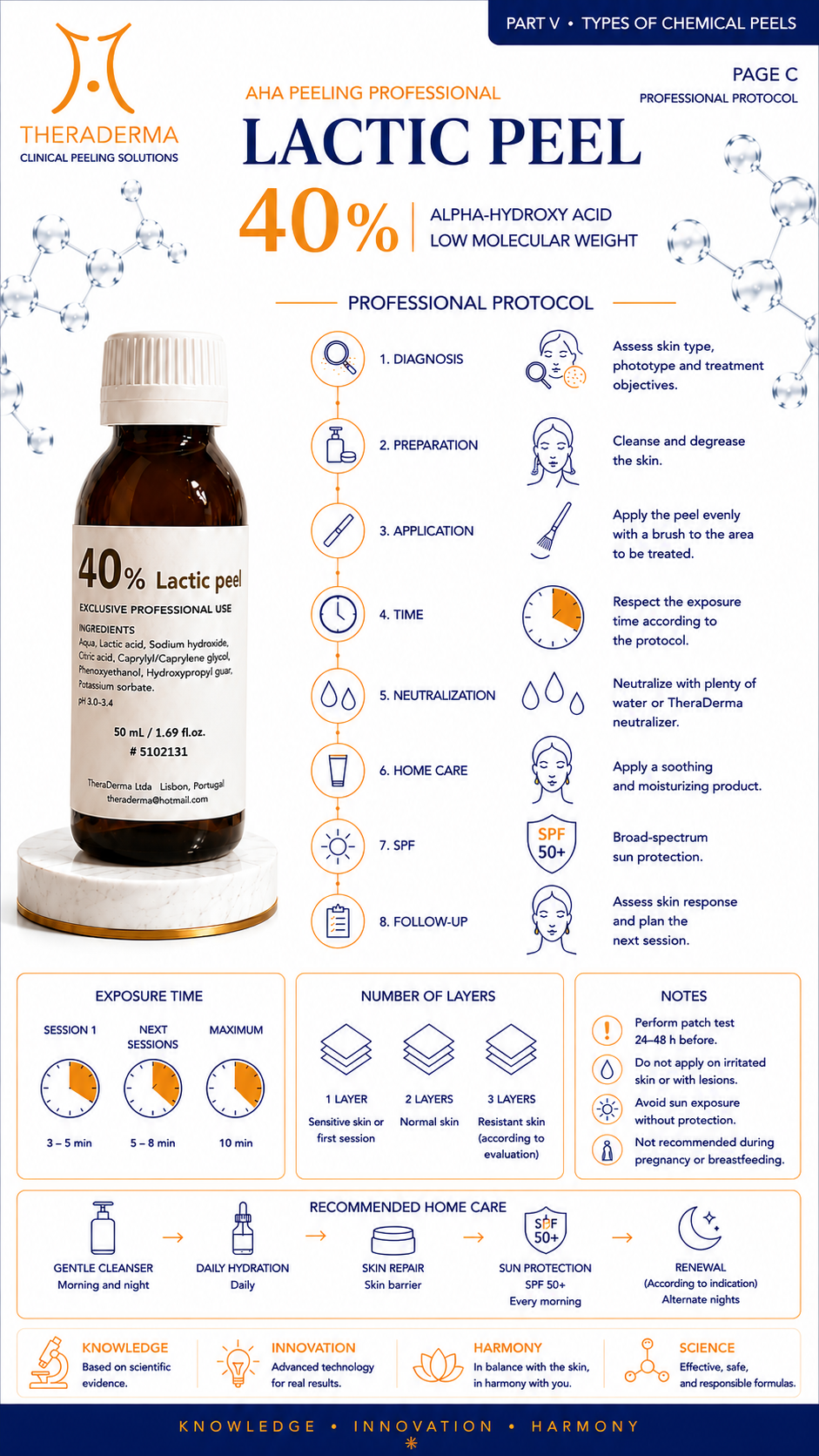
Proper patient assessment, adequate skin preparation, correct application technique, continuous clinical observation and appropriate follow-up are essential factors for achieving safe, reproducible results tailored to the individual needs of each patient.
Lactic Peel 40% TherapDerma has been developed exclusively for professional use and should be incorporated into carefully planned treatment protocols that respect the skin barrier, hydration status and the skin’s regenerative capacity.
Its greater epidermal renewal capacity makes it possible to develop more advanced protocols, provided that appropriate patient selection and individualised clinical planning are carried out. Treatment effectiveness depends on maintaining the balance between therapeutic intensity, safety and professional control.
________________________________________
PRE-TREATMENT CLINICAL ASSESSMENT
Before beginning any procedure, the professional should carry out a complete clinical evaluation to confirm that the patient is a suitable candidate for treatment.
The initial assessment should include:
✔ skin type;
✔ skin phototype;
✔ level of skin hydration;
✔ skin barrier condition;
✔ skin sensitivity;
✔ dermatological history;
✔ recent aesthetic treatments;
✔ current medication;
✔ previous experience with chemical peels;
✔ patient expectations.
This assessment provides the foundation for designing a personalised protocol and selecting the appropriate treatment intensity.
________________________________________
SKIN PREPARATION
Proper preparation promotes a more even peel application and improves procedural control.
Before treatment it is recommended to:
✔ thoroughly cleanse the treatment area;
✔ remove all traces of make-up, sunscreen and excess sebum;
✔ degrease the skin surface when required by the protocol;
✔ protect particularly sensitive areas such as the lip commissures, nasal folds and eye contour.
The skin must be completely clean and dry before applying the product.
________________________________________
DURING APPLICATION
The peel should be applied using a uniform, organised and carefully controlled technique.
Throughout the procedure, the professional must continuously observe the skin’s response and adapt the treatment according to the clinical evolution.
It is important to monitor:
✔ uniformity of application;
✔ skin response;
✔ patient comfort;
✔ exposure time;
✔ the appearance of relevant clinical signs;
✔ the need for neutralisation according to the established protocol.
With Lactic Peel 40%, clinical observation becomes particularly important, as epidermal renewal is more active and the skin response may vary depending on phototype, hydration status and the patient’s previous experience with chemical peels.
________________________________________
THE IMPORTANCE OF CLINICAL OBSERVATION
Every skin responds differently to the same chemical peel.
Factors such as hydration, stratum corneum thickness, individual sensitivity and regenerative capacity all influence the clinical response during treatment.
In patients treated with Lactic Peel 40%, professional experience is particularly important for accurately interpreting the skin’s physiological response and determining the optimal time to complete the procedure.
Patient safety should always take priority over treatment intensity.
________________________________________
PEEL NEUTRALISATION
For peels formulated with Lactic Acid, the need for neutralisation depends on the specific characteristics of the formulation and the clinical protocol established by the manufacturer.
Whenever neutralisation is required, it should be carried out once the intended therapeutic objective has been achieved in order to stop the activity of the acid in a controlled manner.
After this step has been completed, the skin should be carefully cleansed before proceeding with the subsequent stages of treatment.
Professionals should always follow the official product instructions to ensure maximum safety and reproducibility of the procedure.
________________________________________
IMMEDIATE POST-TREATMENT CARE
Once the session has been completed, products designed to improve skin comfort, preserve hydration and support the physiological recovery of the skin barrier should be applied.
The professional should advise the patient to:
✔ use appropriate moisturising products;
✔ apply broad-spectrum sun protection every day;
✔ avoid direct sun exposure;
✔ avoid potentially irritating cosmetic products during the first few days;
✔ strictly follow all home-care recommendations.
Post-treatment care forms an essential part of the overall treatment and plays a decisive role in optimising the final results.
________________________________________
PATIENT FOLLOW-UP
Clinical evaluation does not end when the treatment session is completed.
Follow-up appointments allow the professional to assess:
✔ the progress of epidermal renewal;
✔ recovery of the skin barrier;
✔ skin hydration levels;
✔ treatment tolerance;
✔ the clinical response achieved;
✔ the need to modify the protocol;
✔ planning of the next treatment session.
Each review provides essential information for personalising the patient’s therapeutic progression and deciding whether the protocol should be maintained, intensified or modified.
________________________________________
CLINICAL DOCUMENTATION
It is recommended that every procedure be documented through:
✔ updated medical records;
✔ informed consent where appropriate;
✔ standardised clinical photographs;
✔ concentration used;
✔ exposure time;
✔ skin response observed during treatment;
✔ complementary products used;
✔ home-care recommendations.
Accurate documentation facilitates clinical follow-up, improves treatment continuity and enhances the overall quality of patient care.
________________________________________
PROFESSIONAL CHECKLIST
Before concluding the session, confirm that:
☐ A complete clinical assessment was performed.
☐ The skin was properly prepared.
☐ The peel was applied evenly.
☐ The skin response was monitored throughout the procedure.
☐ Neutralisation was carried out whenever required by the protocol.
☐ Appropriate post-treatment care was provided.
☐ The patient received home-care instructions.
☐ The next clinical review was scheduled.
A systematic workflow promotes safer procedures and more consistent results.
________________________________________
GOOD CLINICAL PRACTICE
The application of Lactic Peel 40% should always be part of professional practice based on:
✔ individualised diagnosis;
✔ personalised treatment protocols;
✔ appropriate therapeutic progression;
✔ respect for the skin barrier;
✔ preservation of physiological skin hydration;
✔ continuous clinical observation;
✔ rigorous documentation;
✔ ongoing clinical follow-up.
These principles make it possible to perform highly safe, reproducible procedures aligned with modern evidence-based aesthetic medicine.
________________________________________
THERAPDERMA CONCLUSION
The professional application of Lactic Peel 40% requires far more than correct exfoliation technique.
It requires rigorous clinical assessment, individualised treatment planning and continuous observation of the skin’s physiological response in order to adapt every treatment to the specific needs of each patient.
Its greater epidermal renewal capacity makes this peel an excellent tool for professionals wishing to progressively advance their treatment protocols while maintaining a high level of safety and always respecting skin biology.
At TherapDerma, we believe that clinical excellence is achieved through the combination of scientific knowledge, professional expertise and carefully structured protocols. This approach makes it possible to develop progressive, highly reproducible treatments focused on achieving natural, safe and sustainable results within the TherapDerma Clinical Ecosystem™.
Clinical Protocols
Personalised protocols for more active epidermal renewal and progressive improvement of skin quality
Lactic Peel 40% TherapDerma can be incorporated into different aesthetic medicine programmes according to the clinical diagnosis, the physiological characteristics of the skin and the established therapeutic objectives.
There is no universal protocol suitable for every patient. Each treatment should be individually designed by adapting treatment intensity, session frequency and combination with other professional solutions according to the patient’s observed clinical progression.
Thanks to its ability to provide more active epidermal renewal while maintaining an excellent tolerance profile, Lactic Peel 40% is an especially versatile tool for developing protocols designed to improve skin texture, radiance, tone uniformity and overall skin quality.
Personalised treatment planning remains one of the fundamental principles of the TherapDerma Clinical Ecosystem™.
________________________________________
PROGRESSIVE EPIDERMAL RENEWAL PROTOCOL
Objective
To promote a more active superficial chemical exfoliation that progressively improves skin quality while respecting the skin barrier and its physiological regeneration mechanisms.
Ideal patient
✔ Patients previously adapted to Lactic Acid.
✔ Early or moderate photoaging.
✔ Loss of radiance.
✔ Uneven skin texture.
✔ Superficial hyperpigmentation.
Protocol structure
Session 1
Clinical assessment + Lactic Peel 40%
↓
Subsequent sessions
Clinical reassessment + repeat treatment according to skin progression
↓
Final phase
Evaluation of results + personalised maintenance planning.
________________________________________
SKIN REJUVENATION PROTOCOL
Objective
To progressively improve skin texture, radiance and tone uniformity through controlled epidermal renewal.
May be combined with
✔ Anti-Aging Mesotherapy.
✔ Hyaluronic Acid.
✔ Skinboosters.
✔ Professional regenerative skincare.
✔ LED Therapy.
The combination of treatments should always be determined according to the clinical diagnosis and the individual patient’s response.
________________________________________
ADVANCED GLOW SKIN PROTOCOL
Objective
To restore brighter, more even and revitalised-looking skin through more active superficial renewal.
This protocol is particularly indicated when the patient presents significant loss of radiance, uneven texture or early signs of photoaging.
The professional may complement the treatment with revitalising solutions and a personalised home-care programme to enhance the continuity of the results.
________________________________________
SUPERFICIAL HYPERPIGMENTATION PROTOCOL
Objective
To promote greater skin tone uniformity through the progressive renewal of the superficial layers of the epidermis.
It may be incorporated into protocols designed to improve the appearance of:
✔ superficial pigmentation spots;
✔ uneven skin tone;
✔ pigmentary photoaging;
✔ dull skin.
Clinical progression should be carefully reassessed at every session in order to progressively adapt the treatment.
________________________________________
SKIN TEXTURE IMPROVEMENT PROTOCOL
Objective
To promote a smoother and more even skin surface through progressive epidermal renewal.
It may be incorporated into patients presenting:
✔ uneven skin texture;
✔ rough skin;
✔ superficial fine lines;
✔ loss of radiance;
✔ changes associated with early photoaging.
Progress should be reassessed regularly so that the protocol can be adapted according to the clinical response.
________________________________________
PREPARATION PROTOCOL FOR COMBINATION TREATMENTS
Objective
To optimise epidermal quality before incorporating additional aesthetic medical treatments.
Properly renewed skin provides an excellent biological foundation for subsequently integrating mesotherapy, biostimulation, radiofrequency, regenerative LED therapy, hyaluronic acid or other personalised treatment protocols.
This approach makes it possible to develop treatments that are more structured, predictable and tailored to each patient’s individual needs.
________________________________________
THERAPDERMA™ COMBINATION PROTOCOL
The comprehensive TherapDerma approach allows Lactic Peel 40% to be incorporated into personalised therapeutic programmes together with other professional solutions.
Example protocol
Phase 1
Lactic Peel 40%
↓
Phase 2
Personalised mesotherapy according to diagnosis
↓
Phase 3
Complementary aesthetic medical technology
↓
Phase 4
Professional home-care skincare
↓
Clinical follow-up
Reassessment and personalised maintenance.
The sequence should always be adapted according to the clinical diagnosis, patient progression and individual needs.
________________________________________
MAINTENANCE PLANNING
Once the therapeutic objectives have been achieved, the professional may establish a maintenance programme adapted to each patient’s individual characteristics.
Maintenance may include:
✔ regular epidermal renewal sessions;
✔ skin revitalisation programmes;
✔ scheduled clinical reviews;
✔ updating the home-care treatment programme;
✔ adapting the protocol according to the physiological evolution of the skin.
This strategy helps preserve the results achieved while responding to the biological changes that naturally occur over time.
________________________________________
PROTOCOL PERSONALISATION
Treatment intensity should never depend exclusively on the concentration of the peel.
Factors such as:
✔ biological age;
✔ hydration status;
✔ skin barrier function;
✔ skin phototype;
✔ skin sensitivity;
✔ aesthetic history;
✔ response observed during previous sessions;
✔ previous experience with chemical peels;
should all form part of the clinical treatment plan.
Personalisation remains the key factor for optimising treatment effectiveness while maintaining a high level of safety throughout the entire protocol.
________________________________________
PROTOCOL SUMMARY
Lactic Peel 40% may be incorporated into programmes for:
✔ Progressive epidermal renewal.
✔ Skin rejuvenation.
✔ Advanced Glow Skin.
✔ Superficial hyperpigmentation.
✔ Skin texture improvement.
✔ Preparation for combination treatments.
✔ TherapDerma™ combination protocols.
✔ Personalised maintenance programmes.
________________________________________
THERAPDERMA CONCLUSION
The true potential of Lactic Peel 40% is achieved when it forms part of a carefully planned clinical protocol tailored to the individual characteristics of each patient.
The combination of an accurate diagnosis, personalised treatment planning, structured clinical follow-up and integration with complementary treatments makes it possible to develop progressive programmes designed to improve skin texture, radiance, tone uniformity and overall skin quality.
Within the TherapDerma Clinical Ecosystem™, Lactic Peel 40% represents the natural progression for patients requiring more active epidermal renewal, providing professionals with a scientifically based, highly reproducible tool focused on achieving natural, safe and sustainable results.
TherapDerma™ Combinations
Integrated protocols to enhance epidermal renewal, radiance and overall skin quality
Modern aesthetic medicine is no longer based on isolated treatments, but on the intelligent integration of different therapies capable of working together to address the specific needs of each patient.
Within this context, Lactic Peel 40% TherapDerma is an excellent tool for developing personalised protocols in which more active epidermal renewal improves skin texture, radiance and tone uniformity, creating the ideal conditions to enhance the effectiveness of subsequent treatments.
Thanks to its excellent tolerance profile, it can be combined with different solutions from the TherapDerma Clinical Ecosystem™, enabling the development of more comprehensive, safe and scientifically structured therapeutic programmes.
The selection of each combination should always depend on the professional diagnosis, the biological characteristics of the skin and the established clinical objectives.
________________________________________
LACTIC PEEL 40% + ANTI-AGING MESOTHERAPY
Renewal + biological revitalisation
Following an appropriate clinical assessment, Lactic Peel 40% may be combined with mesotherapy treatments designed to improve overall skin quality and enhance skin revitalisation processes.
Depending on the diagnosis, the professional may select formulations aimed at:
✔ skin revitalisation;
✔ deep hydration;
✔ improved radiance;
✔ texture optimisation;
✔ progressive rejuvenation programmes.
The combination should always follow the clinical treatment sequence established by the professional.
________________________________________
LACTIC PEEL 40% + NON-CROSSLINKED HYALURONIC ACID
Renewal + hydration replenishment
The superficial renewal promoted by Lactic Acid may be integrated with hydration protocols using non-crosslinked hyaluronic acid.
This combination makes it possible to develop treatments for patients presenting:
✔ loss of radiance;
✔ fine lines;
✔ reduced elasticity;
✔ early photoaging;
✔ dehydrated skin.
Treatment planning should always be individualised according to each patient’s specific needs.
________________________________________
LACTIC PEEL 40% + SKINBOOSTERS
Skin quality + prolonged revitalisation
For patients requiring improvement in overall skin quality, Lactic Peel 40% may form part of programmes that subsequently incorporate Skinboosters.
Prior epidermal renewal supports a progressive therapeutic strategy aimed at optimising hydration, texture, radiance and overall skin uniformity.
Each protocol should be adapted according to the patient’s clinical progression and individual response.
________________________________________
LACTIC PEEL 40% + SKIN BIOSTIMULATION
Prepare before stimulating
Biostimulation aims to activate the skin’s natural regenerative mechanisms.
When clinically indicated, Lactic Peel 40% may be used as the initial phase to promote a more even epidermal surface before introducing biostimulatory treatments.
This approach allows the development of structured and progressive protocols while respecting skin physiology.
________________________________________
LACTIC PEEL 40% + RADIOFREQUENCY
Renewal + tissue stimulation
Radiofrequency is a widely used technology for improving skin firmness and quality.
When integrated into a properly planned protocol, it may be combined with Lactic Peel 40% to provide comprehensive treatments designed to improve skin texture, radiance and overall skin quality through complementary mechanisms.
The therapeutic sequence should always be determined according to the professional’s clinical judgement.
________________________________________
LACTIC PEEL 40% + LED THERAPY
Renewal + physiological recovery
LED therapy may be incorporated into programmes designed to support the skin’s physiological recovery following chemical exfoliation.
Its integration with Lactic Peel 40% enables the development of particularly valuable protocols for progressive rejuvenation programmes and overall skin quality improvement.
Protocol selection should always depend on the individual diagnosis and treatment objectives.
________________________________________
LACTIC PEEL 40% + PROFESSIONAL HOME CARE
Treatment continuity begins at home
The results achieved in the clinic depend largely on the care performed between treatment sessions.
Following treatment, it is recommended to establish a personalised home-care programme including:
✔ gentle cleansing;
✔ intensive hydration;
✔ skin barrier repair;
✔ antioxidants when indicated;
✔ daily broad-spectrum sun protection.
Therapeutic continuity supports more stable and long-lasting results.
________________________________________
THERAPDERMA CLINICAL ECOSYSTEM™
A complete protocol delivers better results
At TherapDerma, we believe that clinical excellence does not depend on a single product.
The best results are achieved through the integration of different therapeutic tools, carefully organised within the same treatment protocol.
Example of clinical integration
Professional Diagnosis
↓
Lactic Peel 40%
↓
Personalised Mesotherapy
↓
Aesthetic Medical Technology
↓
Professional Home Care
↓
Clinical Follow-up
↓
Personalised Maintenance
Each stage prepares the next, enabling the development of progressive, highly personalised and scientifically based treatments.
________________________________________
BENEFITS OF COMBINATION PROTOCOLS
Integrating Lactic Peel 40% into personalised programmes makes it possible to:
✔ improve therapeutic planning;
✔ optimise epidermal renewal;
✔ improve skin texture and radiance;
✔ prepare the skin for subsequent treatments;
✔ personalise every protocol according to the diagnosis;
✔ promote more consistent results;
✔ increase patient satisfaction;
✔ reinforce treatment continuity.
The intelligent combination of therapies represents one of the pillars of modern aesthetic medicine.
________________________________________
CLINICAL SUMMARY
Lactic Peel 40% may be combined with:
✔ Anti-Aging Mesotherapy.
✔ Non-crosslinked Hyaluronic Acid.
✔ Skinboosters.
✔ Skin Biostimulation.
✔ Radiofrequency.
✔ LED Therapy.
✔ Professional Home Care.
✔ Personalised TherapDerma Clinical Ecosystem™ protocols.
________________________________________
THERAPDERMA CONCLUSION
The true potential of Lactic Peel 40% is achieved when it is no longer considered an isolated treatment but becomes part of a comprehensive aesthetic medicine protocol.
Its ability to provide more active epidermal renewal, improve skin texture, enhance radiance and maintain an excellent tolerance profile makes it a highly valuable tool for integrating mesotherapy, biostimulation, aesthetic medical technologies and professional skincare within a single therapeutic strategy.
At TherapDerma, we believe that the best results are achieved through the combination of accurate diagnosis, scientific knowledge and intelligent treatment protocols. For this reason, Lactic Peel 40% represents an evolutionary step within the TherapDerma Clinical Ecosystem™, enabling the development of personalised, reproducible treatments designed to achieve natural, long-lasting and clinically outstanding results.
Frequently Asked Questions (FAQ)
Clear answers for safer clinical practice
The use of chemical peels frequently raises questions regarding their mechanism of action, indications and therapeutic planning.
The following answers bring together some of the most common questions asked by professionals during daily clinical practice and TherapDerma training programmes.
Their purpose is to facilitate clinical decision-making and reinforce the correct use of Lactic Peel 40% within personalised aesthetic medicine protocols.
________________________________________
What type of peel is Lactic Peel 40%?
Lactic Peel 40% is a professional superficial chemical peel formulated with 40% Lactic Acid, belonging to the Alpha Hydroxy Acid (AHA) family.
It has been developed to promote more active epidermal renewal, progressively improving skin texture, radiance and tone uniformity while maintaining the excellent tolerance profile characteristic of Lactic Acid.
________________________________________
Which skin types is it particularly indicated for?
Lactic Peel 40% is especially indicated for patients presenting:
✔ early or moderate photoaging;
✔ loss of radiance;
✔ uneven superficial skin texture;
✔ superficial hyperpigmentation;
✔ fine lines;
✔ skin previously adapted to Lactic Acid.
The final indication should always depend on the clinical diagnosis performed by the professional.
________________________________________
What is the difference between Lactic Peel 30% and Lactic Peel 40%?
Both peels belong to the Alpha Hydroxy Acid (AHA) family and share the same philosophy of progressive skin renewal while respecting skin physiology.
The main difference lies in the intensity of epidermal renewal.
Lactic Peel 30% is especially indicated for introductory protocols, sensitive or dehydrated skin, and patients beginning professional chemical peel programmes.
Lactic Peel 40% represents a therapeutic progression designed for patients requiring more active epidermal renewal to improve skin texture, radiance and tone uniformity.
The choice between the two concentrations should always depend on the clinical diagnosis and the patient’s individual progression.
________________________________________
What is the difference between Lactic Acid and Glycolic Acid?
Although both belong to the Alpha Hydroxy Acid (AHA) family, they have different characteristics.
Glycolic Acid has a lower molecular weight, allowing faster penetration and a more intensive exfoliating action.
Lactic Acid, on the other hand, has a higher molecular weight, providing a more gradual action together with a greater ability to support the skin’s physiological hydration.
For this reason, it is an excellent choice when the objective is to combine superficial renewal, skin comfort and progressive improvement in skin quality.
________________________________________
Can it be used on sensitive skin?
Yes, provided that the patient has been properly selected.
Although Lactic Peel 40% provides more active epidermal renewal than the 30% concentration, Lactic Acid continues to offer an excellent tolerance profile when the treatment is adapted to the individual characteristics of the skin.
A prior clinical assessment remains essential before beginning any treatment protocol.
________________________________________
How many treatment sessions are usually recommended?
There is no universal number of treatment sessions.
Treatment planning depends on:
✔ clinical diagnosis;
✔ skin quality;
✔ therapeutic objectives;
✔ response observed after each session;
✔ the patient’s individual clinical progression.
The professional should periodically reassess clinical progress and adapt the protocol whenever necessary.
________________________________________
How often can it be applied?
Treatment frequency should always be established on an individual basis.
The interval between sessions depends on the skin’s physiological response, the clinical objective and the therapeutic plan established by the professional.
Respecting the skin’s natural recovery time is essential to optimise results and preserve skin barrier function.
________________________________________
Can it be combined with other treatments?
Yes.
Lactic Peel 40% may be integrated into personalised treatment protocols together with:
✔ mesotherapy;
✔ non-crosslinked hyaluronic acid;
✔ Skinboosters;
✔ biostimulation;
✔ radiofrequency;
✔ LED therapy;
✔ professional home-care skincare.
The combination should always be determined according to the clinical diagnosis and the therapeutic sequence designed by the professional.
________________________________________
Does the peel need to be neutralised?
The need for neutralisation depends on the specific characteristics of the formulation and the treatment protocol established by the manufacturer.
The professional should always follow the official product instructions to ensure a safe and reproducible procedure.
________________________________________
What aftercare should the patient follow?
Following the peel treatment, it is recommended that the patient:
✔ maintains adequate skin hydration;
✔ applies broad-spectrum sun protection daily;
✔ avoids direct sun exposure;
✔ avoids potentially irritating cosmetic products during the first few days;
✔ strictly follows all professional recommendations.
Home care forms an integral part of the treatment and contributes significantly to optimising clinical outcomes.
________________________________________
Can it be used throughout the year?
Yes, provided that the patient is able to follow appropriate sun protection measures and the professional considers the treatment clinically appropriate.
For patients expecting significant sun exposure, it may be advisable to adjust the treatment plan in order to maintain maximum safety.
________________________________________
Can it be included in progressive skin rejuvenation programmes?
Yes.
Thanks to its ability to provide more active epidermal renewal while maintaining an excellent tolerance profile, Lactic Peel 40% is an excellent tool for progressive skin rejuvenation programmes designed to improve skin texture, radiance, tone uniformity and overall skin quality.
Treatment planning should always be individualised according to the patient’s age, skin characteristics and therapeutic objectives.
________________________________________
QUICK SUMMARY
Lactic Peel 40% stands out for:
✔ More active epidermal renewal.
✔ Excellent tolerance profile.
✔ Improved skin texture.
✔ Increased radiance.
✔ Enhanced skin tone uniformity.
✔ Easy integration into combination protocols.
✔ High therapeutic versatility.
✔ An excellent tool for progressive skin rejuvenation programmes.
________________________________________
THERAPDERMA CONCLUSION
The most frequently asked questions reflect one of the fundamental realities of aesthetic medicine: there are no identical treatment protocols for every patient.
The true value of Lactic Peel 40% lies in providing professionals with a versatile, scientifically based and highly adaptable tool that allows treatments to evolve progressively and in a personalised manner according to different clinical needs.
At TherapDerma, we believe that answering professionals’ questions correctly is part of the treatment itself. Scientific knowledge, combined with accurate diagnosis and individualised treatment planning, enables safer, more predictable procedures capable of delivering natural, sustainable and high-quality results within the TherapDerma Clinical Ecosystem™.
Related Content
Discover other solutions within the TherapDerma Clinical Ecosystem™
In modern aesthetic medicine, an isolated treatment rarely represents the most effective solution.
Achieving consistent results depends on the professional’s ability to select the right treatment at the right time, integrating different solutions within a personalised clinical strategy.
For this reason, Lactic Peel 40% forms part of the TherapDerma Clinical Ecosystem™, a working model that brings together chemical peels, mesotherapy, aesthetic medical technologies, clinical protocols and specialised training to help professionals develop more comprehensive, safer and scientifically based treatments.
The following resources complement the use of Lactic Peel 40% and expand its therapeutic possibilities within daily clinical practice.
________________________________________
THERAPDERMA PEELING COLLECTION™
One solution for every clinical need
Every skin type presents different biological characteristics and requires a specific level of epidermal renewal.
The TherapDerma Peeling Collection enables professionals to select the most appropriate acid and concentration for each patient, facilitating progressive and highly personalised treatment planning.
The range includes different peel families developed to address various clinical objectives:
✔ Glycolic Peel.
✔ Lactic Peel.
✔ Mandelic Peel.
✔ Salicylic Peel.
✔ Pyruvic Peel.
✔ TCA Peel.
Each occupies a specific position within the TherapDerma Clinical Ladder™, allowing protocols to be tailored according to the skin’s clinical progression and each patient’s therapeutic needs.
________________________________________
THERAPDERMA MESOTHERAPY COLLECTION™
Enhancing results through combination protocols
Professional mesotherapy is one of the main therapeutic complements to chemical peels.
Following appropriate clinical planning, Lactic Peel 40% may be integrated with formulations designed to address different skin needs, including:
✔ skin revitalisation;
✔ deep hydration;
✔ improved radiance;
✔ biostimulation;
✔ progressive rejuvenation programmes.
Treatment combinations should always be established according to the clinical diagnosis and the patient’s clinical progression.
________________________________________
THERAPDERMA TECHNOLOGIES™
Innovation at the service of professionals
Aesthetic medical technologies expand therapeutic possibilities when correctly integrated into personalised treatment protocols.
Depending on the clinical objective, Lactic Peel 40% may be combined with different TherapDerma technologies to develop more comprehensive treatments aimed at improving skin texture, radiance and overall skin quality.
These combinations should always be planned while respecting the therapeutic sequence established by the professional.
________________________________________
THERAPDERMA CLINICAL PROTOCOLS™
Structured protocols for evidence-based aesthetic medicine
One of TherapDerma’s primary objectives is to support clinical decision-making through clearly structured protocols.
Each protocol integrates:
✔ initial diagnosis;
✔ peel selection;
✔ session planning;
✔ complementary treatments;
✔ personalised maintenance;
✔ clinical follow-up.
This approach improves treatment reproducibility and provides a more consistent experience for both professionals and patients.
________________________________________
THERAPDERMA SKINCARE™
Treatment continuity begins at home
Home care represents a fundamental part of therapeutic success.
Following a Lactic Peel 40% protocol, professionals may recommend skincare products adapted to each patient’s individual needs in order to:
✔ maintain skin hydration;
✔ protect the skin barrier;
✔ preserve skin radiance;
✔ support physiological recovery;
✔ prolong the results achieved in the clinic.
Continuity between clinical treatment and home care is one of the pillars of the TherapDerma philosophy.
________________________________________
THERAPDERMA PROFESSIONAL EDUCATION™
Knowledge improves results
The continuous evolution of aesthetic medicine makes ongoing professional education essential.
TherapDerma develops scientific educational content designed to improve understanding of:
✔ skin physiology;
✔ mechanisms of action;
✔ patient selection;
✔ personalised protocols;
✔ treatment combinations;
✔ complication prevention.
Scientific knowledge forms the foundation of safe, high-quality clinical practice.
________________________________________
THERAPDERMA CLINICAL ECOSYSTEM™
A comprehensive vision of aesthetic medicine
At TherapDerma, we believe that no product should be used in isolation.
Every solution forms part of an organised clinical system in which different therapeutic tools work together towards a common objective: improving skin quality through personalised, scientifically based treatments.
TherapDerma Clinical Ecosystem
Professional Diagnosis
↓
Peel Selection
↓
Personalised Mesotherapy
↓
Aesthetic Medical Technologies
↓
Professional Home Care
↓
Clinical Follow-up
↓
Personalised Maintenance
Each stage complements the previous one, enabling the development of progressive, coherent and highly reproducible treatments.
________________________________________
RECOMMENDED CONTENT
To expand your knowledge of Lactic Peel 40%, we also recommend consulting:
✔ Complete TherapDerma Peeling Catalogue.
✔ Facial Mesotherapy Guide.
✔ TherapDerma Clinical Protocols Manual.
✔ TherapDerma Clinical Decision Guide™.
✔ TherapDerma Professional Academy™.
✔ Clinical Combination Protocols Manual.
✔ Home Care Guide.
Each of these resources forms part of the continuous education programme developed by TherapDerma for aesthetic medicine professionals.
________________________________________
THERAPDERMA CONCLUSION
Lactic Peel 40% represents far more than a chemical peel.
It forms part of a clinical ecosystem designed to help professionals better understand skin biology, select treatments with greater precision and develop comprehensive protocols tailored to each individual patient.
Its ability to provide more active epidermal renewal while maintaining the excellent tolerance profile characteristic of Lactic Acid makes it a highly valuable tool within progressive rejuvenation programmes and skin quality improvement protocols.
At TherapDerma, we believe that true knowledge is not simply about understanding a product, but about knowing how to integrate it into a complete therapeutic strategy. It is this comprehensive vision that transforms isolated treatments into clinical programmes capable of delivering natural, consistent and sustainable results within the TherapDerma Clinical Ecosystem™.
TherapDerma Professional Academy™
Knowledge transforms treatments into results
Excellence in aesthetic medicine does not depend solely on having innovative products or advanced technologies.
The best results arise from the professional’s ability to understand skin biology, correctly interpret the clinical diagnosis and select the most appropriate treatment for each patient.
For this reason, TherapDerma Professional Academy™ was created as an international scientific education platform designed to support the continuous development of physicians, nurses, pharmacists, dentists and other aesthetic medicine professionals.
Our mission is to transform scientific knowledge into safe, reproducible clinical protocols focused on achieving natural results.
________________________________________
SCIENCE-BASED EDUCATION
All TherapDerma educational programmes are developed upon scientific principles widely accepted in dermatology, aesthetic medicine and skin biology.
Our objective is not simply to teach the use of a product, but to help professionals understand:
✔ skin physiology;
✔ the biological mechanisms of ageing;
✔ the behaviour of different active ingredients;
✔ appropriate patient selection;
✔ personalised protocol planning;
✔ the integration of different therapies within a single clinical strategy.
This approach promotes safer, more rational professional practice focused on achieving consistent results.
________________________________________
LEARNING TO DIAGNOSE
Diagnosis is the starting point of every successful treatment.
At TherapDerma, we believe that the same product can produce completely different results depending on the professional’s ability to correctly identify the patient’s true skin needs.
For this reason, an essential part of our training is dedicated to developing clinical reasoning and decision-making based on objective patient assessment.
Learning how to diagnose correctly makes it possible to personalise every protocol and select the most appropriate peel concentration for each clinical situation.
________________________________________
LEARNING TO PERSONALISE
No two patients are the same.
Differences in biological age, skin phototype, skin quality, barrier function, hydration level, aesthetic history and lifestyle make it essential to tailor every treatment individually.
TherapDerma Professional Academy™ teaches professionals how to build dynamic treatment protocols that evolve alongside the patient’s clinical response.
Personalisation is one of the fundamental pillars of modern aesthetic medicine.
________________________________________
EDUCATION BEYOND THE PRODUCT
Our educational model goes far beyond the technical application of a chemical peel.
Each programme includes knowledge of:
✔ chemical peels;
✔ mesotherapy;
✔ biostimulation;
✔ aesthetic medical technologies;
✔ professional skincare;
✔ combination protocols;
✔ clinical follow-up;
✔ complication prevention.
The objective is to provide a comprehensive vision that enables professionals to develop complete and highly structured treatment programmes.
________________________________________
CONTINUOUS LEARNING
Aesthetic medicine is constantly evolving.
New research, technologies and treatment protocols emerge every year, making continuous professional education essential.
TherapDerma Professional Academy™ promotes a culture of lifelong learning through programmes designed to accompany professionals throughout their clinical careers.
Education ceases to be a one-time event and becomes an ongoing process of continuous improvement.
________________________________________
EDUCATIONAL FORMATS
The Academy offers different learning formats adapted to the needs of every professional:
✔ face-to-face training;
✔ online training;
✔ scientific webinars;
✔ practical workshops;
✔ clinical masterclasses;
✔ international congresses;
✔ commented clinical cases;
✔ scientific update programmes.
Each format aims to combine theoretical knowledge with practical application in daily clinical practice.
________________________________________
FROM KNOWLEDGE TO CLINICAL PRACTICE
Education only becomes truly valuable when it can be immediately applied in professional practice.
For this reason, all educational content developed by TherapDerma follows a structure designed to facilitate clinical decision-making.
TherapDerma Methodology
Scientific Knowledge
↓
Clinical Diagnosis
↓
Treatment Selection
↓
Protocol Design
↓
Professional Application
↓
Clinical Follow-up
↓
Results Optimisation
This model transforms theory into organised, reproducible clinical procedures focused on excellence.
________________________________________
WHAT DOES THERAPDERMA PROFESSIONAL ACADEMY™ PROVIDE?
Professionals acquire the tools to:
✔ better understand skin biology;
✔ improve diagnostic skills;
✔ select treatments with greater precision;
✔ design personalised protocols;
✔ integrate different therapies;
✔ increase clinical safety;
✔ improve the patient experience;
✔ achieve more consistent and reproducible results.
Scientific education therefore becomes a competitive advantage in everyday clinical practice.
________________________________________
THERAPDERMA PHILOSOPHY
At TherapDerma, we believe that knowledge is the most valuable investment a professional can make.
Products evolve.
Technologies change.
Trends come and go.
However, a professional with a solid scientific foundation will always be prepared to adapt to innovation and continue providing treatments of the highest quality.
For this reason, our Academy does not train product users.
It trains professionals who are capable of understanding, making decisions and leading.
________________________________________
THERAPDERMA CONCLUSION
TherapDerma Professional Academy™ is one of the fundamental pillars of the TherapDerma Clinical Ecosystem™.
Our mission is to support professionals far beyond the product itself by providing scientific education, clinical reasoning and practical tools that transform knowledge into intelligent therapeutic decisions.
Every professional peel within the TherapDerma Collection, including Lactic Peel 40%, forms part of this educational philosophy, where the product represents only one component of a carefully structured clinical protocol.
At TherapDerma, we believe that true excellence does not begin with a peel, a technology or a mesotherapy treatment.
It begins with a professional who understands the science, masters diagnosis and is able to transform that knowledge into natural, safe and sustainable results for every patient.
TherapDerma Clinical Decision System™
Transforming scientific knowledge into clinical decisions
Modern aesthetic medicine requires much more than simply understanding the characteristics of a product.
Every patient presents different biological needs, individual expectations and a unique clinical evolution. Therefore, treatment selection should not rely solely on personal experience or standardised protocols, but on a structured process of clinical reasoning.
The TherapDerma Clinical Decision System™ (TCDS™) has been developed to help professionals transform the information obtained during diagnosis into coherent, personalised and scientifically grounded therapeutic decisions.
Its objective is to facilitate the selection of the most appropriate protocol, optimise treatment safety and improve the reproducibility of clinical outcomes.
________________________________________
STEP 1
CLINICAL DIAGNOSIS
Every protocol begins with a comprehensive patient assessment.
Before selecting a chemical peel, the professional must identify the skin’s actual needs and understand the factors that influence its biological response.
The clinical assessment should include:
✔ reason for consultation;
✔ medical and dermatological history;
✔ previous aesthetic treatments;
✔ skin type and quality;
✔ hydration level;
✔ skin barrier condition;
✔ skin sensitivity;
✔ phototype;
✔ lifestyle and sun exposure.
An accurate diagnosis is the foundation of every successful treatment.
________________________________________
STEP 2
IDENTIFYING THE CLINICAL OBJECTIVE
Once the initial assessment has been completed, the next step is to clearly define the primary therapeutic objective.
For patients who are candidates for Lactic Peel 40%, the most common objectives include:
✔ improving skin texture;
✔ restoring skin radiance;
✔ promoting a more even skin tone;
✔ addressing mild to moderate photoageing;
✔ improving superficial fine lines;
✔ supporting progressive skin rejuvenation protocols;
✔ preparing the skin for combination treatments;
✔ maintaining long-term skin quality.
Correctly defining the objective allows treatment to be selected with greater precision.
________________________________________
STEP 3
PEEL SELECTION
The next step is to determine whether Lactic Peel 40% represents the most appropriate option for that patient.
The professional should evaluate:
✔ degree of photoageing;
✔ skin texture quality;
✔ hydration level;
✔ condition of the stratum corneum;
✔ previous experience with chemical peels;
✔ response to previous treatments;
✔ desired level of epidermal renewal.
When the objective is to promote more active epidermal renewal while improving texture, radiance and skin tone uniformity, maintaining an excellent tolerance profile, Lactic Peel 40% represents an excellent therapeutic option.
________________________________________
STEP 4
PROTOCOL PERSONALISATION
The peel concentration represents only one component of the treatment.
The protocol should be personalised by considering:
✔ treatment frequency;
✔ exposure time;
✔ need for neutralisation according to the protocol;
✔ home care;
✔ complementary treatments;
✔ clinical follow-up visits;
✔ the patient’s biological response.
Personalisation leads to safer and more predictable outcomes.
________________________________________
STEP 5
COMBINATION TREATMENTS
After selecting the peel, the professional may consider integrating other solutions from the TherapDerma Clinical Ecosystem™.
Depending on the diagnosis, these may include:
✔ personalised mesotherapy;
✔ non-cross-linked hyaluronic acid;
✔ skinboosters;
✔ biostimulation;
✔ radiofrequency;
✔ LED therapy;
✔ professional home skincare.
Every combination should be based on a clearly defined clinical objective.
________________________________________
STEP 6
CLINICAL FOLLOW-UP
Clinical decision-making continues after every treatment session.
Follow-up allows the professional to evaluate:
✔ evolution of skin texture;
✔ epidermal renewal response;
✔ skin tone uniformity;
✔ clinical tolerance;
✔ recovery of the skin barrier;
✔ patient satisfaction;
✔ the need to modify the treatment protocol.
Each review provides valuable information for optimising the next stages of treatment.
________________________________________
THERAPDERMA™ ALGORITHM
From diagnosis to clinical decision
Clinical Assessment
↓
Individual Diagnosis
↓
Therapeutic Objective
↓
Peel Selection
↓
Protocol Design
↓
Complementary Treatments
↓
Clinical Follow-up
↓
Personalised Maintenance
This algorithm forms the methodological foundation of the TherapDerma Clinical Decision System™, facilitating a structured and reproducible clinical approach.
________________________________________
BENEFITS OF THE THERAPDERMA CLINICAL DECISION SYSTEM™
Using a structured clinical decision-making model enables professionals to:
✔ improve diagnostic accuracy;
✔ select treatments more objectively;
✔ personalise every protocol;
✔ increase clinical safety;
✔ optimise the patient experience;
✔ facilitate treatment continuity;
✔ achieve more consistent results;
✔ reduce variability between treatments.
Organised knowledge leads to better clinical decisions.
________________________________________
THE TCDS™ PHILOSOPHY
At TherapDerma, we understand that no single product is the right solution for every patient.
True clinical success lies in knowing when to use each treatment, for which patient and within which protocol.
The TherapDerma Clinical Decision System™ does not replace the professional’s clinical judgement.
It strengthens it through a methodology based on diagnosis, clinical reasoning and therapeutic personalisation.
Every decision should be based on skin biology rather than solely on product characteristics.
________________________________________
THERAPDERMA CONCLUSION
The TherapDerma Clinical Decision System™ represents an evolution in the way aesthetic medicine treatments are planned.
Rather than providing rigid treatment protocols, it offers a framework for clinical reasoning that helps professionals transform scientific knowledge into intelligent, personalised and reproducible therapeutic decisions.
Integrated within the TherapDerma Clinical Ecosystem™, this system enables Lactic Peel 40% to become much more than a chemical peel. It becomes a strategic clinical tool within personalised treatment programmes designed to progressively improve skin texture, radiance and skin tone uniformity through safe, scientifically grounded protocols tailored to the individual needs of every patient.


 +1 (786) 546-8347 (Office)