Description
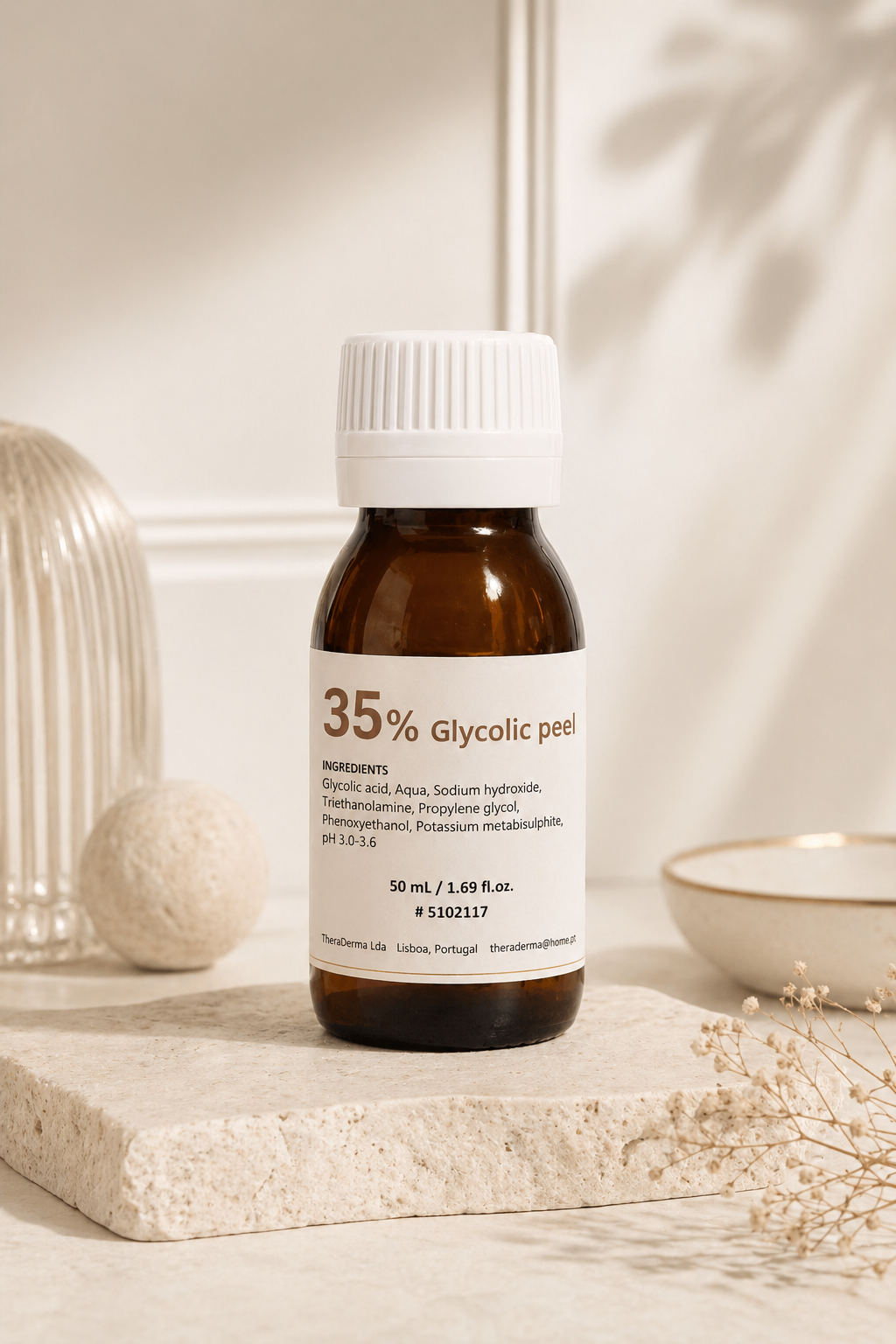
Glycolic Peel 35%
Advanced Epidermal Renewal for Smoother, Brighter and Visibly Refined Skin
TherapDerma Glycolic Peel 35% is a professional chemical peel formulated with high-purity Glycolic Acid, belonging to the Alpha Hydroxy Acid (AHA) family, developed to provide a more intensive superficial chemical exfoliation together with progressive, controlled and predictable epidermal renewal.
Its 35% concentration represents the next step within progressive chemical peeling protocols, offering a greater capacity to refine skin texture and visibly improve the superficial quality of the skin, while always respecting the principles of safety and personalisation that define the TherapDerma clinical philosophy.
Thanks to its low molecular weight, Glycolic Acid demonstrates excellent diffusion across the stratum corneum, promoting uniform exfoliation that contributes to improving skin radiance, skin tone uniformity and the overall appearance of the skin.
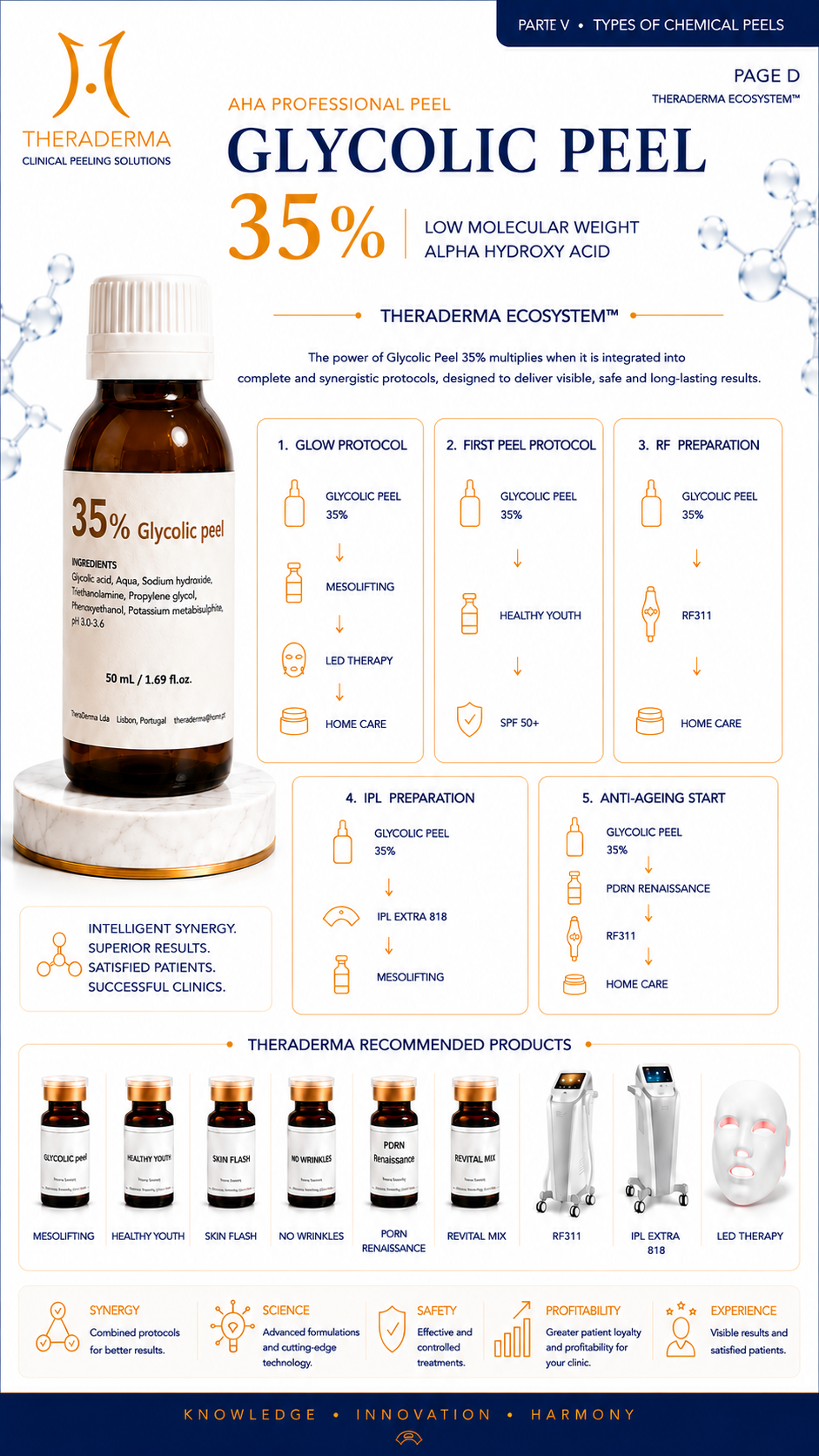
More than an isolated peel, Glycolic Peel 35% forms part of the TherapDerma Clinical Ecosystem™, an integrated system that combines professional chemical peels, mesotherapy, medical aesthetic technologies and personalised protocols to optimise clinical outcomes progressively and reproducibly.
What is glycolic peel 35%?
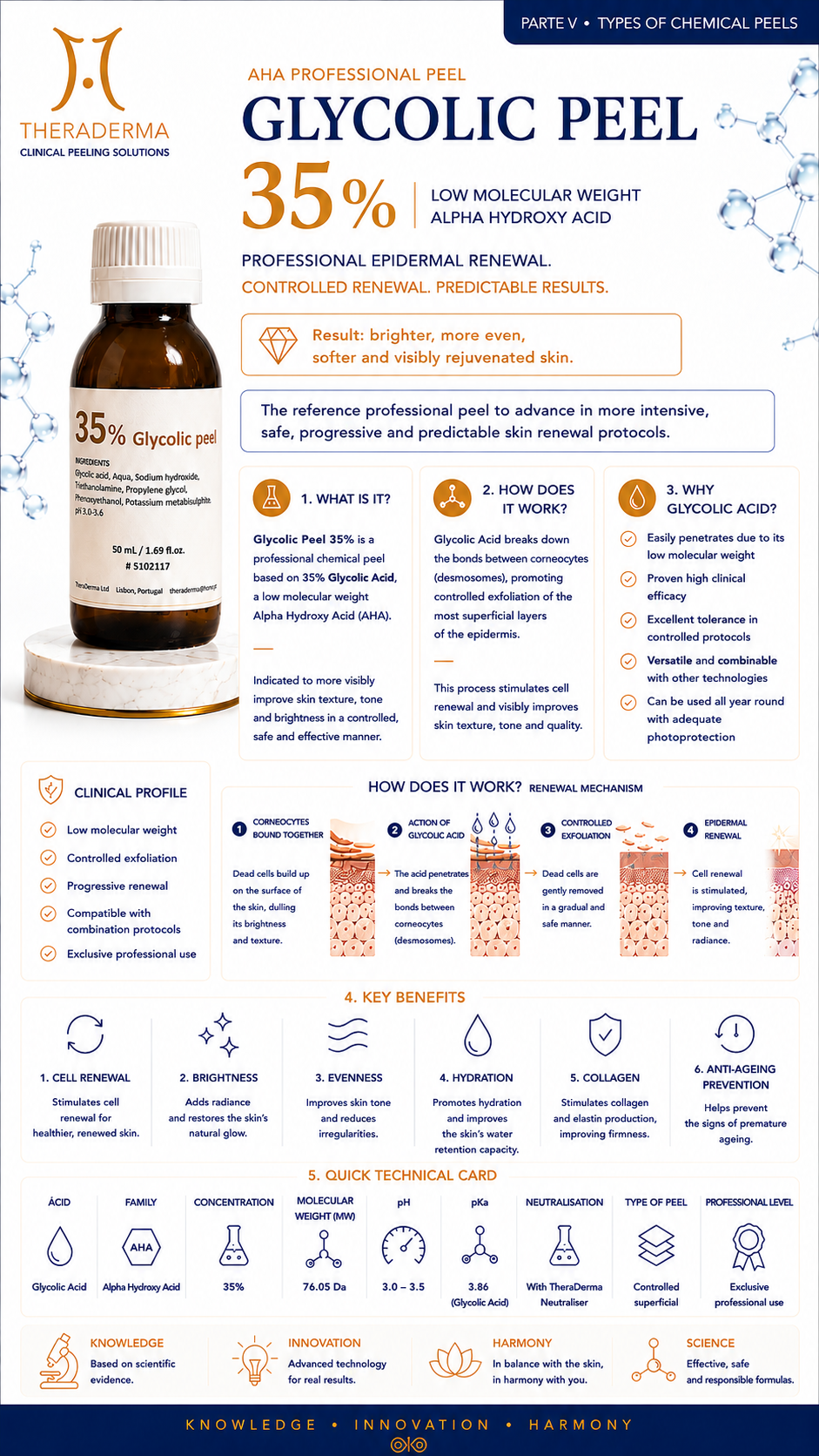
Glycolic Acid is one of the most extensively studied and widely used Alpha Hydroxy Acids in aesthetic medicine due to its remarkable ability to promote the physiological renewal of the epidermis.
Traditionally derived from sugar cane, it has the lowest molecular weight of all AHAs, allowing uniform penetration into the most superficial layers of the skin and enabling the development of professional chemical exfoliation protocols with a high level of clinical control.
The 35% formulation has been developed for professionals seeking a more intensive skin renewal than that achieved with introductory concentrations, while maintaining excellent adaptability within progressive and personalised treatment protocols.
Its use helps optimise the superficial quality of the skin before introducing more advanced procedures or as part of comprehensive programmes for skin rejuvenation, texture refinement and overall improvement of the epidermal appearance.
________________________________________
WHEN SHOULD YOU CHOOSE GLYCOLIC PEEL 35%?
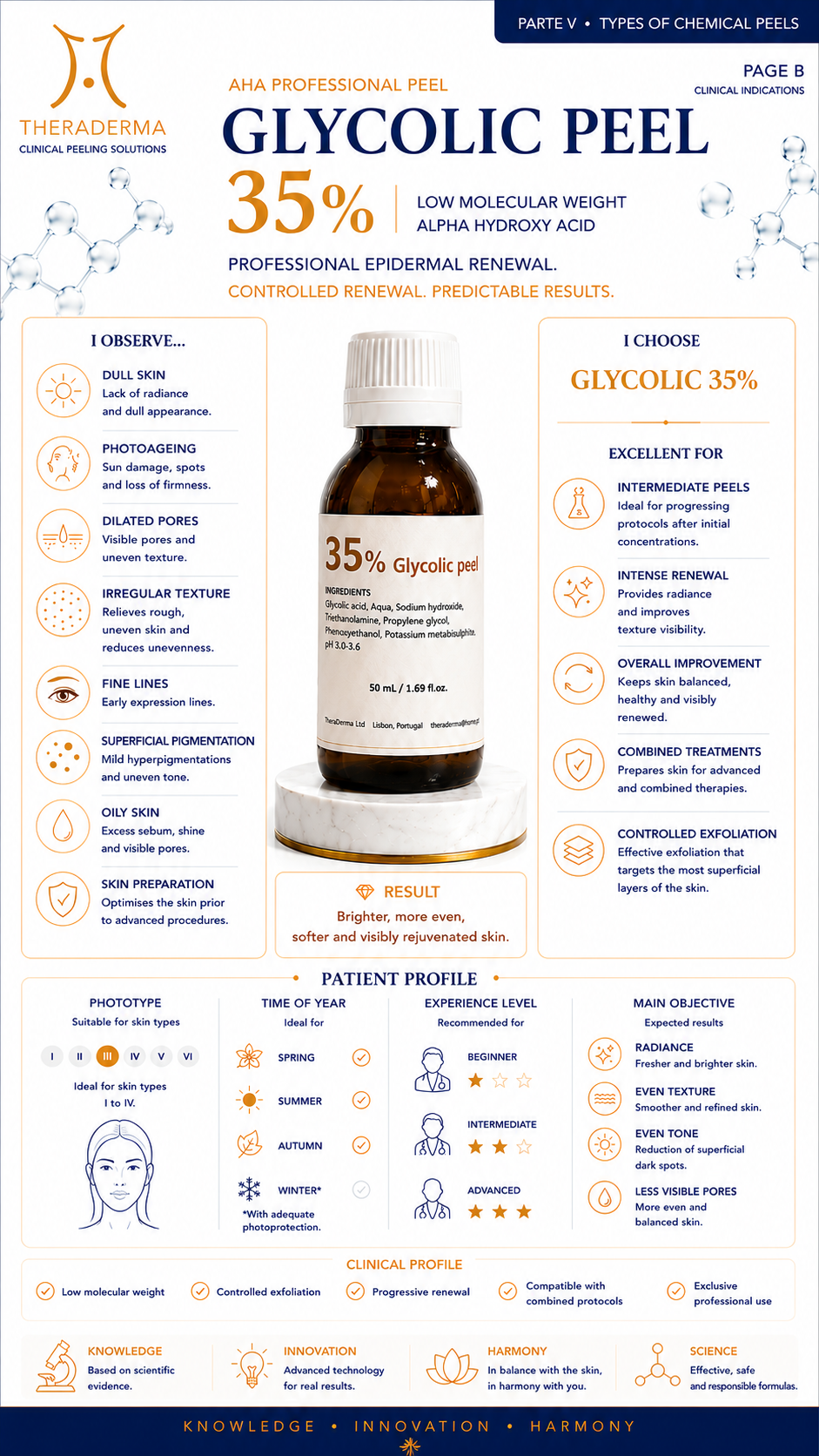
Glycolic Peel 35% is an excellent option when the professional wishes to progress one step further in treatment intensity after evaluating the patient’s skin response, or when the clinical diagnosis requires a more active level of epidermal renewal.
It is particularly indicated for patients presenting with:
• moderate loss of skin radiance;
• uneven skin texture;
• visible pores;
• fine expression lines;
• superficial photoageing;
• mild epidermal hyperpigmentation;
• dull or devitalised skin;
• the need to improve overall skin quality;
• progressive skin rejuvenation programmes;
• preparation for combined aesthetic medicine protocols.
Its clinical profile makes it an especially valuable tool for patients who have already developed tolerance to lower concentrations or who require a greater renewal capacity within personalised treatment programmes.
________________________________________
POSITIONING WITHIN THE THERAPDERMA CLINICAL LADDER™
The concentration of a chemical peel should not be interpreted as an indicator of superiority, but rather as a criterion for clinical selection.
Within the TherapDerma Clinical Ladder™, each concentration corresponds to a specific therapeutic objective.
Glycolic Peel 20% represents the starting point for superficial chemical exfoliation programmes and skin preparation.
Glycolic Peel 35% represents the next stage of progression, providing more active epidermal renewal, greater improvement in skin texture and enhanced integration into progressive skin rejuvenation protocols.
When clinically indicated and where the skin demonstrates appropriate tolerance, the professional may consider higher concentrations as part of a stepwise therapeutic strategy based entirely on individual clinical assessment.
This philosophy allows treatments to be safer, more predictable and better adapted to the specific needs of each patient.
________________________________________
THERAPDERMA PHILOSOPHY
At TherapDerma, we understand that a chemical peel is not an isolated treatment, but the starting point for comprehensive skin regeneration programmes.
Our philosophy is based on respecting skin biology while promoting progressive renewal processes, avoiding unnecessarily aggressive interventions and prioritising natural, reproducible and sustainable long-term results.
Every protocol should be adapted to the clinical diagnosis, skin phototype, epidermal barrier condition and therapeutic objectives of each patient.
For this reason, Glycolic Peel 35% has been designed to integrate intelligently with other solutions within the TherapDerma Clinical Ecosystem™, enabling personalised treatment programmes that combine chemical peels, mesotherapy, medical aesthetic technologies and TherapDerma Home Care™ under one unified scientific approach.
________________________________________
WHY CHOOSE THERAPDERMA?
Because we believe that clinical excellence depends not only on the product itself, but also on the knowledge that accompanies its use.
Every TherapDerma solution is developed according to four fundamental principles:
Science
Formulations supported by scientific principles and quality standards designed for professional clinical practice.
Innovation
Development of protocols that integrate different therapeutic solutions within a single clinical ecosystem.
Safety
Progressive protocols designed to promote predictable outcomes while respecting skin physiology and the individuality of every patient.
Results
Treatments focused on improving skin quality through personalised and cumulative clinical strategies.
These four pillars represent the essence of the TherapDerma Clinical Ecosystem™ and reflect our commitment to modern, responsible and evidence-based aesthetic medicine.
________________________________________
THERAPDERMA CONCLUSION
Glycolic Peel 35% represents the natural evolution of superficial chemical exfoliation protocols, offering professionals a versatile tool to intensify epidermal renewal without compromising control, safety or treatment personalisation.
Integrated within the TherapDerma Clinical Ecosystem™, it enables the development of more comprehensive skin rejuvenation programmes, promoting visibly smoother, brighter and more refined skin through progressive protocols tailored to the individual needs of every patient.
Clinical Benefits
Clinical Benefits Supported by Science and Professional Experience
TherapDerma Glycolic Peel 35% promotes a more active superficial chemical exfoliation that progressively contributes to improving the overall quality of the skin.
Thanks to its higher concentration, it provides a more intensive epidermal renewal within controlled treatment protocols, helping to achieve a visible improvement in skin texture, radiance and tone uniformity without compromising the physiological balance of the epidermis when applied according to professional criteria.
The benefits achieved do not depend solely on an individual treatment session, but on the correct planning of a personalised protocol adapted to the characteristics and needs of each patient.
________________________________________
✨ More Active Epidermal Renewal
What does it contribute clinically?
The greater exfoliating capacity of Glycolic Peel 35% promotes a more efficient cellular turnover, helping to renew the superficial layers of the epidermis in a progressive and controlled manner.
Clinical Benefits
✔ Greater cellular renewal activity.
✔ More even skin surface.
✔ Healthier-looking skin.
✔ Optimal preparation for subsequent treatments.
________________________________________
🌟 Visible Refinement of Skin Texture
What does it contribute clinically?
The progressive removal of keratinised cells helps smooth superficial skin irregularities, providing a more even feel and a visibly more refined appearance.
Clinical Benefits
✔ Smoother skin texture.
✔ Reduced roughness.
✔ Improved surface quality.
✔ Visibly more refined skin.
________________________________________
💎 Greater Radiance and “Glow” Effect
What does it contribute clinically?
A more uniform epidermis reflects light more evenly, improving the skin’s radiance and reducing the dull appearance typically associated with the early stages of photoageing.
Clinical Benefits
✔ Brighter skin.
✔ Revitalised appearance.
✔ Greater feeling of freshness.
✔ Improvement in the skin’s natural glow.
________________________________________
🎯 Improved Skin Tone Uniformity
What does it contribute clinically?
The progressive renewal of the epidermis promotes a more homogeneous distribution of the superficial skin layers, helping to visibly improve minor irregularities in skin tone.
Clinical Benefits
✔ More even skin tone.
✔ More homogeneous appearance.
✔ Improved visual skin quality.
✔ More balanced-looking skin.
________________________________________
🔬 Visible Reduction in the Appearance of Pores
What does it contribute clinically?
By improving the superficial skin texture and promoting more efficient epidermal renewal, the skin acquires a more uniform appearance that visibly reduces the presence of enlarged pores.
Clinical Benefits
✔ Less visible pores.
✔ More refined skin surface.
✔ Better definition of the skin’s surface relief.
✔ More even appearance.
________________________________________
🌿 Softening the Appearance of Fine Lines
What does it contribute clinically?
Improving the superficial quality of the epidermis helps to visibly reduce the appearance of early expression lines and other initial signs of skin ageing.
Clinical Benefits
✔ More youthful-looking appearance.
✔ More even skin surface.
✔ Visibly smoother skin.
✔ Improved overall aesthetic quality.
________________________________________
💧 Optimisation of Combination Protocols
What does it contribute clinically?
A properly renewed epidermis supports the integration of complementary treatments within personalised aesthetic medicine programmes.
Glycolic Peel 35% represents an excellent preparatory phase for protocols combining different solutions within the TherapDerma Clinical Ecosystem™, enabling the professional to develop more comprehensive and progressive therapeutic strategies.
Clinical Benefits
✔ Greater therapeutic versatility.
✔ Excellent integration with combination protocols.
✔ Uniform preparation of the skin surface.
✔ Greater capacity for personalisation.
________________________________________
📈 Cumulative Benefits
The results achieved with Glycolic Peel 35% develop progressively as the clinical protocol advances.
The controlled repetition of treatment sessions promotes a gradual improvement in skin quality, allowing natural and long-lasting changes to be achieved without resorting to excessively aggressive procedures.
This philosophy of progressive treatment is one of the fundamental principles of the TherapDerma Clinical Ecosystem™, where each session forms part of an overall strategy designed to optimise both the health and appearance of the skin.
Why choose glycolic peel 35%?
The Right Concentration to Progress Safely
One of the fundamental principles of modern aesthetic medicine is to select the most appropriate chemical peel for each patient, rather than automatically choosing the highest concentration.
Every skin presents specific characteristics, a different level of tolerance and clearly defined clinical objectives. For this reason, the choice of peel should form part of a progressive therapeutic strategy based on a professional clinical diagnosis.
Within this philosophy, Glycolic Peel 35% represents the balance between more intensive epidermal renewal and a high level of clinical control, making it an excellent option for progressing within progressive skin rejuvenation protocols.
________________________________________
WHEN SHOULD YOU CHOOSE GLYCOLIC PEEL 35%?
Select Glycolic Peel 35% when the patient presents:
✔ moderate loss of skin radiance;
✔ uneven skin texture;
✔ superficial photoageing;
✔ more evident fine lines;
✔ visible pores;
✔ dull-looking skin;
✔ the need for more active epidermal renewal;
✔ maintenance of skin rejuvenation programmes;
✔ preparation for combination treatments;
✔ good tolerance to lower-concentration chemical peels.
________________________________________
WHAT IS ITS CLINICAL OBJECTIVE?
Glycolic Peel 35% has been developed for professionals who wish to increase the intensity of skin renewal without yet resorting to more aggressive chemical peels.
Its use is particularly appropriate when the objective is to:
• improve the overall quality of the epidermis;
• optimise superficial skin texture;
• enhance skin radiance;
• promote a more even complexion;
• prepare the skin for more advanced medical aesthetic protocols;
• continue the therapeutic progression initiated with lower concentrations.
________________________________________
THERAPDERMA CLINICAL LADDER™
Each concentration corresponds to a different stage within the treatment programme.
Glycolic Peel 20%
Ideal for:
✔ first professional chemical peel;
✔ skin with limited peeling experience;
✔ superficial maintenance;
✔ skin preparation programmes.
________________________________________
Glycolic Peel 35%
Ideal for:
✔ patients with good skin tolerance;
✔ progressive skin renewal protocols;
✔ visible improvement in skin texture;
✔ superficial photoageing;
✔ early anti-ageing programmes;
✔ integration with combination treatments.
________________________________________
Glycolic Peel 50%
Ideal for:
✔ more intensive skin renewal protocols;
✔ carefully selected patients;
✔ experienced professionals;
✔ clinical programmes requiring greater exfoliating capacity.
________________________________________
QUICK SELECTION GUIDE
The final choice should always be made following an individual professional clinical assessment.
________________________________________
WHAT MAKES GLYCOLIC PEEL 35% DIFFERENT?
Glycolic Peel 35% is not intended to replace lower or higher concentrations.
Its true value lies in occupying a strategic position within therapeutic planning.
It allows professionals to progressively increase treatment intensity while maintaining excellent clinical control and promoting gradual skin adaptation to more advanced treatment protocols.
This approach facilitates the development of personalised treatment programmes and minimises the need to resort prematurely to more intensive exfoliation.
________________________________________
DISTINCTIVE ADVANTAGES
✔ Balanced concentration for progressive treatment protocols.
✔ Excellent integration within the TherapDerma Clinical Ecosystem™.
✔ More active epidermal renewal than Glycolic Peel 20%.
✔ High level of professional control.
✔ Excellent option for progressive anti-ageing programmes.
✔ Compatible with multiple combination protocols.
✔ Developed exclusively for professional use.
________________________________________
PATIENT PROFILE
Glycolic Peel 35% is often an excellent option for patients who:
• have previously undergone professional chemical peels;
• wish to improve the overall quality of their skin;
• present with early or moderate signs of photoageing;
• are seeking a more even skin texture;
• require skin preparation before complementary aesthetic treatments.
Treatment Areas
Professional Applications of Glycolic Peel 35%
Glycolic Peel 35% is a versatile professional chemical peel that can be incorporated into a wide range of aesthetic medicine protocols focused on improving overall skin quality.
Thanks to its controlled superficial exfoliating action, it may be applied to different anatomical areas, provided that a proper professional assessment has been carried out and the treatment protocol has been adapted to the characteristics of each region.
The selection of the treatment area should always take into consideration:
• skin thickness;
• degree of photoageing;
• skin sensitivity;
• clinical objective;
• previous treatments;
• patient expectations.
Personalisation remains one of the fundamental principles of the TherapDerma philosophy.
________________________________________
FACE
The face is the principal treatment area for Glycolic Peel 35%.
Professional protocols may contribute to improving:
• uneven skin texture;
• superficial photoageing;
• dull-looking skin;
• visible pores;
• superficial fine lines;
• early signs of skin ageing;
• overall skin quality.
Progressive treatment programmes may visibly improve skin smoothness, radiance and the overall appearance of the epidermis.
________________________________________
NECK
The neck frequently presents early signs of skin ageing due to its thinner skin structure and continuous environmental exposure.
Professional treatment programmes may contribute to improving:
• skin texture;
• skin radiance;
• superficial photoageing;
• mild skin irregularities;
• overall skin quality.
Treatment intensity should always be adapted to the characteristics of the cervical skin.
________________________________________
DÉCOLLETAGE
The décolletage is commonly affected by chronic sun exposure and therefore frequently develops visible signs of photoageing.
Glycolic Peel 35% may be incorporated into professional treatment programmes designed to improve:
• uneven skin tone;
• superficial texture irregularities;
• dull-looking skin;
• skin radiance;
• the overall appearance of the skin.
Appropriate photoprotection remains essential throughout the treatment programme.
________________________________________
HANDS
The hands are often one of the first anatomical areas to reveal visible signs of skin ageing.
Professional treatment programmes may contribute to improving:
• superficial photoageing;
• uneven skin tone;
• skin texture;
• skin radiance;
• overall skin quality.
Hand rejuvenation programmes may also be combined with other TherapDerma professional solutions according to the individual clinical assessment.
________________________________________
BACK
Selected areas of the back may also benefit from professionally supervised Glycolic Peel 35% treatment programmes.
Clinical indications may include:
• uneven skin texture;
• oily skin;
• visible pores;
• superficial post-inflammatory skin irregularities;
• dull-looking skin.
Treatment protocols should always be adapted according to skin thickness and the individual characteristics of each patient.
________________________________________
OTHER BODY AREAS
Following professional assessment, Glycolic Peel 35% may also be incorporated into selected treatment programmes involving other anatomical regions where superficial skin renewal is clinically appropriate.
Treatment planning should always consider:
• anatomical characteristics;
• skin sensitivity;
• clinical objectives;
• patient tolerance;
• expected treatment response.
Every protocol should remain individualised.
________________________________________
PROFESSIONAL TREATMENT PLANNING
Successful treatment depends not only on the anatomical area selected but also on careful clinical planning.
Professionals should consider:
✔ Patient assessment
✔ Medical history
✔ Skin phototype
✔ Skin barrier function
✔ Previous chemical peel experience
✔ Individual skin tolerance
✔ Therapeutic objectives
✔ Combination treatment opportunities
✔ TherapDerma Home Care™ recommendations
✔ Photoprotection requirements
Comprehensive planning contributes significantly to treatment predictability and patient satisfaction.
________________________________________
COMBINATION TREATMENTS ACCORDING TO THE TREATMENT AREA
Depending on the clinical objective, Glycolic Peel 35% may be incorporated into personalised programmes including:
Facial Rejuvenation
• Glycolic Peel 35%
• Revitalising Mesotherapy
• LED Therapy
• TherapDerma Home Care™
________________________________________
Skin Quality Improvement
• Glycolic Peel 35%
• Hydration Protocols
• Skin Biorevitalisation
• Professional Skincare Programme
________________________________________
Photoageing Management
• Glycolic Peel 35%
• Depigmenting Protocols
• Antioxidant Mesotherapy
• Daily Photoprotection
________________________________________
Texture Refinement
• Glycolic Peel 35%
• Radiofrequency
• Regenerative Therapies
• Optimised TherapDerma Home Care™
________________________________________
THERAPDERMA CLINICAL INSIGHT™™
The treatment area alone should never determine the protocol. Skin condition, therapeutic objectives, patient tolerance and clinical assessment are equally important factors. Personalised treatment planning remains one of the strongest predictors of successful clinical outcomes.
How does it work?
Understanding the Process Helps Achieve Better Clinical Outcomes
Applying a chemical peel is not simply a matter of placing an acid onto the skin.
Each session triggers a sequence of carefully controlled biological events that promote the progressive renewal of the epidermis. Understanding this process enables the professional to adapt the protocol to each patient’s needs and optimise clinical outcomes in a safe and reproducible manner.
TherapDerma Glycolic Peel 35% has been developed to produce a more intensive superficial chemical exfoliation than Glycolic Peel 20%, while maintaining a high level of control throughout every stage of treatment.
Its clinical behaviour depends on the interaction between concentration, exposure time, the individual skin response and the correct neutralisation of the acid.
________________________________________
EVERYTHING BEGINS IN THE STRATUM CORNEUM
The first structure on which Glycolic Peel 35% acts is the stratum corneum, the outermost layer of the epidermis.
This barrier is composed of keratinised cells that protect the skin against external aggressions and regulate water loss.
Over time, the physiological renewal of this layer becomes slower, promoting the accumulation of ageing cells that alter skin texture, reduce radiance and compromise skin tone uniformity.
The objective of the peel is to promote the progressive removal of these cells, allowing the epidermis to recover a more efficient renewal cycle.
________________________________________
WHAT HAPPENS DURING APPLICATION?
Following uniform application to the skin, Glycolic Acid begins to interact with the most superficial layers of the epidermis.
During this phase, a controlled chemical exfoliation begins, promoting the gradual shedding of ageing cells.
The speed and intensity of this process depend on several clinical factors, including:
• concentration used;
• exposure time;
• condition of the skin barrier;
• thickness of the stratum corneum;
• the patient’s individual tolerance;
• the professional’s experience.
For this reason, two patients treated with the same concentration may present completely different clinical responses.
________________________________________
THE ROLE OF THE PROFESSIONAL
One of the most important aspects of treatment is the continuous observation of the skin response throughout the entire session.
The professional should assess the clinical evolution of the skin in order to determine the appropriate moment to neutralise the peel and end the exposure.
This dynamic control allows treatment to be adapted to each patient, promoting greater safety and a more predictable clinical response.
In modern aesthetic medicine there are no completely rigid protocols; clinical experience and individual assessment continue to play a fundamental role.
________________________________________
THE IMPORTANCE OF EXPOSURE TIME
The length of time the peel remains in contact with the skin is one of the principal factors determining treatment intensity.
A correctly planned exposure allows progressive and uniform exfoliation.
Conversely, unnecessarily prolonging the exposure time does not automatically produce better results and may increase the risk of irritation.
For this reason, exposure time should always be adjusted according to the clinical diagnosis, the patient’s tolerance and the skin response observed during the session.
________________________________________
WHY IS NEUTRALISATION NECESSARY?
Unlike other aesthetic procedures, Glycolic Acid peels require appropriate neutralisation in order to stop the chemical action of the acid.
This step is an essential part of the professional protocol.
Neutralisation allows the exfoliation process to be completed at the intended moment and helps preserve the physiological balance of the skin following treatment.
Correct neutralisation contributes to improving the safety of the procedure and promotes a more comfortable skin recovery.
________________________________________
WHAT HAPPENS AFTER THE PEEL?
Once the session has been completed, the skin begins a physiological renewal process that continues over the following days.
This process forms part of the body’s natural response and may vary slightly from one patient to another.
During this period, the epidermis progressively replaces superficial cells with new ones of a more uniform appearance, promoting a gradual improvement in skin texture and radiance.
The changes do not appear immediately but develop progressively as the natural epidermal regeneration cycle advances.
________________________________________
THE IMPORTANCE OF PROGRESSIVE PROTOCOLS
One of the fundamental principles of the TherapDerma Clinical Ecosystem™ is understanding that a single session rarely represents the complete treatment.
The best outcomes are generally achieved through structured programmes that progressively adapt the intensity of the peel according to the patient’s clinical evolution.
This philosophy promotes cumulative improvements in skin quality while maintaining a high level of safety throughout the entire treatment programme.
FACTORS THAT INFLUENCE THE RESULT
The clinical response obtained following Glycolic Peel 35% depends on multiple clinical variables, including:
✔ initial diagnosis;
✔ appropriate patient selection;
✔ proper skin preparation;
✔ application technique;
✔ exposure time;
✔ correct neutralisation;
✔ treatment session planning;
✔ compliance with the TherapDerma Home Care™ programme;
✔ daily photoprotection.
The balanced combination of all these factors determines the success of the treatment far more than the acid concentration alone.
________________________________________
SUMMARY OF THE PROCESS
Clinical diagnosis
↓
Skin preparation
↓
Uniform application
↓
Observation of the skin response
↓
Individualised exposure time
↓
Neutralisation
↓
Epidermal recovery
↓
Progressive renewal
↓
Clinical follow-up
↓
Planning of the next session
________________________________________
QUICK SUMMARY
Glycolic Peel 35% promotes:
✔ Controlled chemical exfoliation.
✔ Progressive epidermal renewal.
✔ Gradual improvement in skin texture.
✔ Increased skin radiance.
✔ Optimisation of combination treatment protocols.
✔ Cumulative results through personalised treatment programmes.
________________________________________
THERAPDERMA BIOLOGICAL TIMELINE™
Typical Biological Evolution Following Glycolic Peel 35%
Understanding the chronology of the skin response helps professionals explain the treatment evolution correctly and manage patient expectations.
Time Expected Biological Response
Day 0 Professional application of the peel
Minutes afterwards Neutralisation and completion of the procedure
First 24 hours Beginning of the physiological recovery of the skin barrier
Days 2–5 Progressive epidermal renewal*
Week 2 Gradual improvement in texture and radiance
Subsequent sessions Cumulative results and optimisation of skin quality
*Progress may vary according to the individual characteristics of the skin, the protocol used and each patient’s biological response.
________________________________________
TherapDerma Clinical Insight™™
The best results do not appear immediately after the peel. They develop progressively as the natural process of epidermal renewal advances.
________________________________________
THERAPDERMA CONCLUSION
The success of a chemical peel does not depend solely on the formulation used, but also on the way the professional interprets the skin’s response throughout every stage of treatment.
Glycolic Peel 35% has been developed to provide more active epidermal renewal within carefully planned protocols, enabling professionals to work with a high level of control, safety and predictability.
When integrated into a personalised therapeutic strategy, it becomes an effective tool for progressively improving skin quality and enhancing the performance of treatments that form part of the TherapDerma Clinical Ecosystem™.
Mechanism Of Action
The Science Behind Epidermal Renewal
Understanding the mechanism of action of Glycolic Acid enables professionals to correctly interpret the biological response of the skin and design safer, more effective and more personalised treatment protocols.
TherapDerma Glycolic Peel 35% acts primarily on the most superficial layers of the epidermis, promoting controlled chemical exfoliation that stimulates the physiological processes of skin renewal.
Its objective is not only to eliminate ageing cells, but also to create a biological environment that allows the epidermis to recover a more uniform, radiant and functional appearance.
This process occurs progressively and continues for several days after treatment.
________________________________________
1. ACTION ON THE STRATUM CORNEUM
The stratum corneum constitutes the skin’s primary protective barrier.
It is composed of multiple layers of corneocytes surrounded by a lipid matrix that regulates skin hydration and protects against external aggressions.
With ageing and environmental exposure, this layer tends to accumulate keratinised cells that slow epidermal renewal and alter the superficial quality of the skin.
Glycolic Peel 35% promotes the progressive removal of these ageing cells, allowing the skin to recover a more physiological desquamation cycle.
________________________________________
2. REDUCTION OF CORNEOCYTE COHESION
Corneocytes remain connected by specialised structures known as corneodesmosomes.
These proteins act as a genuine binding system between the superficial cells of the epidermis.
Glycolic Acid promotes the progressive degradation of these junctions, reducing cellular cohesion and facilitating uniform, controlled desquamation.
This mechanism constitutes the biological basis of chemical exfoliation.
Unlike mechanical exfoliation, this process occurs uniformly across the entire treated surface.
________________________________________
3. ACCELERATION OF EPIDERMAL RENEWAL
The progressive removal of ageing cells encourages the epidermis to reactivate its natural renewal process.
As a result, newly formed cellular layers reach the surface more efficiently, providing skin with improved structural quality and a more uniform appearance.
This physiological renewal contributes to:
• improving skin texture;
• increasing skin radiance;
• evening skin tone;
• visibly reducing minor superficial irregularities.
The clinical response appears gradually as the biological regeneration cycle progresses.
________________________________________
4. EFFECT ON KERATINOCYTES
Keratinocytes represent approximately 90% of the cells within the epidermis.
Their function is to produce keratin and participate in the continuous renewal of skin tissue.
During their migration from the basal layer to the stratum corneum, these cells undergo a highly regulated differentiation process.
By promoting more efficient epidermal renewal, Glycolic Peel 35% contributes to maintaining a more uniform cellular organisation and a visibly smoother skin surface.
________________________________________
5. EFFECT ON SUPERFICIAL PIGMENTATION
Melanin produced by melanocytes is progressively distributed among keratinocytes as they migrate towards the skin surface.
When the epidermal renewal process slows, this distribution may become irregular, leading to a less even skin tone.
By accelerating superficial cellular turnover, Glycolic Peel 35% progressively contributes to improving the appearance of certain superficial epidermal pigmentation irregularities, always within personalised treatment protocols established by the professional.
Its objective is not to eliminate pigment, but to promote a more homogeneous renewal of the superficial layers in which it is distributed.
________________________________________
6. EFFECT ON SKIN TEXTURE
The accumulation of keratinised cells alters the relief of the epidermal surface.
As a result, the skin may develop an irregular texture, a rough feel and a reduced ability to reflect light.
The progressive chemical exfoliation promoted by Glycolic Peel 35% encourages a smoother and more uniform skin surface.
This effect explains a significant part of the aesthetic improvement observed after completing a professional treatment protocol.
________________________________________
7. BIOLOGICAL PREPARATION OF THE SKIN
One of the most important roles of Glycolic Peel 35% is preparing the skin for subsequent treatments.
A properly renewed epidermis enables more effective integration of combination protocols within the TherapDerma Clinical Ecosystem™.
For this reason, Glycolic Peel 35% is frequently used as a preparatory phase before introducing procedures aimed at rejuvenation, revitalisation or overall improvement of skin quality.
Its role within treatment is not to act in isolation, but to enhance the performance of the complete protocol.
________________________________________
8. PROGRESSIVE BIOLOGICAL RESPONSE
Following application of the peel, the skin initiates a sequence of physiological responses that continue throughout the days after treatment.
This gradual evolution is a characteristic feature of superficial chemical peels and explains why results develop progressively.
Each session represents a controlled stimulus that contributes to improving skin quality without altering the skin’s natural repair mechanisms.
This approach promotes more stable and reproducible long-term results.
________________________________________
SEQUENCE OF THE MECHANISM OF ACTION
Application of Glycolic Peel 35%
↓
Uniform diffusion across the stratum corneum
↓
Reduction of corneodesmosome cohesion
↓
Controlled chemical exfoliation
↓
Progressive removal of ageing cells
↓
Acceleration of epidermal turnover
↓
Improvement in skin texture
↓
Greater skin radiance
↓
More even skin tone
↓
Preparation for combination treatment protocols
↓
Progressive optimisation of overall skin quality
________________________________________
SUMMARY OF THE MECHANISM OF ACTION
Glycolic Peel 35% promotes:
✔ Uniform chemical exfoliation.
✔ Reduced cohesion between corneocytes.
✔ Progressive epidermal renewal.
✔ Visible improvement in skin texture.
✔ Increased skin radiance.
✔ More even skin tone.
✔ Biological preparation for complementary treatments.
✔ Integration within the TherapDerma Clinical Ecosystem™.
________________________________________
THERAPDERMA SCIENTIFIC CONCLUSION
The mechanism of action of Glycolic Peel 35% demonstrates that the effectiveness of a chemical peel does not depend exclusively on its concentration, but on the way it interacts with the biology of the skin.
By promoting controlled chemical exfoliation and progressive epidermal renewal, this peel helps improve the superficial quality of the skin while respecting its physiological regeneration mechanisms.
Integrated within the TherapDerma Clinical Ecosystem™, it constitutes a scientific tool designed to build personalised, safe and reproducible treatment protocols, where each session represents another step towards skin that is more even, more radiant and healthier.
Scientific Foundations
The Science That Determines the Behaviour of Glycolic Peel 35%
The effectiveness of a professional chemical peel depends on much more than the acid concentration alone.
Factors such as pH, pKa, molecular weight, the free acid fraction, the formulation and the application technique directly influence the intensity of exfoliation, the rate of penetration and the clinical response achieved.
Understanding these parameters enables professionals to select safer, more predictable protocols adapted to the individual characteristics of each patient.
For this reason, the 35% concentration should be interpreted as one of the elements that determine the behaviour of the peel, but never as the only one.
________________________________________
GLYCOLIC ACID
Chemical Family
Glycolic Acid belongs to the Alpha Hydroxy Acid (AHA) family, a group of organic acids widely used in aesthetic medicine due to their remarkable ability to promote the physiological renewal of the epidermis.
Traditionally derived from sugar cane, it has the lowest molecular weight of all AHAs, a characteristic that facilitates uniform distribution across the skin surface.
This property explains its outstanding clinical versatility and its inclusion in numerous professional skin rejuvenation protocols.
________________________________________
CONCENTRATION
Concentration expresses the amount of Glycolic Acid present in the formulation.
In Glycolic Peel 35%, this concentration enables a more active chemical exfoliation than formulations with lower concentrations while maintaining a high level of control when applied according to professional protocols.
However, it is important to remember that concentration alone does not determine the actual depth of the peel.
Its behaviour also depends on other physicochemical and clinical parameters.
________________________________________
pH
pH represents the degree of acidity of a solution.
In chemical peels, it is one of the principal factors responsible for the availability of the acid to act on the skin.
As a general rule:
• a lower pH promotes greater acid activity;
• a higher pH progressively reduces that activity.
Nevertheless, pH should never be interpreted in isolation.
Its true significance becomes apparent only when analysed together with the pKa value.
________________________________________
pKa
The pKa is a chemical constant specific to Glycolic Acid.
It represents the point at which approximately 50% of the acid is present in its free form and the remaining 50% in its ionised form.
The relationship between pH and pKa determines the proportion of free acid available to exert biological activity on the epidermis.
For this reason, two peels with the same concentration may demonstrate completely different clinical behaviour.
Understanding this relationship is one of the most important scientific foundations of chemical peel chemistry.
________________________________________
MOLECULAR WEIGHT
Glycolic Acid has an approximate molecular weight of 76 Da, the lowest among all Alpha Hydroxy Acids.
This characteristic facilitates rapid and homogeneous diffusion across the skin surface, allowing a uniform exfoliation when the protocol is correctly performed.
It is precisely this property that explains why Glycolic Acid is one of the most widely used peels in aesthetic medicine for progressive epidermal renewal programmes.
________________________________________
FREE ACID
The free acid fraction represents the biologically active portion of the formulation.
It is responsible for interacting with the superficial layers of the epidermis and promoting the chemical exfoliation process.
The amount of free acid available depends primarily on the relationship between pH and pKa.
This balance determines much of the clinical behaviour of the peel and explains the differences observed between apparently similar formulations.
________________________________________
NEUTRALISATION
Peels formulated with Glycolic Acid require appropriate neutralisation to stop the action of the acid at the moment determined by the professional.
Neutralisation is an essential stage of the clinical protocol and forms part of good professional practice in the use of chemical peels.
Correct neutralisation contributes to:
✔ stopping the chemical activity of the acid;
✔ improving procedural safety;
✔ promoting a more comfortable recovery;
✔ increasing protocol reproducibility.
________________________________________
TECHNICAL DATA SHEET
Characteristic Glycolic Peel 35%
Chemical Family Alpha Hydroxy Acid (AHA)
Active Ingredient Glycolic Acid
Concentration 35%
pKa 3.86
Approximate pH ≥ 3.5*
Peel Type Superficial
Neutralisation Mandatory
Use Professional Use Only
Presentation 50 mL Professional Solution
Compatibility TherapDerma Clinical Ecosystem™
*The pH value may vary slightly between batches according to the manufacturer’s specifications.
________________________________________
TECHNICAL DOCUMENTATION
Intended Use
Product intended exclusively for qualified professionals performing superficial chemical peels.
________________________________________
Treatment Areas
May be used on:
• face;
• neck;
• décolletage;
• backs of the hands;
• other areas selected following professional assessment.
________________________________________
Storage
• Keep the container tightly closed.
• Protect from direct light.
• Store in a cool, dry place.
• Avoid extreme temperatures.
• Do not use the product after the expiry date.
________________________________________
Clinical Compatibility
May be integrated into personalised protocols forming part of the TherapDerma Clinical Ecosystem™, combining mesotherapy solutions, medical aesthetic technologies and TherapDerma Home Care™ programmes according to professional judgement.
QUALITY CONTROL
Each batch is manufactured in accordance with internal quality control procedures designed to ensure the physicochemical stability, formulation uniformity and reproducibility of the product.
________________________________________
SAFETY INFORMATION (MSDS)
Glycolic Peel 35% is intended exclusively for professional use.
During handling, the standard safety procedures applicable to professional chemical exfoliation products should always be followed.
________________________________________
General Recommendations
✔ Use only on intact skin.
✔ Avoid contact with the eyes and mucous membranes.
✔ Use appropriate personal protective equipment whenever necessary.
✔ Keep out of the reach of children.
✔ Keep the container tightly closed.
✔ Protect from light and heat.
✔ Always neutralise according to the professional protocol.
✔ Strictly respect the exposure times.
✔ Discontinue the application if, in the professional’s judgement, the skin response is not as expected.
________________________________________
In Case of Accidental Contact
If the product comes into contact with the eyes or mucous membranes:
• rinse immediately with plenty of water;
• follow the established safety recommendations applicable to this type of product;
• proceed according to the professional’s clinical judgement.
________________________________________
SCIENTIFIC SUMMARY
The clinical behaviour of Glycolic Peel 35% is determined by the interaction of multiple factors:
✔ Concentration
✔ pH
✔ pKa
✔ Free Acid
✔ Molecular Weight
✔ Formulation
✔ Exposure Time
✔ Professional Technique
The correct interpretation of these parameters allows professionals to develop safer, more effective and more reproducible treatment protocols.
________________________________________
SCIENCE AT A GLANCE™
The Six Factors That Determine the Behaviour of a Professional Chemical Peel
Although concentration is important, the clinical behaviour of a chemical peel depends on the interaction of multiple physicochemical and clinical variables.
Parameter Clinical Influence
Concentration Determines the action potential of the peel
pH Influences the chemical activity of the acid
pKa Regulates the proportion of free acid available
Molecular Weight Influences the rate of superficial diffusion
Neutralisation Controls the effective duration of the chemical action
Professional Technique Determines the safety and reproducibility of the treatment
________________________________________
Scientific Conclusion
None of these parameters should be interpreted in isolation.
The final behaviour of the peel is the result of the interaction between the formulation, the technique used and the individual biological response of each patient.
________________________________________
THERAPDERMA SCIENTIFIC CONCLUSION
Understanding the chemistry of a professional chemical peel means understanding why each formulation behaves differently on the skin.
Glycolic Peel 35% combines a carefully selected concentration with the physicochemical properties of Glycolic Acid to provide a more active superficial chemical exfoliation while maintaining a high level of control when incorporated into properly planned clinical protocols.
At TherapDerma, we believe that scientific knowledge forms the foundation of responsible aesthetic medicine. For this reason, every protocol should be based not only on clinical experience, but also on a sound understanding of the chemical principles that determine the behaviour of each chemical peel.
Indications
When Is Glycolic Peel 35% Indicated?
Correct indication is the first step towards achieving safe, effective and predictable results.
TherapDerma Glycolic Peel 35% has been developed to promote more active epidermal renewal within personalised aesthetic medicine protocols.
Its use should always be based on an individual clinical assessment, taking into account the condition of the skin, the patient’s phototype, medical history, previous experience with chemical peels and the established therapeutic objectives.
Rather than treating an isolated skin concern, Glycolic Peel 35% progressively improves the overall quality of the skin when incorporated into a properly planned clinical programme.
________________________________________
MAIN CLINICAL INDICATIONS
Superficial Photoageing
Cumulative exposure to ultraviolet radiation contributes to visible alterations in skin texture, tone and radiance.
Glycolic Peel 35% may be incorporated into treatment protocols designed to progressively improve the superficial quality of the epidermis in patients presenting with early or moderate signs of photoageing.
________________________________________
Uneven Skin Texture
The accumulation of keratinised cells may produce a less uniform skin surface.
The epidermal renewal promoted by Glycolic Peel 35% contributes to smoother skin with a more refined texture and a more homogeneous appearance.
________________________________________
Dull Skin
A reduction in the physiological rate of cellular renewal may lead to a visible loss of skin radiance.
Controlled chemical exfoliation promotes an epidermis capable of reflecting light more evenly, providing a fresher and more revitalised appearance.
________________________________________
Fine Expression Lines
When the first expression lines are mainly associated with superficial epidermal alterations, Glycolic Peel 35% may be incorporated into treatment protocols aimed at visibly improving skin quality.
________________________________________
Visible Pores
Improvement of the superficial skin texture contributes to a more even appearance of the skin, visibly reducing the presence of enlarged pores.
________________________________________
Superficial Epidermal Hyperpigmentation
Progressive epidermal renewal may promote a more homogeneous distribution of superficial pigment, forming part of depigmentation programmes established by the professional.
________________________________________
Skin Showing Early Signs of Ageing
Glycolic Peel 35% is an excellent solution for patients beginning to present changes associated with skin ageing and wishing to commence progressive skin rejuvenation programmes.
________________________________________
Maintenance Programmes
Following completion of more intensive protocols, Glycolic Peel 35% may be incorporated into periodic maintenance programmes designed to preserve the superficial quality of the skin.
________________________________________
Preparation for Combination Protocols
One of its most common applications is preparing the skin before integrating other treatments within the TherapDerma Clinical Ecosystem™, supporting a more comprehensive and personalised therapeutic strategy.
________________________________________
PATIENT PROFILE
Glycolic Peel 35% is particularly suitable for patients presenting with:
✔ Moderate loss of skin radiance.
✔ Uneven skin texture.
✔ Superficial photoageing.
✔ Early expression lines.
✔ Visible pores.
✔ Devitalised skin.
✔ Good tolerance to lower-concentration chemical peels.
✔ Interest in progressive skin rejuvenation programmes.
________________________________________
THERAPEUTIC OBJECTIVES
The use of Glycolic Peel 35% may be directed towards achieving:
✔ Progressive epidermal renewal.
✔ Improved skin texture.
✔ Increased skin radiance.
✔ Greater skin tone uniformity.
✔ Refinement of the skin surface.
✔ Preparation for complementary treatments.
✔ Maintenance of overall skin quality.
________________________________________
WHEN SHOULD AN ALTERNATIVE BE CONSIDERED?
Although Glycolic Peel 35% is a highly versatile solution, it is not always the most appropriate choice.
Depending on the clinical diagnosis, the professional may consider other TherapDerma alternatives when the primary objective involves:
• Extremely sensitive skin.
• Complex hyperpigmentation.
• Severely dehydrated skin.
• Significant excess sebum production.
• Multi-level protocols.
• Treatments for other specific clinical indications.
The choice of chemical peel should always be made on an individual basis.
________________________________________
QUICK SUMMARY
Glycolic Peel 35% is indicated for:
✔ Superficial photoageing.
✔ Uneven skin texture.
✔ Dull skin.
✔ Fine expression lines.
✔ Visible pores.
✔ Superficial hyperpigmentation.
✔ Anti-ageing programmes.
✔ Combination protocols.
✔ Clinical maintenance.
________________________________________
THERAPDERMA CONCLUSION
Correct indication is the most important factor in achieving satisfactory results with any professional chemical peel.
When clinical diagnosis is appropriate and treatment forms part of a personalised therapeutic strategy, Glycolic Peel 35% enables professionals to develop progressive epidermal renewal programmes capable of visibly improving the superficial quality of the skin.
Contraindications
Safety Begins with Proper Patient Selection
Every professional chemical peel requires a prior clinical assessment.
Before initiating any protocol with Glycolic Peel 35%, the professional must confirm that the patient does not present any condition that could increase the risk of complications or interfere with the skin’s normal response.
A thorough medical history, clinical examination and identification of potential risk factors constitute an essential part of the treatment.
________________________________________
ABSOLUTE CONTRAINDICATIONS
Treatment is not recommended in the presence of:
✔ pregnancy;
✔ breastfeeding;
✔ active skin infections;
✔ active herpes simplex;
✔ warts in the treatment area;
✔ open wounds;
✔ skin erosions;
✔ recent sunburn;
✔ known hypersensitivity to any of the product’s components;
✔ active oncological disease, where the professional considers the procedure contraindicated.
________________________________________
RELATIVE CONTRAINDICATIONS
Treatment should be postponed or adapted in the presence of:
✔ active eczema;
✔ active psoriasis;
✔ inflammatory dermatitis;
✔ recent surgical procedures;
✔ recent aesthetic treatments performed on the same area;
✔ significant impairment of the skin barrier;
✔ persistent irritation;
✔ local inflammatory processes.
The final decision should always be based on the individual clinical assessment.
________________________________________
SPECIAL PRECAUTIONS
Particular caution is recommended in patients presenting with:
• higher skin phototypes;
• a history of post-inflammatory hyperpigmentation;
• highly reactive skin;
• a history of abnormal scarring;
• controlled chronic skin diseases;
• anticipated intense sun exposure during the treatment period.
In these cases, it may be necessary to adapt the treatment protocol or select an alternative therapeutic strategy.
________________________________________
TREATMENT WITH RETINOIDS
Patients undergoing treatment with oral retinoids should follow the established clinical recommendations before commencing any chemical peel protocol.
The decision should always be based on professional clinical judgement and the current clinical guidelines.
________________________________________
MEDICATION AND CLINICAL HISTORY
Before treatment, it is advisable to obtain information regarding:
✔ current medication;
✔ dermatological history;
✔ recent aesthetic procedures;
✔ known allergies;
✔ previous depigmenting treatments;
✔ response obtained from previous chemical peels.
This information enables the protocol to be individualised and helps reduce potential risks.
________________________________________
WHEN SHOULD TREATMENT BE POSTPONED?
The procedure should be postponed if the professional observes:
• significant skin irritation;
• recent sun exposure;
• significant impairment of the epidermal barrier;
• active infection;
• insufficient recovery from previous procedures;
• any circumstance that may compromise patient safety.
PRIOR TO TREATMENT
Before commencing treatment, it is recommended to:
✔ perform a complete clinical assessment;
✔ explain the procedure to the patient;
✔ review the patient’s treatment expectations;
✔ obtain informed consent where appropriate;
✔ establish a TherapDerma Home Care™ and photoprotection plan.
________________________________________
QUICK SUMMARY
Do not perform treatment in cases of:
✔ pregnancy;
✔ breastfeeding;
✔ active infections;
✔ active herpes simplex;
✔ open wounds;
✔ sunburn;
✔ known hypersensitivity;
✔ significant skin alterations that contraindicate the procedure.
________________________________________
THERAPDERMA CONCLUSION
The effectiveness of a chemical peel begins long before the product is applied.
Appropriate patient selection, correct identification of contraindications and individualised clinical planning enable professionals to develop safer protocols, minimise risks and achieve predictable outcomes.
At TherapDerma, safety is a fundamental pillar of every professional protocol and forms an inseparable part of our evidence-based philosophy of aesthetic medicine.
Professional Application
Clinical Guide for the Professional Use of Glycolic Peel 35%
TherapDerma Glycolic Peel 35% has been developed exclusively for professional use.
Its correct application requires prior clinical assessment, appropriate patient selection and strict adherence to a protocol designed to ensure maximum treatment safety and reproducibility.
Every treatment session should be adapted to the individual characteristics of the skin, avoiding rigid protocols and always prioritising the clinical response observed throughout the procedure.
________________________________________
TREATMENT OBJECTIVES
Each application should pursue clearly defined clinical objectives.
The most common include:
✔ promoting progressive epidermal renewal;
✔ improving superficial skin texture;
✔ increasing skin radiance;
✔ evening skin tone;
✔ preparing the skin for combination protocols;
✔ initiating or continuing progressive skin rejuvenation programmes.
________________________________________
PRE-TREATMENT ASSESSMENT
Before commencing treatment, it is recommended to perform a complete clinical evaluation.
This assessment should include:
✔ skin type;
✔ skin phototype;
✔ condition of the skin barrier;
✔ dermatological history;
✔ previous treatments;
✔ current medication;
✔ previous experience with chemical peels;
✔ the patient’s therapeutic objectives.
Proper treatment planning is the first step towards achieving safe and predictable outcomes.
________________________________________
SKIN PREPARATION
Before applying the peel, the skin surface should be completely clean and free from make-up, sunscreen, oils or any other residue that may interfere with the uniform distribution of the product.
Where the protocol requires, the professional may incorporate specific skin preparation solutions according to their clinical judgement.
Appropriate preparation promotes more homogeneous application and a more uniform skin response.
________________________________________
PEEL APPLICATION
Apply an appropriate amount of product to the selected treatment area using the professional’s usual application technique.
The product should be distributed evenly, avoiding localised accumulation and respecting particularly sensitive anatomical areas.
Continuous observation of the skin response should be maintained throughout the entire application.
________________________________________
EXPOSURE TIME
Exposure time should never be regarded as a fixed value.
It should always be individualised, taking into account:
EXPOSURE TIME
Exposure time should never be regarded as a fixed value.
It should always be individualised, taking into account:
• clinical diagnosis;
• skin thickness;
• skin sensitivity;
• patient tolerance;
• the response observed during the treatment session;
• the professional’s experience.
Clinical evolution should always take precedence over a predetermined exposure time.
________________________________________
CLINICAL OBSERVATION
During the procedure, it is recommended to assess the evolution of the skin continuously.
The appearance of the expected clinical signs will enable the professional to determine the most appropriate moment to end the exposure.
Continuous visual monitoring represents one of the principal safety factors of the treatment.
________________________________________
NEUTRALISATION
Glycolic Peel 35% requires mandatory neutralisation.
Neutralisation must be carried out according to the established professional protocol in order to completely stop the action of the acid.
This step is essential to ensure the correct development of the treatment and preserve the physiological balance of the skin.
________________________________________
COMPLETION OF THE PROCEDURE
Once the peel has been neutralised, it is recommended to complete the protocol using products intended to promote skin comfort and support the recovery of the epidermal barrier.
The professional should select the most appropriate solutions according to the individual characteristics of each patient.
________________________________________
TREATMENT FREQUENCY
Treatment planning depends on multiple clinical factors.
As general guidance, professional programmes are usually performed through several appropriately spaced treatment sessions, allowing the skin to complete its physiological renewal process between applications.
The total number of treatment sessions should always be individualised according to the clinical evolution observed.
________________________________________
THERAPDERMA HOME CARE™
TherapDerma Home Care™ forms an inseparable part of professional treatment.
After each session, it is recommended to establish a personalised programme including products intended to promote skin hydration, support epidermal barrier recovery and provide protection against ultraviolet radiation.
Patient adherence to the TherapDerma Home Care™ programme directly influences the stability and duration of the results achieved.
________________________________________
PHOTOPROTECTION
The daily use of a broad-spectrum sunscreen is an essential recommendation following any chemical peel.
Protection against UV radiation helps preserve the physiological recovery of the skin and minimise the risk of subsequent pigmentary alterations.
The professional should inform the patient of the importance of maintaining this measure throughout the entire treatment protocol.
________________________________________
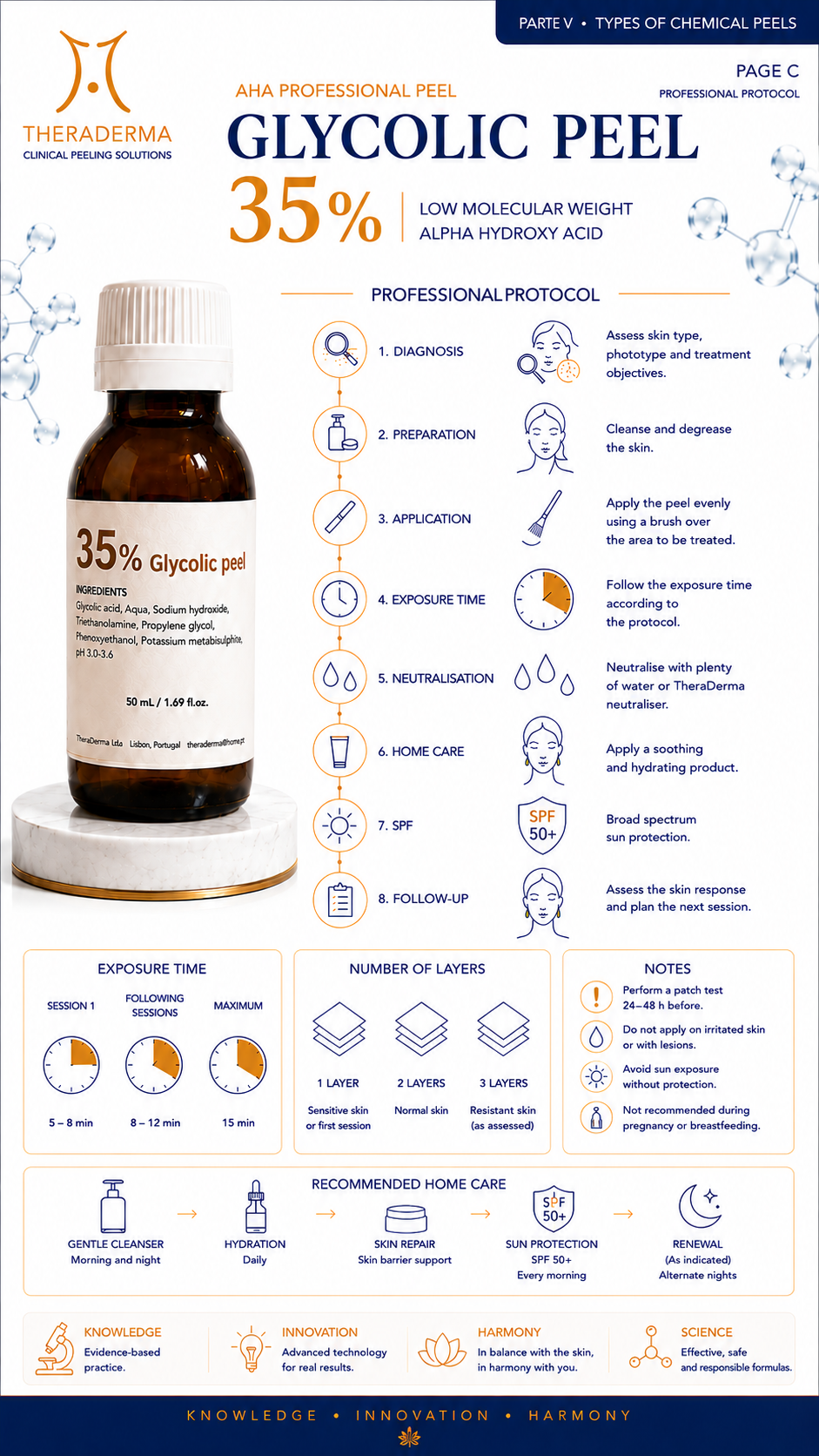
THERAPDERMA CLINICAL PROTOCOL™
Step 1
Clinical Assessment.
↓
Step 2
Diagnosis and Patient Selection.
↓
Step 3
Skin Preparation.
↓
Step 4
Uniform Application of Glycolic Peel 35%.
↓
Step 5
Continuous Clinical Observation.
↓
Step 6
Neutralisation.
↓
Step 7
Skin Recovery.
↓
Step 8
TherapDerma Home Care™.
↓
Step 9
Photoprotection.
↓
Step 10
Follow-up and Planning of the Next Treatment Session.
________________________________________
PROFESSIONAL RECOMMENDATIONS
To optimise treatment reproducibility, it is recommended to:
✔ always respect the individuality of each patient;
✔ adapt every treatment session according to the clinical response observed;
✔ avoid standardised protocols for all patients;
✔ document treatment progress with clinical photographs whenever appropriate.
PROFESSIONAL RECOMMENDATIONS (continued)
To optimise treatment reproducibility, it is also recommended to:
✔ record the response obtained during each treatment session;
✔ plan the treatment as a progressive programme rather than an isolated application.
________________________________________
QUICK SUMMARY
Professional Application
✔ Professional use only.
✔ Prior clinical assessment.
✔ Appropriate skin preparation.
✔ Uniform application.
✔ Continuous observation.
✔ Mandatory neutralisation.
✔ Personalised TherapDerma Home Care™.
✔ Daily photoprotection.
✔ Clinical follow-up.
________________________________________
THERAPDERMA CONCLUSION
The correct application of Glycolic Peel 35% depends not only on the quality of the formulation, but also on the professional’s ability to adapt each treatment session to the individual characteristics of the patient.
When the procedure is carried out following a rigorous clinical assessment, an appropriate technique and a structured follow-up programme, the peel becomes a highly predictable tool for progressively improving skin quality.
Within the TherapDerma Clinical Ecosystem™, professional application represents far more than a technique; it constitutes the meeting point between scientific knowledge, clinical experience and therapeutic personalisation.
________________________________________
CLINICAL PEARLS™
TherapDerma Specialist Recommendations
Clinical experience demonstrates that small details during application can make a significant difference to the uniformity of results and patient satisfaction.
These practical recommendations form part of the philosophy of the TherapDerma Clinical Ecosystem™ and are intended to help professionals achieve safer, more consistent and more reproducible treatment protocols.
✔ Always select the peel according to the diagnosis, not the concentration.
Concentration should never be the principal selection criterion. The condition of the skin, the patient’s tolerance and the therapeutic objective are the factors that truly determine the most appropriate protocol.
________________________________________
✔ Always explain to the patient what they can expect.
When the patient understands the skin renewal process, the normal treatment reactions and the importance of TherapDerma Home Care™, adherence to the protocol increases and satisfaction with the results improves significantly.
________________________________________
✔ Document treatment progress with clinical photographs.
Taking standardised photographs before treatment begins and throughout follow-up enables objective assessment of clinical progress and facilitates communication of results with the patient.
________________________________________
✔ Never regard the peel as an isolated treatment.
The best results are generally achieved when Glycolic Peel 35% forms part of a structured programme that combines diagnosis, professional treatment, follow-up and TherapDerma Home Care™.
________________________________________
✔ Always adapt the protocol according to the individual response.
Every skin responds differently. Continuous clinical observation should always take precedence over rigid protocols or predefined exposure times.
________________________________________
✔ TherapDerma Home Care™ begins on the very first day of treatment.
Explaining the importance of hydration, epidermal barrier repair and photoprotection from the first treatment session contributes to improved clinical progress and prolongs the results achieved.
________________________________________
COMMON MISTAKES™
Frequent Mistakes and How to Avoid Them
Most incidents associated with chemical peels do not depend on the product itself, but on treatment planning and application technique.
Understanding the most common mistakes helps improve both treatment safety and predictability.
❌ Mistake 1
Selecting the peel solely according to its concentration.
✅ Correct approach: Select the treatment according to the clinical diagnosis, the condition of the skin and the therapeutic objective.
________________________________________
❌ Mistake 2
Applying the same protocol to every patient.
✅ Correct approach: Every skin presents different characteristics, tolerance and needs. The protocol should be individualised for every treatment session.
________________________________________
❌ Mistake 3
Extending the exposure time in an attempt to obtain faster results.
✅ Correct approach: Treatment intensity does not depend solely on exposure time. The clinical response of the skin should always be the principal criterion for deciding when to neutralise the peel.
________________________________________
❌ Mistake 4
Failing to emphasise the importance of photoprotection and TherapDerma Home Care™.
✅ Correct approach: Patient education is an integral part of treatment. Daily use of broad-spectrum sunscreen and adherence to the prescribed TherapDerma Home Care™ programme contribute directly to the stability and longevity of the clinical results.
________________________________________
PROFESSIONAL CHECKLIST™
Before the Session
✔ Confirm the clinical diagnosis.
✔ Review the patient’s medical history.
✔ Assess skin type and phototype.
✔ Evaluate the condition of the epidermal barrier.
✔ Confirm there are no contraindications.
✔ Explain the procedure and expected skin response.
✔ Obtain informed consent where appropriate.
✔ Prepare the skin correctly before application.
________________________________________
During the Session
✔ Apply the peel evenly.
✔ Observe the skin response continuously.
✔ Adapt the exposure time according to the patient’s clinical response.
✔ Avoid rigid protocols.
✔ Neutralise according to the established professional protocol.
✔ Complete the procedure with the appropriate post-treatment products.
________________________________________
After the Session
✔ Explain the expected post-treatment evolution.
✔ Recommend an appropriate TherapDerma Home Care™ programme.
✔ Reinforce the importance of daily photoprotection.
✔ Schedule the next treatment session if indicated.
✔ Document the clinical progress with standardised photographs whenever appropriate.
________________________________________
THERAPDERMA PROFESSIONAL SUMMARY™
Ten Keys to Clinical Success
✔ Correct patient selection.
✔ Accurate clinical diagnosis.
✔ Appropriate treatment planning.
✔ Proper skin preparation.
✔ Uniform peel application.
✔ Continuous clinical observation.
✔ Correct neutralisation.
✔ Personalised TherapDerma Home Care™.
✔ Daily photoprotection.
✔ Progressive follow-up.
________________________________________
THERAPDERMA CONCLUSION
The quality of a professional chemical peel depends not only on the formulation, but also on the precision with which every stage of the treatment is performed.
Clinical experience shows that careful planning, meticulous application, continuous observation and structured follow-up are the foundations of safe, reproducible and predictable results.
For this reason, the TherapDerma Clinical Ecosystem™ integrates scientific knowledge, professional protocols and therapeutic personalisation into a single clinical philosophy, where every treatment session represents another step towards healthier, more uniform and visibly revitalised skin.
Frequently Asked Questions (FAQ Professional™)
The Most Common Questions from Professionals Using Glycolic Peel 35%
Correct interpretation of treatment protocols is just as important as selecting the appropriate chemical peel.
These frequently asked questions summarise many of the clinical situations most commonly encountered in everyday aesthetic practice and provide practical guidance based on the TherapDerma Clinical Ecosystem™ philosophy.
________________________________________
1. Is Glycolic Peel 35% suitable for all patients?
No.
Patient selection should always be based on an individual clinical assessment that considers skin type, phototype, medical history, previous experience with chemical peels and the therapeutic objectives established for each case.
________________________________________
2. Can Glycolic Peel 35% be used as a first professional chemical peel?
In general, patients with no previous experience of chemical peels are usually better suited to starting with lower concentrations before progressing to Glycolic Peel 35%.
The final decision should always be based on professional clinical judgement.
________________________________________
3. How many treatment sessions are usually recommended?
There is no universal number of sessions.
Treatment planning depends on the patient’s clinical diagnosis, the skin’s biological response, the therapeutic objectives and the progress observed throughout the programme.
________________________________________
4. Does more visible peeling mean better results?
No.
The effectiveness of a professional chemical peel should never be judged by the amount of visible desquamation.
The objective is to promote controlled, progressive and predictable epidermal renewal while respecting the skin’s physiology.
________________________________________
5. Can Glycolic Peel 35% be combined with other treatments?
Yes.
One of its principal advantages is its excellent integration within the TherapDerma Clinical Ecosystem™, where it may be incorporated into personalised programmes combining mesotherapy, medical aesthetic technologies and TherapDerma Home Care™ according to the professional’s clinical judgement.
________________________________________
6. Is daily photoprotection really necessary?
Absolutely.
Daily use of a broad-spectrum sunscreen is one of the most important recommendations throughout any chemical peel programme.
Appropriate photoprotection contributes to preserving skin recovery and reducing the risk of post-inflammatory pigmentary alterations.
________________________________________
7. What should the patient expect after treatment?
The skin response varies from one patient to another.
Mild erythema, a sensation of skin tightness and progressive epidermal renewal may occur as part of the normal physiological response following treatment.
The professional should always explain the expected evolution before beginning the protocol.
________________________________________
8. Can the protocol be personalised?
Yes.
Personalisation is one of the fundamental principles of the TherapDerma Clinical Ecosystem™.
Every treatment should be adapted according to the clinical diagnosis, skin tolerance, treatment objectives and the patient’s progress.
________________________________________
9. Is TherapDerma Home Care™ really important?
Yes.
Professional treatment does not end when the patient leaves the clinic.
An appropriate TherapDerma Home Care™ programme contributes to maintaining the integrity of the epidermal barrier, supports physiological skin recovery and helps prolong the clinical results obtained.
________________________________________
10. What is the greatest predictor of successful treatment?
Correct diagnosis.
Selecting the appropriate patient, adapting the protocol and monitoring the skin response throughout every treatment session remain the strongest predictors of safe, reproducible and clinically successful outcomes.
Does Glycolic Peel 35% cause visible peeling?
It may vary depending on the individual patient and the treatment protocol applied.
________________________________________
Can it be used throughout the year?
This will depend on the professional’s clinical assessment and on the patient’s strict adherence to the recommended photoprotection measures.
________________________________________
Is neutralisation necessary?
Yes.
Neutralisation is a mandatory part of the professional protocol.
________________________________________
How many treatment sessions are usually recommended?
The number of sessions depends on the clinical diagnosis and the patient’s clinical progress.
________________________________________
Can it be combined with other treatments?
Yes.
It forms part of the TherapDerma Clinical Ecosystem™.
________________________________________
Is it suitable for all skin phototypes?
The indication will always depend on the professional clinical assessment.
________________________________________
Is it a superficial chemical peel?
Yes.
It belongs to the category of superficial chemical peels.
________________________________________
Can it be used as a first professional peel?
In general, Glycolic Peel 20% is usually the preferred option for initiating professional peeling protocols.
Glycolic Peel 35% is generally introduced once the patient has demonstrated adequate skin tolerance or when the clinical diagnosis requires more active epidermal renewal.
________________________________________
STILL HAVE QUESTIONS?
Every patient presents unique skin characteristics and requires an individual clinical assessment.
If you would like to develop personalised treatment protocols or require guidance in selecting the most appropriate TherapDerma peel, our technical team will be pleased to assist you.
Continuous education and scientific support form part of TherapDerma’s commitment to professional excellence.
________________________________________
QUICK SUMMARY
Glycolic Peel 35% FAQ
✔ Individual clinical assessment is essential.
✔ Treatment protocols should always be personalised.
✔ More peeling does not necessarily mean better results.
✔ Daily photoprotection is indispensable.
✔ TherapDerma Home Care™ forms part of the treatment.
✔ Clinical diagnosis always comes first.
________________________________________
THERAPDERMA CLINICAL INSIGHT™™
The quality of the result depends not on applying the strongest peel, but on selecting the right peel, for the right patient, at the right stage of treatment.
THERAPDERMA CONCLUSION
The questions professionals ask most frequently reflect a common reality: successful chemical peeling depends far more on clinical judgement than on the product alone.
Understanding when to treat, how to individualise each protocol and how to guide the patient throughout the entire therapeutic programme allows Glycolic Peel 35% to be used with greater confidence, safety and predictability.
Within the TherapDerma Clinical Ecosystem™, every answer reinforces the same principle: scientific knowledge, clinical experience and personalised treatment are the true foundations of long-term success in modern aesthetic medicine.
Therapderma Combination Protocols™
The True Potential Appears When Treatments Work Together
At TherapDerma, we believe that a chemical peel does not represent the complete treatment.
It represents the first step of an intelligent protocol.
For this reason, Glycolic Peel 35% has been designed to integrate seamlessly within the TherapDerma Clinical Ecosystem™.
________________________________________
Glow Protocol™
Glycolic Peel 35%
↓
Mesolifting
↓
LED Therapy
↓
TherapDerma Home Care™
________________________________________
Anti-Ageing Program™
Glycolic Peel 35%
↓
PDRN Renaissance
↓
RF311
↓
Skin Flash
↓
TherapDerma Home Care™
________________________________________
Skin Quality Program™
Glycolic Peel 35%
↓
Healthy Youth
↓
LED Therapy
↓
SPF
________________________________________
Bright Skin Program™
Glycolic Peel 35%
↓
Revital Mix
↓
Mesolifting
↓
TherapDerma Home Care™
________________________________________
Professional Maintenance™
Glycolic Peel 35%
↓
No Wrinkles
↓
Skin Flash
↓
LED Therapy
↓
TherapDerma Home Care™
________________________________________
Recommended Products
✔ Mesolifting
✔ Healthy Youth
✔ PDRN Renaissance
✔ Skin Flash
✔ Revital Mix
✔ No Wrinkles
✔ RF311
✔ LED Therapy
________________________________________
THERAPDERMA CONCLUSION
The true treatment is not the peel.
It is the TherapDerma Clinical Ecosystem™
Related Content
You may also be interested in:
• Glycolic Peel 20%
• Glycolic Peel 50%
• Mandelic Peel
• Lactic Peel
• Salicylic Peel
• PR360 Specialty Peel
• TherapDerma Clinical Decision Guide™
• TherapDerma Professional Academy™
• TherapDerma Home Care™ Protocols
• Clinical Protocol Handbook
Therapderma Professional Academy™
Training is one of the fundamental pillars of TherapDerma.
Our educational programmes are designed to help professionals develop safer, more reproducible and more profitable treatment protocols.
The Academy includes training in:
✔ The Science of Chemical Peels.
✔ Skin Diagnosis.
✔ Patient Selection.
✔ pH and pKa.
✔ Combination Protocols.
✔ TherapDerma Home Care™.
✔ Clinical Case Studies.
✔ Business Intelligence Applied to Aesthetic Medicine.
Because we believe that the best product will always be knowledge.


 +1 (786) 546-8347 (Office)